REVIEW · BRUSSELS
e-Scavenger hunt Brussels: Explore the city at your own pace
Book on Viator →Operated by Qula · Bookable on Viator
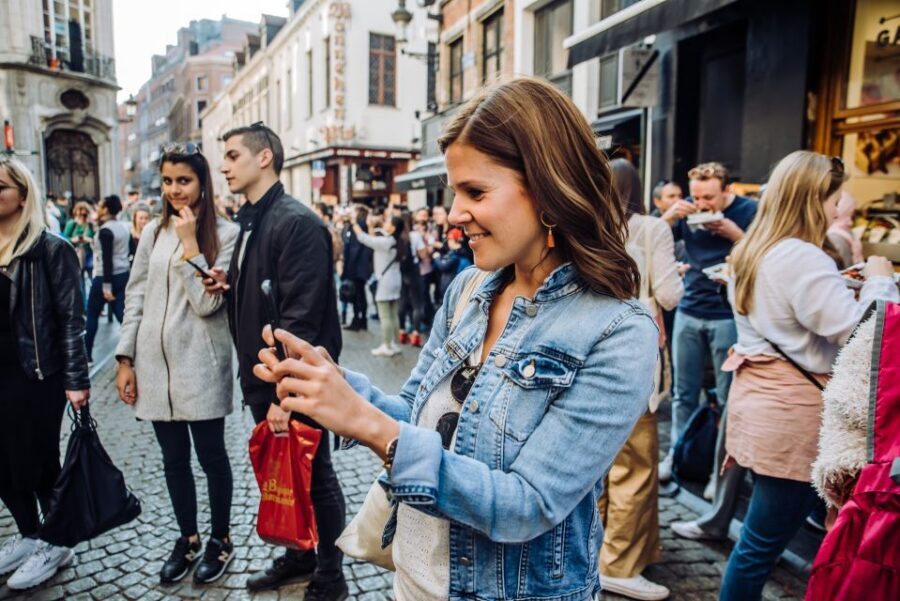
Brussels can feel big and busy. This self-guided e-Scavenger hunt turns it into a game with a GPS-led map, so you’re moving like a local without chasing set times. I especially like that you can start whenever you want and finish on your schedule, plus the trail is designed to work in multiple languages. One possible drawback: this is a game first, so if you want a traditional, lecture-style history tour, you may feel underfed.
The best part is how it balances structure and freedom. You get an ordered path through classic highlights, but you control the pace, breaks, and even pauses, since there’s no time limit. That flexibility is great for families, groups of friends, and anyone who likes to “look, solve, walk, repeat” without crowds steering the day.
Before you go, just note the basics: you’ll need your own smartphone, and your own data plan. If you show up underprepared, the game part can feel less fun and more stressful.
In This Review
- Key points to know before you go
- Brussels at your pace: how this city trail really plays
- Price and group math: when it’s a bargain (and when it isn’t)
- Getting started at Putterie 1: the one location that matters
- The route: 17 stops through Brussels (what you’ll notice at each)
- 1) Parc de Bruxelles (Warandepark)
- 2) Brussels Central Station
- 3) Royal Palace (Palais Royal)
- 4) Hotel de Ville de Bruxelles
- 5) Manneken Pis
- 6) St. Michael and St. Gudula Cathedral (Cathedrale St-Michel et Ste-Gudule)
- 7) Brussels Vintage Market
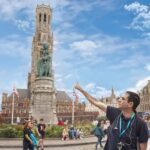
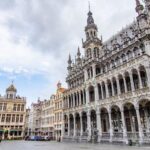
- 8) Grand Place
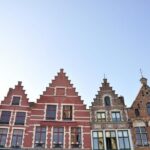
- 9) Guild Houses
- 10) Koninklijke Serres Van Laken
- 11) Les Galeries Royales Saint-Hubert
- 12) Horta Museum (Musee Horta)
- 13) Notre Dame Des Victoires Au Sablon
- 14) La Mort Subite
- 15) Comic Art Museum – Brussels
- 16) Rue Neuve
- 17) Quartier de L’Ilot Sacre
- What the riddles feel like: game tasks that can surprise you
- Crowds, pace, and family-friendliness: why this works
- The watch-outs: where the experience can frustrate you
- Should you book it? My practical call
- FAQ
- FAQ
- How much does the Brussels e-Scavenger hunt cost?
- How long does the hunt take?
- Do we need to start at a specific time?
- How does the self-guided trail work?
- What do we need to bring?
- Where do we meet, and where do we end?
Key points to know before you go
- Start anytime, pause anytime: the trail runs 24/7 with no fixed reservation window.
- GPS-led map for confidence: you’re meant to navigate without getting turned around.
- Built for groups up to 6: perfect for families and friend teams, and the pricing is per group.
- Riddles + assignments on your phone: some tasks involve listening and identifying answers, not just sightseeing.
- A full loop through major sights: from Warandepark through the center to the Ilot Sacré area.
- Multiple languages: available in English, German, French, Dutch, Spanish, Italian, and more.
Brussels at your pace: how this city trail really plays
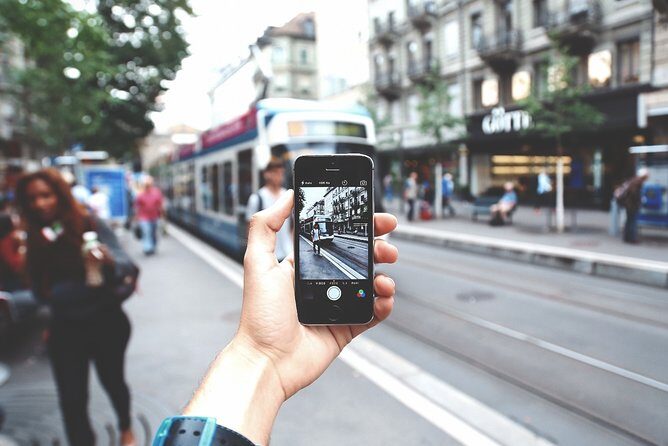
Think of this as a guided walk that lives inside your phone. After you book, you get an email with instructions. Then, once you’re standing at the start point, the app leads you through the city with a GPS map and prompts you to solve riddles and complete assignments.
The format is simple and flexible:
- You pick your day and time.
- You follow the order of stops.
- You can start, pause, and stop whenever it works for your group.
- You’re not racing against a clock.
This is where the value often shows up. In a city like Brussels, it’s easy to burn time just figuring out routes, entrances, and “where do we go next.” Here, the next move is baked into the experience.
Other escape games and scavenger hunts we've reviewed in Brussels


Price and group math: when it’s a bargain (and when it isn’t)
The cost is $37.29 per group for up to 6 people, and the experience runs about 3 hours. That means your “per-person” cost depends on how many seats you fill.
- If you use the full group size (6 people), it works out to about $6.22 per person.
- If it’s just 2 people, it’s about $18.65 per person.
So the best value is when you travel as a real team. It also matters that this is private in the sense that only your group participates, so you don’t get pulled into other people’s timing or energy.
One more practical angle: you’re paying for navigation help and game structure, not for a live guide’s continuous commentary. If you want storytelling on demand, you might still pair this with a walking tour later. If you want an active, self-paced “starter mission” in Brussels, this can be a smart first move.
Getting started at Putterie 1: the one location that matters

Your start point is Putterie 1, 1000 Brussels, Belgium, and the trail ends back there. Having a clear start-and-finish location helps a lot, because it removes one of the biggest headaches of self-guided activities: wondering where the walk will deposit you at the end.
You’ll want to arrive with time to settle in at the start. Once you begin, the trail starts guiding you to the first stop and keeps you moving through the rest of the route.
Also plan for this reality: your smartphone is part of the experience, and your data isn’t included. If your connection is weak or you’re stingy with data, the game elements can slow down.
The route: 17 stops through Brussels (what you’ll notice at each)
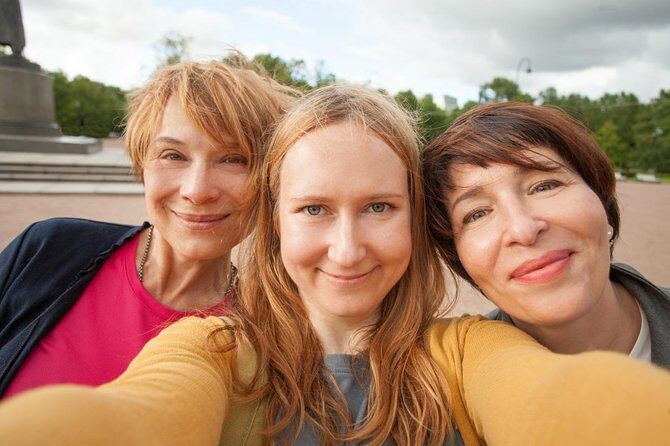
The path is designed to cover a mix of green space, big landmarks, old-center sights, and museums. Expect a “classic Brussels loop” with some built-in variety so your group doesn’t get bored mid-walk.
Below is what each stop is good for, plus a quick note on what might feel awkward.
1) Parc de Bruxelles (Warandepark)
This is a strong opener because you get moving in a calmer setting. A park start is a good warm-up for families and groups—less intense than jumping straight into the thick of the city center. It also gives you a chance to get comfortable with the phone controls before the game gets more demanding.
Other city tours we've reviewed in Brussels


2) Brussels Central Station
Next up: the city’s transport pulse. A major station can be busy and loud, so don’t be surprised if the area feels hectic compared to the park. The good news is that GPS-led navigation helps you stay focused on the next prompt instead of getting pulled into wandering.
3) Royal Palace (Palais Royal)
This is the “big official building” stop. You’ll likely be doing quick look-and-answer moments more than long detours. If your group likes dramatic facades and recognizably important places, this one lands well.
Potential drawback: depending on where the prompt pulls you, access can feel a little restrictive, so keep expectations grounded in exterior viewing.
4) Hotel de Ville de Bruxelles
City halls and civic buildings tend to be visually striking. This stop works as a “hold still and look” pause in the middle of the walk. If your group gets competitive with scores, this is an easy place to spot details for assignments.
5) Manneken Pis
Yes, it’s the famous little statue—and yes, it can feel crowded. That’s exactly why it’s useful inside a game: your group doesn’t just stand around waiting. You move through faster because the trail gives you a reason to get there, solve something, and continue.
6) St. Michael and St. Gudula Cathedral (Cathedrale St-Michel et Ste-Gudule)
A cathedral stop naturally slows the pace, even for people who usually don’t slow down. It’s also a good chance to reset before the walk turns toward the densest tourist zone.
If your group is sensitive to noise, this can still be busy around major sightseeing hours, but the trail structure helps you keep the time efficient.
7) Brussels Vintage Market
This is a fun change of scenery. “Market energy” tends to make scavenger-style games feel more playful. The only thing to keep in mind is that markets can vary in how active they are depending on the time you choose.
So treat it like a look-and-go stop: enjoy the vibe if it’s going, solve the prompt, and keep moving.
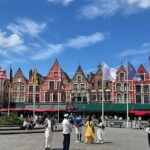
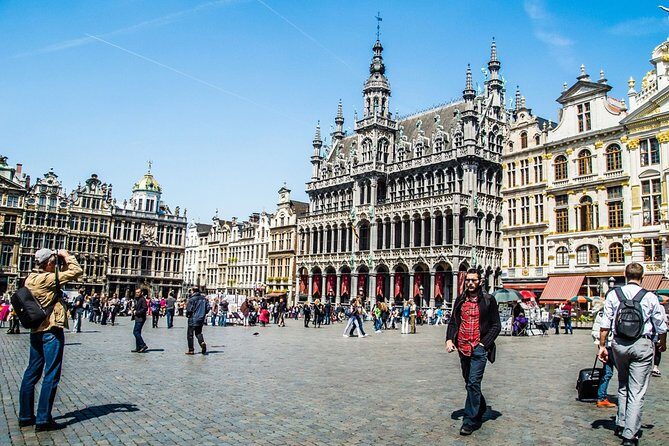
8) Grand Place
Now you’re in the postcard zone. Grand Place is one of those squares that makes everyone in the group unconsciously raise their camera, because it’s just visually memorable.
In a game format, it also works because square-shaped places give you natural “look around” moments for assignments.
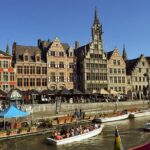
9) Guild Houses
Right after Grand Place, this is where the walk turns detail-hunting. If your team likes spotting patterns, facades, and repeating motifs, you’ll probably enjoy this section more than you expect.
If your group prefers broad views and wide photos, you may want to keep answers snappy and avoid turning it into a long museum-style inspection.
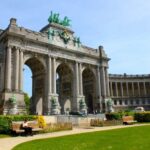
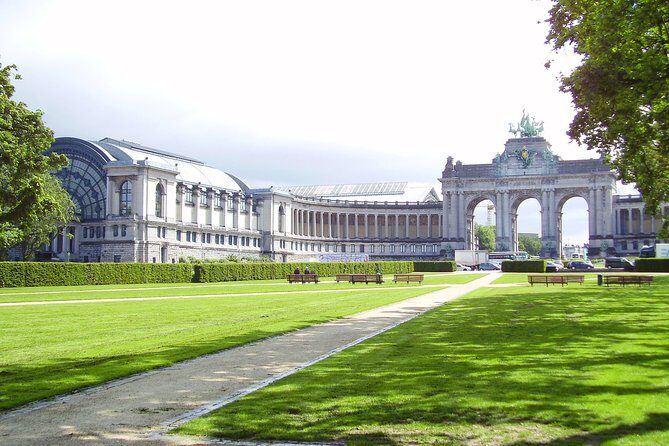
10) Koninklijke Serres Van Laken
This one shifts you away from the core center and adds variety. The name is long and memorable, which is exactly what this kind of trail likes—you’re moving from one clearly identifiable place to the next.
Practical note: long names can be easy to misread on a phone screen, so take a second to confirm you’re on the right prompt before you walk off.
11) Les Galeries Royales Saint-Hubert
Covered shopping arcades change the walk feel right away. The big advantage here is psychological: your route suddenly feels like a defined corridor rather than open streets.
This stop also helps keep the tour interesting if your group is starting to flag. A change in environment often reboots attention fast.
12) Horta Museum (Musee Horta)
This is a dedicated museum stop. Even if you don’t step inside, it gives your group a clear “destination” feeling. If you do pause longer than the trail expects, it’s easy to rejoin later because the experience doesn’t punish you with a strict time limit.
Potential drawback: museums can be tempting to overstay, which can eat into the overall 3-hour flow. For best results, treat it like a quick stop unless you’re intentionally extending the day.
13) Notre Dame Des Victoires Au Sablon
Another church stop, but this one keeps the rhythm going. This is a good place for groups who enjoy religious architecture from the outside without needing a long guided explanation.
If you’re traveling with kids, this is often a helpful moment to switch from “riddle-solving” mode to “spot the differences” mode.
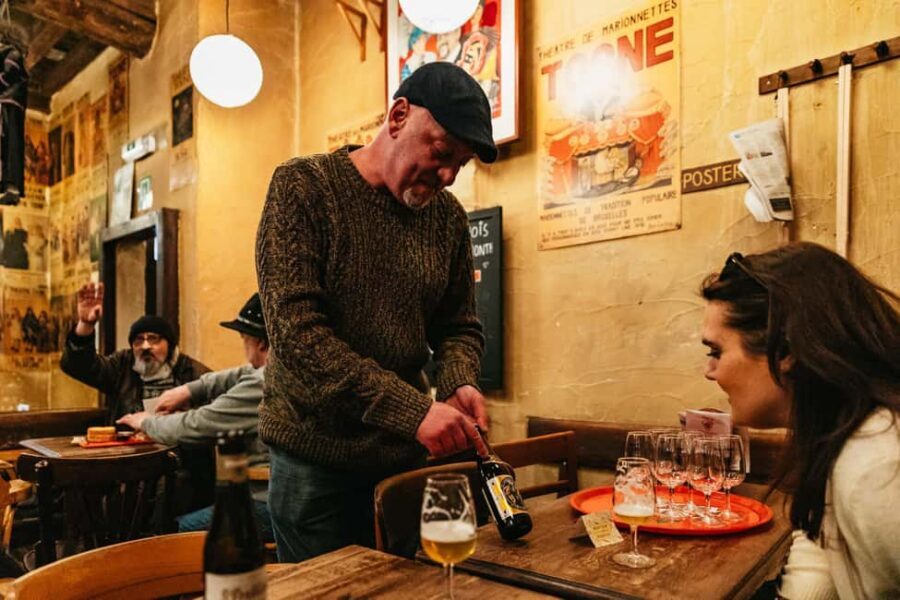
14) La Mort Subite
This stop adds a different vibe: it’s a bar-related landmark. That variety can make the whole hunt feel less like you’re only collecting sights and more like you’re collecting Brussels experiences.
Just remember, your trail tasks are designed for the exterior/area around the stop. If your group decides to take a drink afterward, that’s on you—but the tour itself doesn’t require you to.
15) Comic Art Museum – Brussels
Comic lovers usually perk up here. Museums tied to pop culture fit perfectly with game prompts because they’re naturally playful.
If you’re in a group where only one person is into museums, this stop can still work because the trail gives a concrete reason to stop and solve, not just browse.
16) Rue Neuve
Rue Neuve is your “energy shift” into a shopping street feel. After museums and old architecture, this kind of street can be a refreshing change because it’s designed for walking and passing shops.
It’s also a good point to check your group’s momentum. If you’re doing the hunt as a team game, the late phase is where you keep the score effort fun.
17) Quartier de L’Ilot Sacre
You finish in a neighborhood area built for wandering. Ending here makes the loop feel complete because it ties together different parts of the city into one coherent walk.
Finish with your group answers still fresh. If someone gets stuck earlier, you may still be able to recover your rhythm with the final prompts.
What the riddles feel like: game tasks that can surprise you
This trail isn’t a lecture. It’s a set of smartphone-driven challenges tied to locations.
One thing that can catch you off guard: tasks aren’t always simple “read a plaque and move on.” Some prompts can involve listening to a short clip and identifying who the singer is. In at least one example, the singer is Jacques Brel, which is a very Belgian reference that you might not know if you’re coming from the US without much French-language pop culture.
There are also photo-related assignments. One negative review complained about photos that don’t match the location, but that’s part of the game’s twist: it can ask you to look carefully and think, not just snap the nearest postcard.
So here’s the honest tradeoff:
- If you like puzzles and quick thinking, you’ll likely have a great time.
- If you only want facts and straight-up history, the game format can feel like it got in the way.
Crowds, pace, and family-friendliness: why this works
Brussels can be busy, especially around the major sights. The trail helps you avoid dead time, because you’re not just wandering and hoping to find the next good spot.
It also supports group play in a practical way. A team of up to 6 can split roles:
- one person navigates,
- one person reads the prompts,
- one person checks the location details,
- and someone else keeps score.
If you’re traveling with kids, this kind of structure often holds attention longer than a standard walk. You’re still seeing major landmarks, but you’re doing it through interaction instead of passive listening.
Accessibility note: the experience is user-friendly for hearing impaired, and service animals are allowed. If anyone in your group has specific needs, this is worth considering.
The watch-outs: where the experience can frustrate you
I don’t want to sugarcoat the weak spots. One low rating criticized translations and said some information felt poorly translated or didn’t make sense. Another complaint targeted the map experience and said place names weren’t easy to find on Google Maps, making navigation harder.
Here’s how I’d handle that as a smart traveler:
- If translation issues pop up, switch to a language mode you understand well before you start (the trail supports multiple languages).
- If you rely on external maps, don’t assume the trail location names will match exactly how they appear in every map app. Use the trail’s GPS guidance as the main reference.
Also, keep your expectations clear: this is not designed to replace a free walking tour or a museum day. It’s designed to be a fun structured walk that teaches you by making you pay attention.
Should you book it? My practical call
You should book this e-Scavenger hunt in Brussels if:
- You want a low-stress way to see a lot of key sights without committing to a guide’s schedule.
- You’re traveling as a group (especially up to 6) and you’ll actually play the game together.
- You like puzzles and don’t mind that some questions are pop-culture or listening-based.
- You want a simple, affordable Brussels starter that helps you get bearings fast.
You might skip it if:
- You want a traditional history tour with deep explanations.
- Your group hates anything “quiz-like” and prefers facts delivered straight.
- You don’t want to use a smartphone or you’re worried about data.
If you’re on the fence, I’d treat this as a first-day or first-evening activity. It can set the tone for the rest of your Brussels time because you’ll know where the big landmarks sit relative to each other.
FAQ
FAQ
How much does the Brussels e-Scavenger hunt cost?
It costs $37.29 per group for up to 6 people.
How long does the hunt take?
Plan on about 3 hours. It’s described as guiding you along the best spots in about 2 hours, with your extra time coming from breaks and how fast your team completes prompts.
Do we need to start at a specific time?
No. There are no fixed starting times or reservations. You choose your own day and time, and the trail runs 24/7.
How does the self-guided trail work?
After booking, you receive an email with instructions. You then start the trail on your smartphone at the meeting point, and the GPS-led map guides you between the stops.
What do we need to bring?
You’ll need your own smartphone and data. These are not included.
Where do we meet, and where do we end?
You meet at Putterie 1, 1000 Brussels, Belgium, and the activity ends back at the same meeting point.