REVIEW · BRUSSELS
From Brussels: Bruges & Ghent Day Tour – 2 Fairytale Cities
Book on GetYourGuide →Operated by BRUSSELS CITY TOURS · Bookable on GetYourGuide
Two fairytale cities in one organized day. I love the way this tour strings together major medieval sights with real breathing room, so you’re not stuck watching a bus-load of people rush photos. I also like that the day is run with a steady hand, with guides such as Veronica and Jan called out for keeping timing tight and explanations clear.
My other big win is the practical setup: comfortable coach, plus radios and earphones for the walking tours. The possible drawback is simple: you’ll cover a lot of ground, and cobblestones add up, especially if your feet aren’t used to long days.
In This Review
- Key Points You’ll Care About
- The Coach Day Starts Near Central Brussels (and Moves On Time)
- Ghent First: Saint Bavo Cathedral and the Mystic Lamb Painting
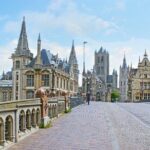
- Graslei, Castle of the Counts, and St Nicholas Church in One Guided Run
- Your Ghent Break: How to Use 105 Minutes Without Feeling Rushed
- Bruges Arrives: Begijnhof and Lake of Love Set the Tone
- Our Lady’s Church and Michelangelo’s Madonna: Art With a Stop-and-Read Feel
- The Former Red Light District and Old St John’s Hospital
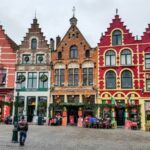
- Grote Markt and the Belfry Tower: The Classic Bruges Centerpiece
- Optional Canal Boat Cruise: Bruges From the Waterline
- Price and Value: Is $57 Worth It for Two Cities?
- Pace, Walking, and the Language Setup You May Feel
- Who This Tour Fits Best (and Who Might Want a Different Plan)
- Should You Book This Ghent and Bruges Day Tour?
- FAQ
- How long is the Ghent and Bruges day tour?
- Where do I meet for the tour?
- Is lunch included?
- Are entry tickets included for churches or attractions?
- What languages are available for the live guide?
- How much guided time versus free time do I get?
- Is this tour suitable for wheelchair users or mobility impairments?
Key Points You’ll Care About
Saint Bavo Cathedral in Ghent centers on the Adoration of the Mystic Lamb painting
Begijnhof and the Lake of Love in Bruges give you that postcard-quiet feeling
Earl’s Castle / Castle of the Counts adds a “how power worked” stop to the day
UNESCO Bruges highlights include Market Square, the Belfry tower, and Old St John’s Hospital
Optional canal boat cruise is built into Bruges free time for better angles and easier pacing
The Coach Day Starts Near Central Brussels (and Moves On Time)
This is one of those Belgium trips that feels easy because the heavy lifting is done for you. You meet outside the National Bank of Belgium at Bd de Berlaimont 18 and step onto a comfortable coach for the transfers and guided walking.
Once you’re onboard, you get an overview of Belgium’s story and Brussels context before you reach Flanders. That matters more than it sounds. When you later see medieval trade wealth in Ghent or the “how did this place stay so intact” factor in Bruges, you’ll have a mental map for why the buildings look the way they do.
Timing is also part of the value. The tour runs about 10.5 hours, with a return to Brussels around 7:30 PM. In real terms, you’re getting a full day out of one morning start, without needing to figure out train times, ticket lines, and transfers between two cities.
Other Bruges day trips we've reviewed in Brussels

Ghent First: Saint Bavo Cathedral and the Mystic Lamb Painting
Ghent gets your attention early with a guided stop at Saint Bavo Cathedral. This is the big art anchor: the Adoration of the Mystic Lamb painting. Even if you’re not a museum superfan, it’s the kind of masterpiece that changes how you look at an entire place. The building and the art go together, and the guide helps you make sense of what you’re seeing rather than just admiring it like a decoration.
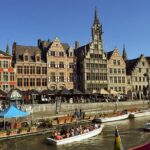
The walking portion is designed to get you from “wow” to “I understand why this is important.” You also head through key parts of the historic center, including the port area around Graslei. That waterfront setting is where you start picturing everyday medieval life: money moving, goods trading, and people building wealth that still shapes the streets today.
Graslei, Castle of the Counts, and St Nicholas Church in One Guided Run
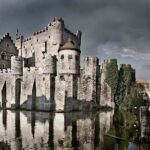
After the cathedral, you get a tour rhythm that works: a mix of signature landmarks and small details. In Ghent, you’ll see the Castle of the Counts, and the itinerary also references Earl’s Castle as the “imagine what it was like to live as a king” moment. This is about power and control—who held the fortifications and why the city could thrive.
You’ll also get a relic of the Middle Ages in the form of St. Nicholas’ Church. That stop is worth it because it’s not just about one big famous sight. It’s a reminder that Ghent was a full city with multiple centers of meaning: worship, trade, defense, and civic identity.
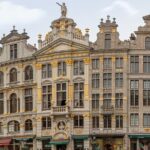
And because the tour isn’t only “big building, next building,” you’ll pass through spots that feel more lived-in, like Great Butchers’ Hall. It’s the kind of place that gives you a stronger sense of the city’s economic heartbeat. If you care about how cities functioned—who cooked meals, who traded goods, who paid for all that stonework—those details matter.
Your Ghent Break: How to Use 105 Minutes Without Feeling Rushed
You get 105 minutes of break time in Ghent. That’s long enough to slow down, grab something on a terrace, and reset your brain before Bruges. It’s also short enough that you shouldn’t plan a long museum quest.
Here’s how I’d use it:
- Wander near the port and old center for easy photos and quick atmosphere checks
- Stop for a snack or coffee and people-watch from a terrace
- Return to the areas you liked most during the guided walk, rather than sprinting for new sights
A couple of guides have been praised for recommending good spots during free time, so pay attention to what your guide suggests before you break off. That can save you time and keep you from eating in a place that’s convenient but not great.
Bruges Arrives: Begijnhof and Lake of Love Set the Tone
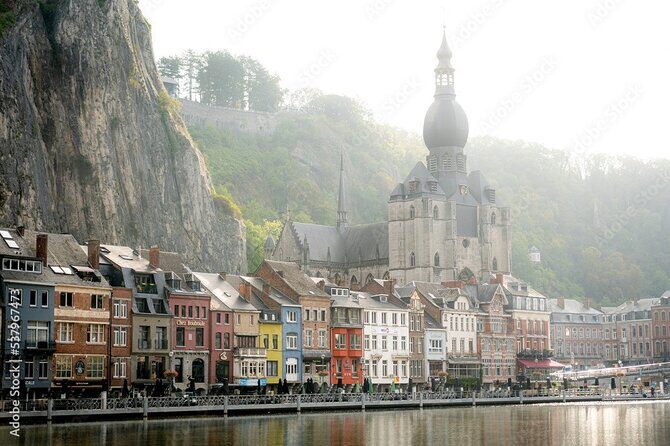
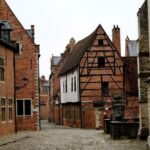
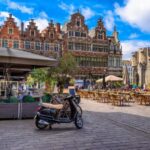
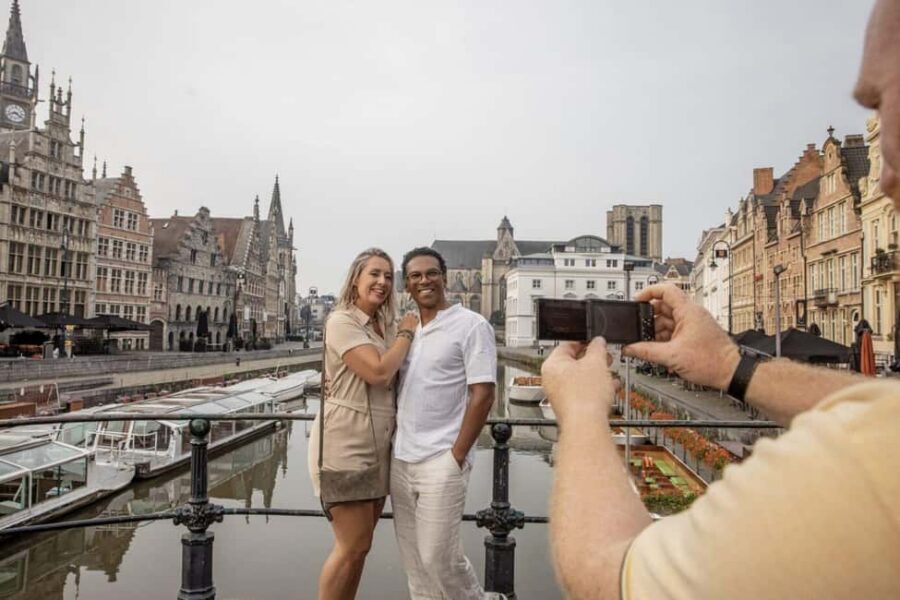
Then it’s off to Bruges, where the mood shifts quickly. Bruges is the UNESCO World Heritage-style city: cobbles, canals, and architecture that looks like it’s been waiting for a movie camera.
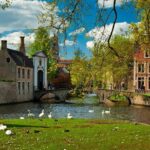
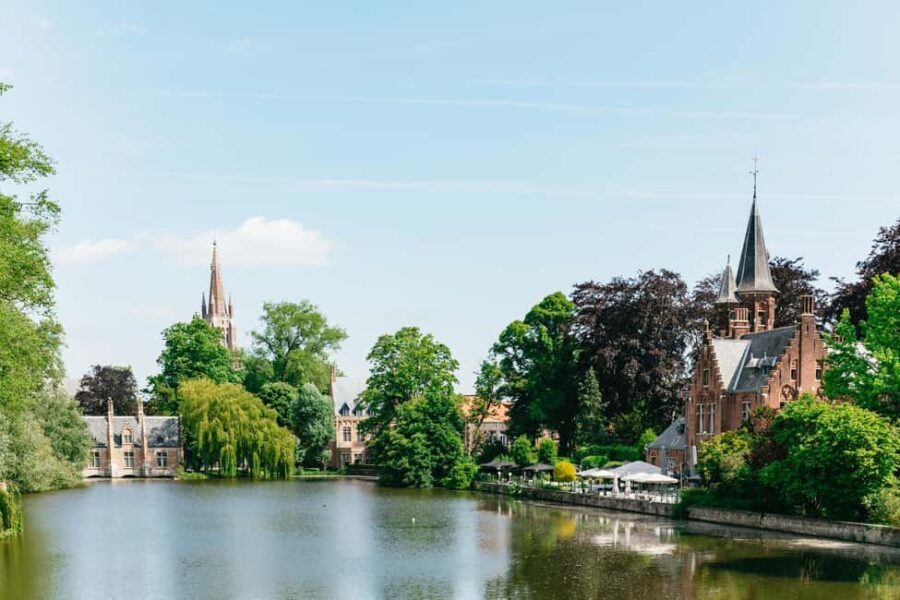
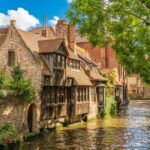
The guided tour starts with some of the most emotionally satisfying stops: the Lake of Love and the Begijnhof (Begijnhof complex), built in 1245. This is one of those places where you don’t need a checklist. You just need a moment to look. The Begijnhof gives you a quieter, more human-scale view of medieval life—religious women living in a carefully arranged community. It’s a strong contrast to the fortress-and-trade feel you got in Ghent.
The Lake of Love ties into the same idea: it’s calm, scenic, and instantly memorable. If you’ve ever thought you wanted to see Bruges, but you’re worried it’ll just be a photo factory, this stop is the reason the city has fans.
Other Ghent day trips we've reviewed in Brussels

Our Lady’s Church and Michelangelo’s Madonna: Art With a Stop-and-Read Feel
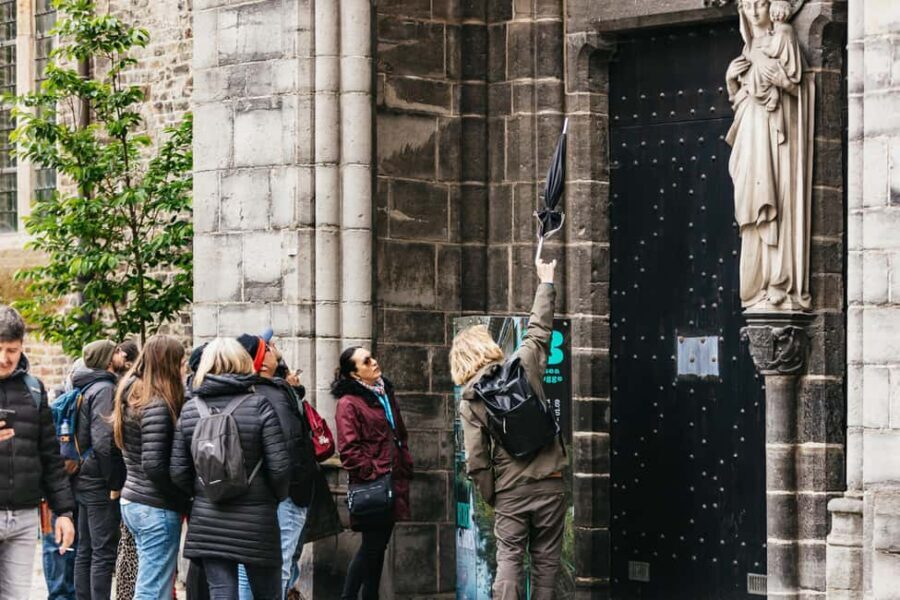
Bruges also includes Our Lady’s Church and Michelangelo’s Madonna. This is the part of the day that scratches the “I want more than streets” itch. The guide helps connect what you’re seeing to the larger story of the region’s art and worship traditions.
This is especially good if you like your travel with a bit of context. The tour doesn’t try to turn you into an art historian. Instead, it gives you enough orientation that you can appreciate the meaning of the artworks while still keeping the day moving.
The Former Red Light District and Old St John’s Hospital
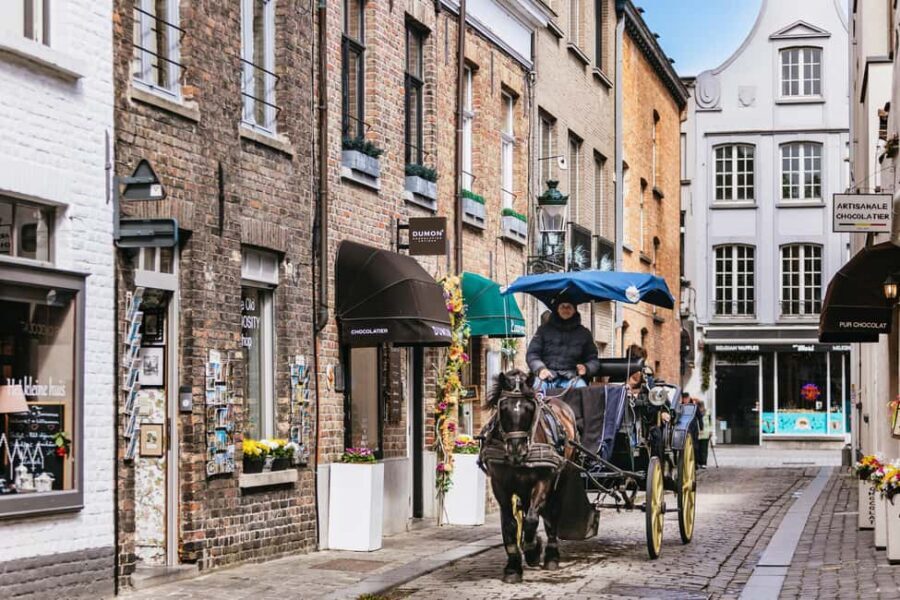
After lunch, the tour continues through Bruges past the city’s former Red Light District and into historic monuments such as the 11th-century Old St John’s Hospital. This is a smart choice because it prevents the day from being only sweet postcard scenes.
Old St John’s Hospital adds a practical human layer: it’s about care, community, and how a city organized compassion in stone. You’re not just looking at pretty buildings. You’re seeing how institutions shaped everyday life over centuries.
Grote Markt and the Belfry Tower: The Classic Bruges Centerpiece
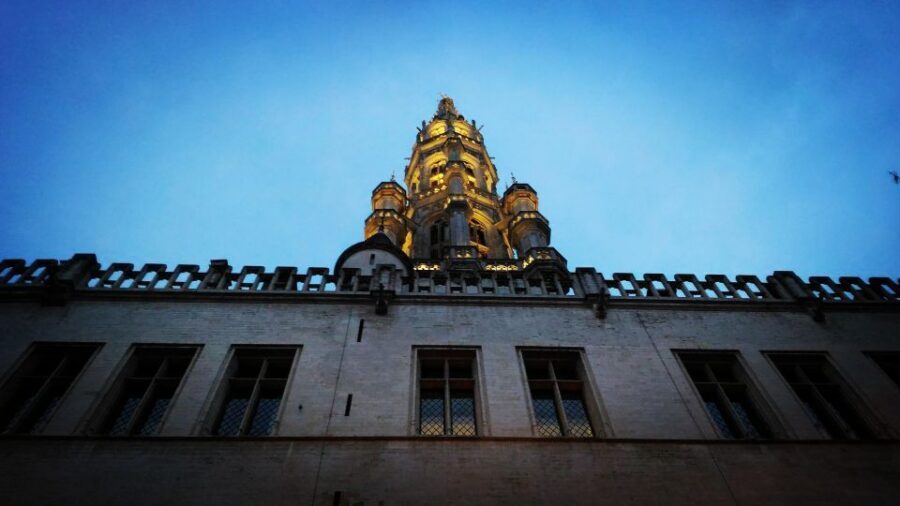
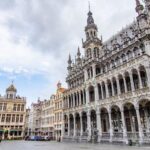
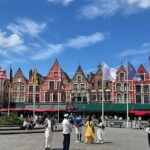
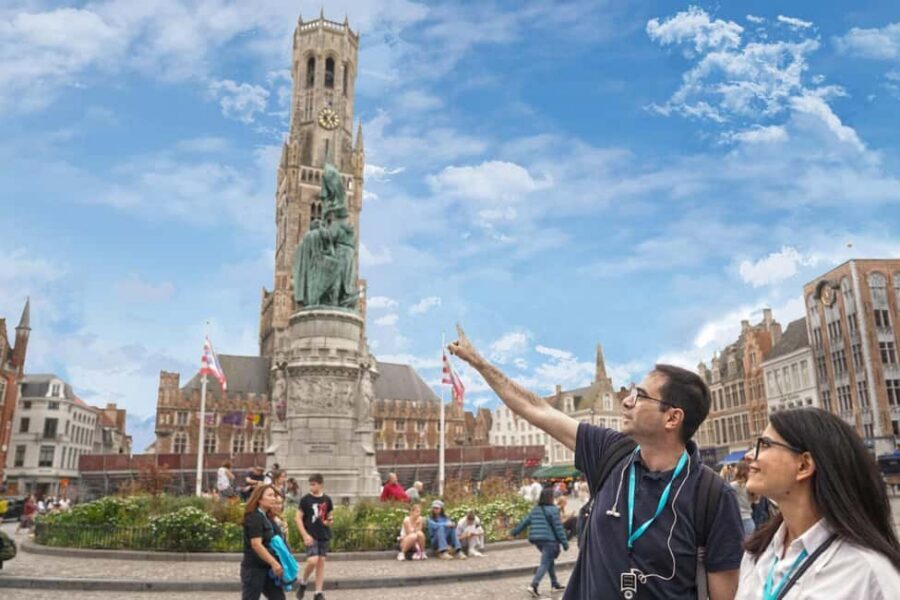
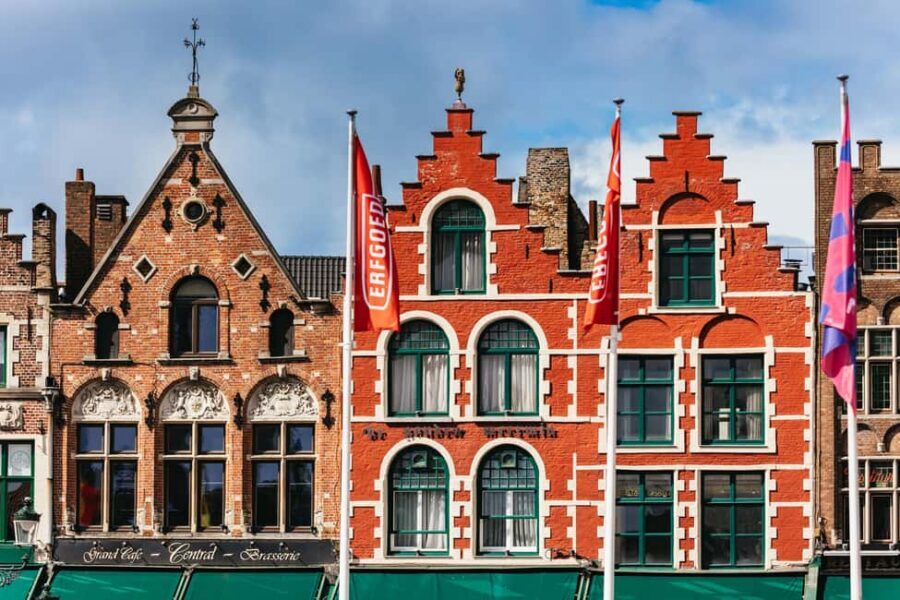
Once you reach Market Square (Grote Markt), you’ll see the Belfry tower. This is the kind of moment where everything clicks. The square is the civic heart of the city, and the Belfry is the vertical symbol that helped run the town’s identity.
I like that this tour includes it late enough in the day that you’re ready to feel the “okay, this is really Bruges” moment. If you’ve been touring for hours already, that’s when a major centerpiece pays off.
Optional Canal Boat Cruise: Bruges From the Waterline
Bruges free time includes an optional boat trip along the canals. One of the strongest points from the experience is that this cruise is planned and organized by your guide, which matters more than you’d think. In Bruges, canals are everywhere, but timing and boarding can eat your energy if you try to wing it.
The cruise is also an easy way to slow down without losing time. You still get views, but you’re not walking. That’s a win if your feet are starting to complain.
Price and Value: Is $57 Worth It for Two Cities?
At $57 per person, this tour can be great value if you want the “two cities, guided plan, low-stress logistics” combo.
Here’s what you’re buying beyond transportation:
- Guided walking tours in both Ghent and Bruges
- Radios and earphones, which make it easier to follow along on cobbled streets
- A structured day that covers the major highlights without you needing to design an itinerary
- Time to explore on your own, especially in Bruges
Also, I’ve seen people compare DIY travel costs and decide the tour price made sense. One booking mentioned planning to take the train and estimating about 40 euros each, which makes a coach tour with guides feel like a better deal—especially if you’d otherwise spend time figuring out schedules, platforms, and where to start your walking loop.
Just be clear about what’s not included: lunch and entry tickets are not part of the price. In practice, that means you might spend a bit more depending on what you want to see inside churches and museums. Still, the tour does a solid job of guiding you to the sights that are worth prioritizing.
Pace, Walking, and the Language Setup You May Feel
This is a long day—about 10.5 hours. You’ll also do a lot of walking. Based on feedback, you might end up in the ballpark of 15,000 to 17,000 steps. So bring comfortable shoes that can handle cobblestones for hours.
One practical plus: radios and earphones. This keeps the guide’s explanations clear during walking tours. It also helps when groups split for photos, because you can still hear what’s going on.
Language is another real-world factor. Guides lead in Spanish, English, and French. And you might hear bilingual commentary depending on customer language preferences. That flexibility can be helpful, but if you’re sensitive to attention switching between languages, you may find it a little distracting. The fix is simple: pick a tour language preference when available and keep your earphones set the same way the whole walk.
Who This Tour Fits Best (and Who Might Want a Different Plan)
I’d recommend it if you:
- Want a first visit to Ghent and Bruges without building an itinerary from scratch
- Like medieval architecture and art landmarks, not just street scenes
- Enjoy a mix of guided time and free time—especially the big Bruges highlights plus optional canal cruising
It may not be the best match if you:
- Need a low-walking pace (this is not a sit-everywhere tour)
- Have mobility limitations. The tour is listed as not suitable for wheelchair users or people with mobility impairments.
- Prefer slow travel where each city gets a full day. Ghent is shorter and acts like a strong opening chapter; Bruges gets more of the spotlight.
Should You Book This Ghent and Bruges Day Tour?
If you’re staying in Brussels and want a memorable day that feels guided but not rigid, I think this is a smart book. The combination of major sights (Saint Bavo Cathedral, Begijnhof, Our Lady’s Church), structured walking with radios, and an optional canal boat cruise gives you a lot for the money—especially when you compare it to DIY costs and the time you’d spend planning.
Book it if you’re comfortable with walking and you like the idea of seeing the best-known moments in both cities in one shot. Skip it only if you know you need a slower pace, longer free time per city, or you can’t handle cobblestones for most of the day.
FAQ
How long is the Ghent and Bruges day tour?
The total duration is about 630 minutes, which is roughly 10.5 hours.
Where do I meet for the tour?
Meet outside the National Bank of Belgium, near the Keolis coach, at Bd de Berlaimont 18.
Is lunch included?
Lunch is not included. You’ll have a lunch period where you can grab a snack or follow guide recommendations.
Are entry tickets included for churches or attractions?
No. Entry tickets are not included.
What languages are available for the live guide?
The live tour guide operates in Spanish, English, and French.
How much guided time versus free time do I get?
Ghent includes a guided walking tour plus a break time, and Bruges includes a guided walking tour plus free time (with an optional boat cruise).
Is this tour suitable for wheelchair users or mobility impairments?
No. It’s not suitable for wheelchair users or people with mobility impairments.