REVIEW · BRUSSELS
Bruges and Ghent – Belgium’s Fairytale Cities – from Brussels
Book on Viator →Operated by Brussels City Tours - Keolis Travel · Bookable on Viator
Two fairy-tale cities, one easy day. I love how this trip strings together UNESCO-listed Ghent and Bruges in a single guided flow, and I especially like the radios and earphones that let you listen without crowding close to the guide. The trade-off is a long, structured day: you’ll walk a lot, and punctuality matters if you don’t want to get left behind.
You’ll depart Brussels at 9:00 am in an air-conditioned coach, then settle in for a scenic drive through the Belgian and Flemish countryside. Lunch is on your own (often a window between about 12:00 and 2:00), so bring patience—and plan your break like you mean it.
In This Review
- Key highlights I’d plan around
- From Brussels by Coach: Why This Route Works
- Ghent Arrival: St. Bavo’s Cathedral and the Mystic Lamb Caveat
- Ghent’s Medieval Core: Gravensteen, St. Nicholas, and the Leie Quay
- The Countryside Drive: The Between-Cities Reset
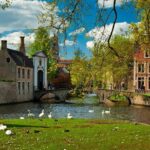
- Bruges First Stop: Minnewater (Lake of Love) and Lovers Bridge
- Burg Square, City Hall, and Holy Blood: The Big Medieval Center
- Onze-Lieve-Vrouwekerk and Ten Wijngaarde: A Breather Between Main Stops
- Optional Bruges Canal Tour: When the Extra Cost Makes Sense
- Timing, Walking Pace, and the One Rule You Should Actually Follow
- Price and Value: Is About $59 a Good Deal?
- Who This Trip Suits Best
- Should You Book This Bruges and Ghent Day Trip?
- FAQ
- What time does the tour start?
- How long is the Bruges and Ghent day trip?
- Is lunch included?
- Where does the tour start and end?
- What time is lunch, and is it fixed?
- Will the guide wait if I’m late?
- Can I book the canal tour in advance?
- Can I change my excursion date?
- Do you cancel tours if it rains?
Key highlights I’d plan around
- Ghent’s St. Bavo’s Cathedral and the Ghent Altarpiece zone with an optional look inside (Mystic Lamb access is not possible on Sundays)
- Gravensteen (Castle of the Counts of Flanders), dating back to 1180, plus St. Nicholas’ Church and the Leie river quay
- Bruges’ Minnewater (Lake of Love) and Lovers Bridge for a romantic pause in the middle of sightseeing
- Burg Square, City Hall, and the Basilica of the Holy Blood—politics and pilgrimage in the same compact area
- Princely Beguinage Ten Wijngaarde as a quieter contrast to the main medieval streets
- Optional canal tour in Bruges (organized with your guide at extra cost)
From Brussels by Coach: Why This Route Works
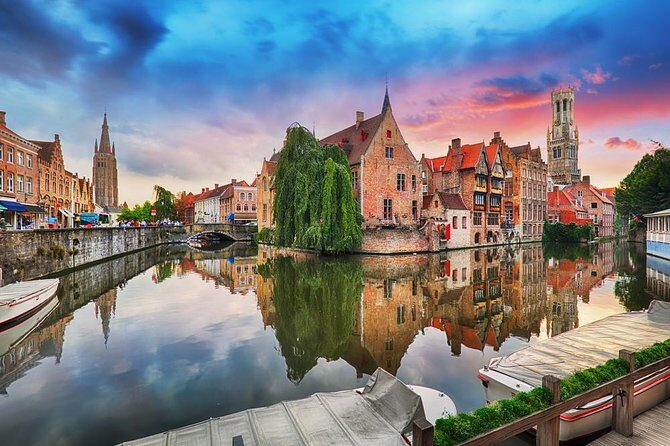
This is a classic “see-the-essentials” day trip, built for people who want two of Belgium’s top medieval cities without juggling trains, timing, and transfers. The coach is air-conditioned, which matters because weather in this region can flip fast—rain, wind, then sudden bright skies.
The flow is also practical. You get a guided start in Ghent, then a guided walking loop in Bruges, with time to wander on your own. You’ll have radios and earphones on walking sections, which changes the experience. Instead of being trapped inside a big group’s shoulder-to-shoulder noise, you can hang back for photos, step aside to read a plaque, or speed up if you’re feeling good.
One thing to know: this is not a slow sightseeing stroll. You’ll cover a lot of ground across both towns, so comfortable shoes are not optional. Moderate fitness helps because you’ll be doing frequent walking on cobbles and around tight old-city streets.
Other Bruges day trips we've reviewed in Brussels

Ghent Arrival: St. Bavo’s Cathedral and the Mystic Lamb Caveat
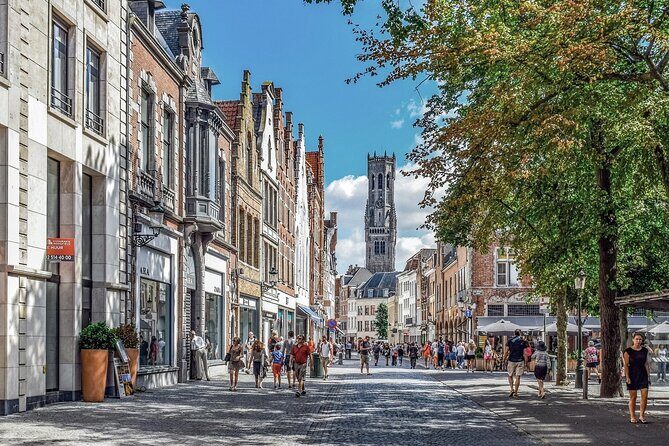
Ghent is the calmer-feeling sibling here: a historic city with big architectural landmarks and a waterfront vibe along the Leie river. The tour starts at St. Bavo’s Cathedral, a Gothic cathedral with an 89-meter profile. It’s the setting for late-medieval treasures, including the famous Ghent Altarpiece.
What I like about beginning here is that it gives you an anchor. From the cathedral area, the rest of Ghent makes more sense—why the city mattered, what people built, and how church power shaped daily life.
Entrance is listed as optional, with admission ticket free for the included stop. Still, there’s one important planning detail: access to the Mystic Lamb at St. Bavo’s Cathedral is not possible on Sundays. If you’re traveling on a Sunday, you’ll want to set expectations so you don’t leave the cathedral feeling like you missed the main attraction.
Ghent’s Medieval Core: Gravensteen, St. Nicholas, and the Leie Quay
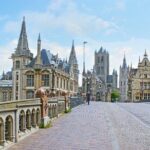
After St. Bavo’s, you’ll move into a guided walking tour through Ghent’s legendary landmarks. The major targets are easy to love: Gravensteen (the Castle of the Counts of Flanders), St. Nicholas’ Church, and the old river quay area (the kind of waterfront view you remember long after you leave).
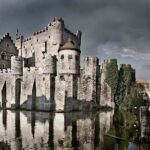
Gravensteen is one of those places where you can feel the layers of time. The current castle dates to 1180, and it served as a residence for the Counts of Flanders until 1353. After that, it was reused in different ways—court, prison, mint, and even a cotton factory. Even if you only get a look from the outside, the story helps you see it as more than a pretty fortress.
St. Nicholas’ Church is another anchor. It’s known as one of Ghent’s oldest prominent landmarks, started in the early 1200s to replace an earlier Romanesque church. If you like architecture that looks tough, purposeful, and built to last, this stop will land well.
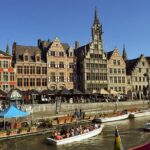
You’ll also pass by a quay in Ghent’s historic center on the right bank of the Leie. That river-side setting gives you breathing space between major monuments and is a good moment to slow down for photos. If the day is windy or drizzly, this is also where you’ll want to have a waterproof layer.
The Countryside Drive: The Between-Cities Reset
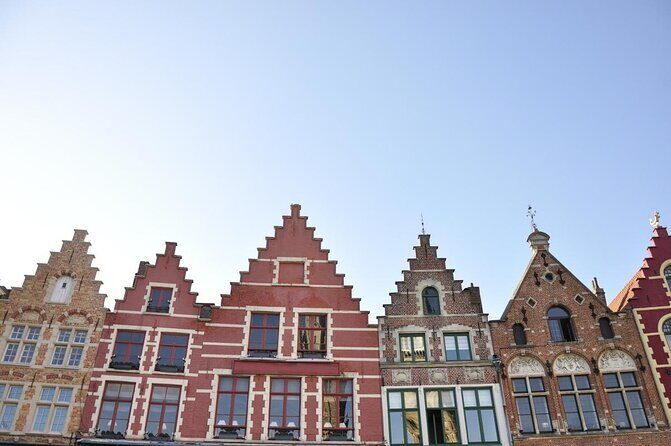
Between Ghent and Bruges, you’ll travel by coach through Belgian and Flemish countryside. This “in-between” time does something useful. It resets your brain after one dense historic center, then helps you arrive in Bruges ready to walk instead of mentally collapsing.
Practically, it also gives you a chance to check your day plan: where you want to spend your free time, whether you’re interested in the optional canal tour, and how you’ll handle lunch break. Since food isn’t included, that quick planning habit can save stress later.
The coach ride is also where you’ll notice how the tour manages group size and listening. With earphones in the bus and during walking, the guide can keep the pace and keep everyone oriented—even when your group is big.
Bruges First Stop: Minnewater (Lake of Love) and Lovers Bridge
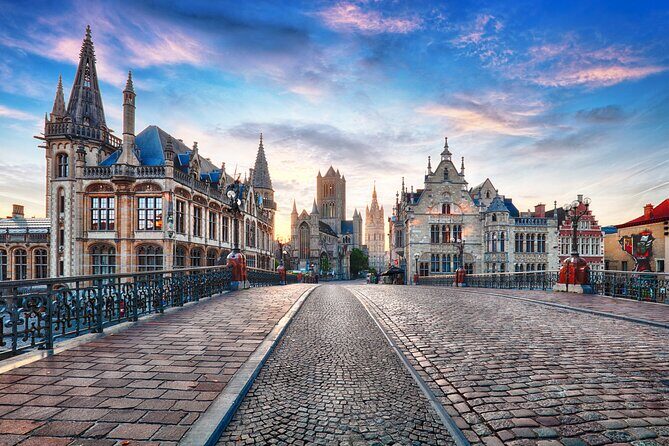
Bruges hits you in the best way: compact, storybook-looking, and very walkable. The tour’s first Bruges moment is Minnewater (Lake of Love), plus the Lovers Bridge area. This is one of those stops that works even if you’re tired—because the setting does the heavy lifting.
The lake zone is peaceful compared to the louder main squares, and it’s an easy place to take a short stroll, make a few photos, and look at the water reflections. The tour gives you a chance to refresh with lunch at a café overlooking the lake (own expense). If you’re choosing where to eat, this is the kind of location where convenience beats hunting for a bargain—just be aware that prime views often mean higher prices.
Even if you don’t go for lunch immediately, plan to use Minnewater as your “reset corner.” It’s a smart way to transition from Ghent’s monuments into Bruges’ flatter, more strolling-based streets.
Other Ghent day trips we've reviewed in Brussels

Burg Square, City Hall, and Holy Blood: The Big Medieval Center
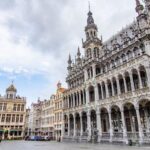
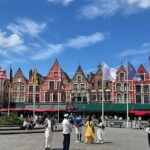
Once you’ve had your lake moment, the tour shifts into Bruges’ heart: Burg Square, Stadhuis (City Hall), and the Basilica of the Holy Blood.
Burg Square is the political center of Bruges, and the architecture mix here is the point. You’ll see buildings that feel designed to impress—this is where you should slow down if you like façade details, stonework, and dramatic scale.
The City Hall (Stadhuis) sits in Burg Square. It’s described as one of the oldest city halls in the Netherlands region. That matters because it helps you understand Bruges as a civic power center, not just a tourist wallpaper town.
Then there’s the Basilica of the Holy Blood. This is the religious-and-legend stop: it houses a venerated relic of the Holy Blood, with an origin story tied to Joseph of Arimathea and a bring-it-from-the-Holy-Land claim associated with Thierry of Alsace. Even if you’re not religious, the reason this basilica is famous is simple: people have traveled for it for a long time, and it shaped Bruges’ identity.
Onze-Lieve-Vrouwekerk and Ten Wijngaarde: A Breather Between Main Stops
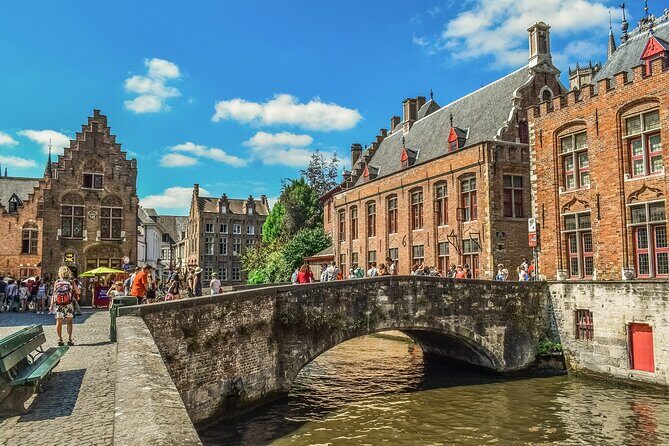
Two stops give Bruges texture beyond the squares: Onze-Lieve-Vrouwekerk and the Princely Beguinage Ten Wijngaarde.
Onze-Lieve-Vrouwekerk (Church of Our Lady) dates mainly from the 13th, 14th, and 15th centuries. Its tower is 115.6 meters, and it remains the tallest structure in the city. If you’re looking for a “look up” moment, this is your one. It’s also a reminder that Bruges’ skyline used to be dominated by religious and civic building heights.
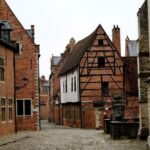
Then Ten Wijngaarde. A beguinage is a specific kind of community tied to religious life without being a typical convent structure. Princely Beguinage Ten Wijngaarde is described as the only preserved beguinage in Bruges. No beguines live there anymore, but since 1927 it’s used as a convent for Benedictines. This stop is perfect when the rest of Bruges feels too fast. You get a quieter, more reflective scene right in the middle of the historic core.
Optional Bruges Canal Tour: When the Extra Cost Makes Sense
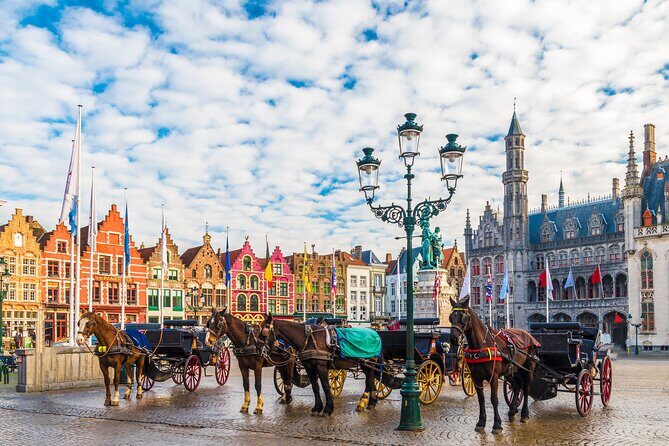
Bruges is famous for its canals, and the tour offers an optional boat tour at extra cost. You won’t be stuck doing it—you’ll have time for the historic center first, including a chance for this canal view option.
I like canal tours here because they solve a common problem: old towns can look flat from street level. On the water, the buildings line up differently, and you see angles you can’t easily replicate on foot. If your day feels rushed, the canal tour is also a way to get a “big picture” feeling without adding more walking distance.
That said, it’s extra money. If you’re watching your budget, prioritize your own walking time in the main medieval streets first, then decide if the boat adds value for you.
Timing, Walking Pace, and the One Rule You Should Actually Follow
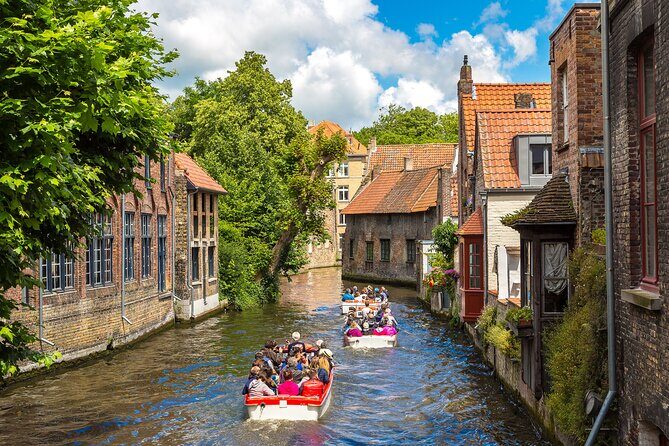
This tour is structured, and the structure is the whole point. Still, structure has edges.
First, your walking pace matters. You’ll be moving through both Ghent and Bruges, with short stops and small “look around” windows. The tour also recommends comfortable walking shoes because cobblestones and tight turns can be tough on tired feet.
Second, be on time. The tour notes that it cannot accommodate latecomers. The FAQ also says they can wait 5 minutes if you let them know in advance and call. So don’t gamble. If you’re taking transit, build in extra buffer time.
Third, language switching can affect your enjoyment. The tour may include bilingual commentary, and guides may switch among English, Spanish, and/or French depending on guest language needs. If you’re easily annoyed by repeated instructions in multiple languages, plan for that possibility. It’s not a failure of the guide—it’s a symptom of running one tour for mixed-language groups.
Price and Value: Is About $59 a Good Deal?
At $59.13 per person, you’re paying for a full-day bundle: coach transportation, a professional guide, and radios/earphones that help you keep hearing the commentary while walking. You’re also getting a guided introduction to major sights in both cities, so you’re not piecing together your own route from scratch.
Lunch is not included, and the canal tour is extra—so yes, your total cost can rise once you add meals and optional activities. But even with that, the value tends to be strong if you’re staying in Brussels and you want maximum sightseeing density.
For me, the biggest value signal is the radios/earphones. That’s the difference between a guided day you can enjoy and a guided day where you’re stuck trying to hear through crowds. If you like your own pace—photos, side streets, and quick breaks—this setup supports that.
Who This Trip Suits Best
This tour is ideal if you:
- Want a fast, guided intro to Ghent and Bruges without train logistics
- Like a mix of guided stops plus time to roam on your own
- Appreciate having earphones so you can step out of the pack for a minute
It’s less ideal if you:
- Need lots of uninterrupted free time for browsing shops (the schedule is tight)
- Hate language switching and repetition when groups are mixed
- Have difficulty walking long stretches on cobblestones (the tour notes it’s not recommended for people who have trouble walking)
If you’re traveling with kids, a stroller can work better than you’d expect on a coach day, but old street surfaces can still be challenging. You’ll want to judge based on your child’s tolerance for uneven ground and frequent stop-start moments.
Should You Book This Bruges and Ghent Day Trip?
If your goal is one high-value day that covers both UNESCO centers—without you planning routes—this is a solid pick. The day’s structure is efficient, the coach is comfortable, and the radios help you actually enjoy walking instead of just surviving it.
Book it if you’re comfortable with a long schedule, you’re okay with lunch being on your own, and you’ll treat sightseeing as a “see the highlights” mission. Skip it—or at least reconsider—if you need guaranteed, lengthy independent time in each city, or if language switching would wear you down.
Bottom line: for a first-time Belgium hit from Brussels, this tour gives you two iconic cities in one smooth, guided package.
FAQ
What time does the tour start?
The start time is 9:00 am.
How long is the Bruges and Ghent day trip?
The duration is about 10 hours 30 minutes.
Is lunch included?
Lunch is not included.
Where does the tour start and end?
It starts at Bd de Berlaimont 18, 1000 Bruxelles, Belgium, and ends at Brussel-Centraal, Carr de l’Europe, 1000 Bruxelles, Belgium.
What time is lunch, and is it fixed?
Lunch is usually between 12:00 pm and 2:00 pm, but the timing can change.
Will the guide wait if I’m late?
They can wait for 5 minutes if you let them know in advance about your delay by calling +32 2 513 77 44.
Can I book the canal tour in advance?
No. The canal tour in Bruges can only be booked with your guide on the day of your trip.
Can I change my excursion date?
Yes, you can change your trip to another date depending on availability.
Do you cancel tours if it rains?
No. Tours are only cancelled in extreme weather such as heavy storms or floods.