REVIEW · BRUSSELS
Bruges and Ghent Day Trip from Brussels
Book on Viator →Operated by Buendía · Bookable on Viator
Bruges and Ghent in one packed day. That’s the appeal: you get UNESCO-listed Bruges and Ghent with a guide, plus round-trip transport from central Brussels without doing logistics yourself. I especially like the mix of short guided stops (Minnewater, Belfort tower, St. Bavo Cathedral) and real breathing room for shopping and wandering. One thing to plan for: it’s a lot of walking, with a bus that may park a bit away from the exact tour spots.
What makes this trip work is how structured it feels while still letting you move at your own speed during free time. I love that the guide covers the key sights and stories (including places tied to beer, medieval guild life, and the Van Eyck brothers), and you end with major squares where you can grab snacks and reset. The main drawback to keep in mind is audio and timing: radio-guides may be used in some areas, and several groups report the bus can park about 15 minutes away, so getting back on time matters.
In This Review
- Key highlights to look for on this Bruges and Ghent day trip
- From 8:30 Brussels to two medieval cities: what the day actually feels like
- Meeting point at Carré de l’Europe: the practical logistics that save time
- Bruges guided circuit: Minnewater to Grote Markt without missing the icons
- Bargeplein (Katelijnparking): the reset point
- Minnewater (Lake of Love): the romantic photo start
- Begijnhof: a surprising quiet corner
- Chocolalino: artisan chocolate tasting (and how to tell what’s real)
- Walplein: beer history in the middle of a pretty square
- Stoofstraat + the medieval-house spotting
- The little-bridge photo pause
- Saint John’s Hospital: medieval healthcare, made understandable
- Onze-Lieve-Vrouwekerk (Church of Our Lady): Michelangelo’s Madonna, from the outside
- Gruuthusemuseum area + a powerful family
- Boniface Bridge + the legend
- Quai du Rosaire / Rozenhoedkaai: Bruges’ most photographed riverside
- Huidenvettersplein: tanners and the smell you’d rather not imagine
- Burg Square: Gothic Town Hall and Holy Blood Basilica area
- Markt / Grote Markt: where you end the Bruges tour loop
- Bruges free time: about 1.5 hours
- How to use Bruges free time without feeling rushed
- Ghent guided loop: Town Hall, Belfry dragon, and St. Bavo Cathedral
- Town Hall (Stadhuis): architecture styles explained
- Belfry (Het Belfort van Gent): the dragon story
- St. Bavo’s Cathedral: the Van Eyck masterwork moment
- St. Nicholas Church: church spaces for events
- Masons’ Guild Hall: guild power in stone
- Korenmarkt: the post office past
- Saint Michael’s Bridge: top-tier photo views
- Graslei and Korenlei: the Lys riverbank walk
- OOOST (Great Butchers’): a 15th-century covered market
- Kleine Vismarkt: cuberdon candy stop
- Sint-Veerleplein: final square + beer and souvenirs tips
- Ghent free time: about 1 hour
- Audio, radios, and headphones: how it can help or annoy you
- Walking pace, crowds, and who should choose this tour
- Price and value: what $56.72 buys you for two cities
- Should you book this Bruges and Ghent day trip?
- FAQ
- Where is the meeting point and what time does the tour start?
- How much free time do I get in Bruges and Ghent?
- Do I need headphones for the tour?
- Is food included?
- What big sights are covered in Ghent?
- What happens if the tour is canceled due to weather or too few travelers?
Key highlights to look for on this Bruges and Ghent day trip
- A/C round-trip transport from central Brussels so you’re not fighting trains and transfers
- Guided walking loops in both cities with stops at the big-ticket sights
- Chocolate tasting in Bruges plus practical tips for spotting handmade vs industrial bars
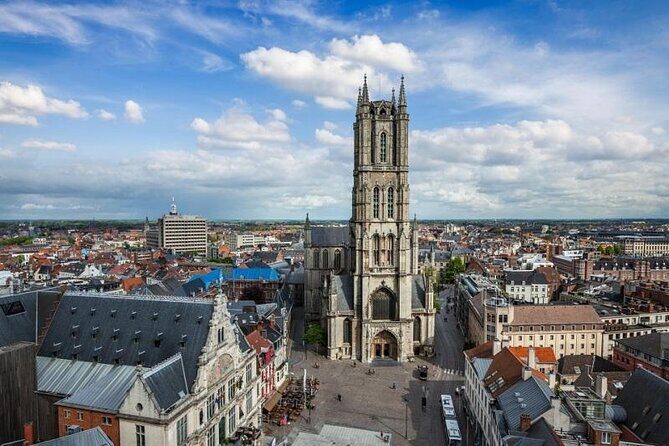
- Cathedral and tower moments in Ghent including St. Bavo’s interior and the Belfry with its dragon legend
- Plenty of photo pull-offs (Quai du Rosaire/Rozenhoedkaai, Boniface Bridge, Saint Michael’s Bridge, Ghent riverfront)
- Short but frequent guided stops that keep you moving, then longer free time blocks to eat and shop
From 8:30 Brussels to two medieval cities: what the day actually feels like
This is a true day trip, starting in Brussels at 8:30 am and returning back to the same meeting point. Expect about 10 hours total, with two guided walking tours and two chunks of free time. The pace is designed for “big sights without getting stuck commuting,” but it’s not a slow stroll.
You’ll spend the morning in Bruges and the afternoon in Ghent, with a bus ride in between. If you like your travel days organized—clear starting points, clear meeting times, and someone else handling the route—this setup tends to feel relaxing. If you hate tight timing, plan your expectations around cobblestones, crowded streets, and the fact that free time is useful but not huge.
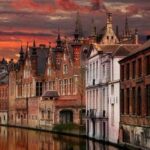
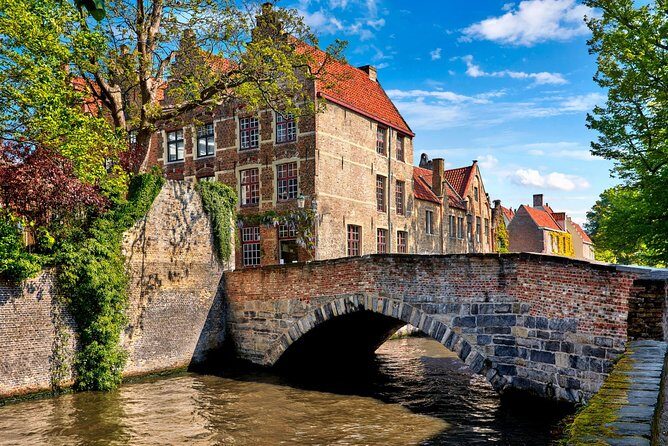
A good example of why timing matters: Bruges has that classic, postcard-perfect canal and bridge look, but you’re sharing space with crowds. The trip moves fast enough to show you the key areas, then gives you enough free time to make the day feel worth it.
Other Bruges day trips we've reviewed in Brussels
Meeting point at Carré de l’Europe: the practical logistics that save time
You meet at Carrefour de l’Europe (Carré de l’Europe), 1000 Bruxelles. It’s a central spot near public transportation, which matters because a day trip like this lives and dies by “don’t be late.”
Bring water and plan for a morning bathroom stop. The itinerary includes a scheduled break at the Bruges departure point (Bargeplein / Katelijnparking) where the guide checks when you must be back. Several groups also mention that the bus may park around 15 minutes away from the exact walking areas in both cities. That doesn’t break the trip, but it means you should always assume you may need a little extra walking to reach the pickup zone.
One extra tip: make sure you board the correct bus. Some departures happen from the same meeting area, and getting on the wrong one is an easy mistake on a busy morning.
Bruges guided circuit: Minnewater to Grote Markt without missing the icons
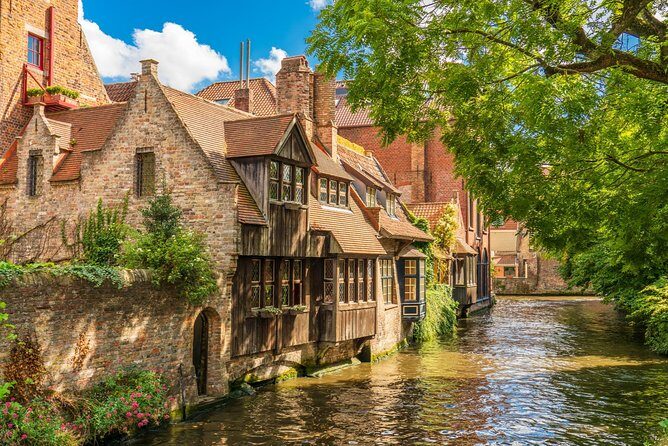
Bruges is where the tour front-loads the “wow” stuff. You’re dropped into the city and given a guided route that hits both scenic canals and important landmarks—often within 5 to 10 minute segments. That structure is helpful if you want the highlights without paying museum tickets or buying multi-day passes.
Here’s what each Bruges stop adds, and where you should pay attention:
Bargeplein (Katelijnparking): the reset point
This first stop is mostly practical. You get about 10–15 minutes to handle basics like bathrooms before the walking tour starts. The guide tells you what time to return to the bus, which is key if you don’t want to lose time later.
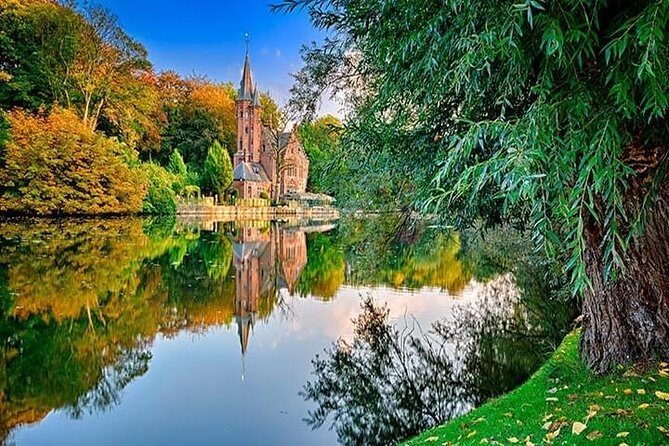
Minnewater (Lake of Love): the romantic photo start
Minnewater is your first scenic backdrop. The guide ties it to Bruges storytelling, including the famous love legend associated with the lake. It’s short (about 5 minutes), but it’s a strong way to set the tone for Bruges right away.
Other Ghent day trips we've reviewed in Brussels
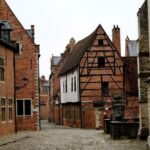
Begijnhof: a surprising quiet corner
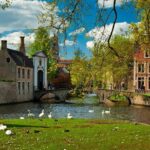
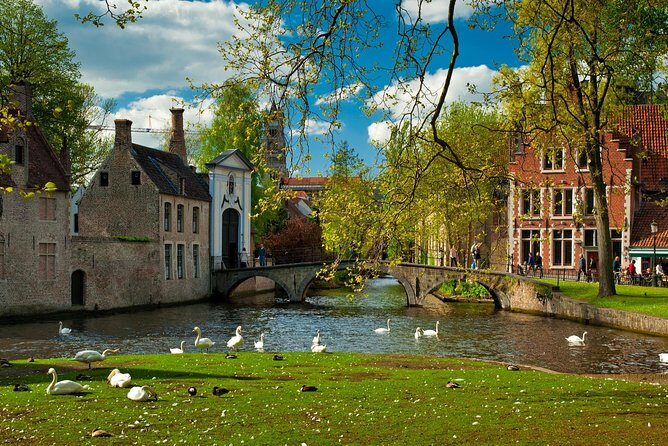
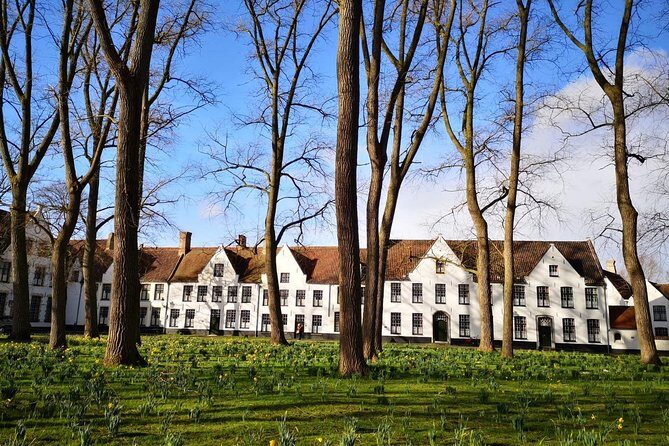
The Begijnhof, founded in 1245, is where you get a glimpse of a historic community created for women. This stop is brief, but it often feels like a breath of calm after busy streets.
Chocolalino: artisan chocolate tasting (and how to tell what’s real)
This is one of the most “you’ll remember this” moments. You get a taste at a certified artisan chocolate shop, and the guide explains how to spot handmade chocolate versus industrial versions. Even if you’re not a huge chocolate shopper, this is a practical mini lesson—then you can shop smarter during free time.
Walplein: beer history in the middle of a pretty square
Walplein is where the guide connects Bruges to beer culture. It’s a short stop, but it adds context so the city feels less like frozen-in-time scenery and more like a working place with trades and industries.
Stoofstraat + the medieval-house spotting
Stoofstraat is a quick lesson in how to recognize older medieval architecture. It’s not just sightseeing; it’s training your eye.
The little-bridge photo pause
There’s a dedicated moment for photos from a small bridge. Bruges lives on details like this, and it helps you get a few postcard images without rushing later.
Saint John’s Hospital: medieval healthcare, made understandable
Outside Old St. John’s Hospital, the guide explains how health care worked in medieval Bruges. This stop is short, but it adds depth beyond canals and buildings.
Onze-Lieve-Vrouwekerk (Church of Our Lady): Michelangelo’s Madonna, from the outside
From the outside, the guide points out the church’s connection to the white marble Madonna and Child by Michelangelo, which is inside. You don’t spend long here, but it’s a great “I saw the connection” moment.
Gruuthusemuseum area + a powerful family
At the Gruuthuse area, the guide talks about the family that dominated Bruges between the 1600s and 1700s. This is the kind of context that makes the city’s grand facades feel purposeful instead of decorative.
Boniface Bridge + the legend
Boniface Bridge is both scenic and story-driven. You get time to take photos and hear the bridge’s legend.
Quai du Rosaire / Rozenhoedkaai: Bruges’ most photographed riverside
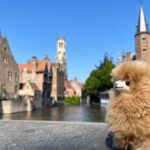
This is one of the best places for photos. The guide explains the background of the Pier of the Roses. Short stop, but it lands because the view is iconic and the guide gives you a reason to look closely.
Huidenvettersplein: tanners and the smell you’d rather not imagine
This is where you learn about tanners in medieval Bruges. It’s a small stop, yet it connects to the city’s trade history—useful if you like understanding what people actually did.
Burg Square: Gothic Town Hall and Holy Blood Basilica area
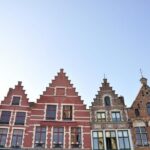
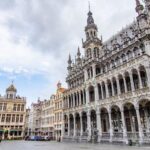
Burg Square is where the architectural big guns show up: Gothic Town Hall, the Old Court House, and the Basilica of the Holy Blood. The stop is about 10 minutes, so it’s a quick sweep rather than a deep visit.
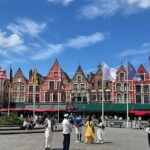
Markt / Grote Markt: where you end the Bruges tour loop
The guided portion ends around Grote Markt. The guide explains key buildings around the square and offers shop and food tips—especially for Belgian chocolate. They also remind you when to get back to the bus for the transfer to Ghent.
Bruges free time: about 1.5 hours
Then you get about 1.5 hours of free time in Bruges (depending on traffic and group pace). This is where you can do a sit-down lunch if you plan it right, buy chocolate, and explore the parts you liked most.
How to use Bruges free time without feeling rushed
This is the part that makes or breaks the day for many people. The guided loop gives you the structure and the context, but Bruges shopping and lunch take time—especially if it’s cold or if the streets are crowded.
I’d use this free window like this:
- Chocolate first or lunch first? If you’re serious about chocolate shopping, hit it soon after the guided portion ends. Lines and crowds build.
- Pick one “long linger” spot. For most people, it’s the canal areas or near the Grote Markt. Don’t spread yourself across three neighborhoods unless you enjoy speed-walking.
- Build in a safety margin. Since the bus pickup and parking may not be right next to the exact tour points, return a few minutes early.
One warning from experience-shaped comments: 1.5 hours can feel tight for a proper sit-down meal plus full chocolate browsing. If you want a leisurely lunch, choose a casual place you can actually get served quickly.
Ghent guided loop: Town Hall, Belfry dragon, and St. Bavo Cathedral
After Bruges, the bus ride moves you to Ghent. You arrive and walk to the center for the guided portion. Ghent often feels more compact and easier to manage on foot than Bruges, which is a big reason people end up liking the second half of the day.
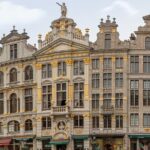
Town Hall (Stadhuis): architecture styles explained
You start at the Ghent Town Hall area. The guide explains the building’s architecture in a quick, understandable way. Even from outside, it helps you read what you’re seeing.
Belfry (Het Belfort van Gent): the dragon story
The Belfry is one of Ghent’s most iconic towers. The guide includes the story around its dragon, which gives you a reason to look up instead of walking past it.
St. Bavo’s Cathedral: the Van Eyck masterwork moment
At St. Bavo’s Cathedral, you get outside and inside time focused on the Van Eyck brothers’ Adoration of the Mystic Lamb. The tour also notes it as the most stolen painting in history, which adds extra punch to what you see. This is one of the best “stop and slow down” points in the day.
St. Nicholas Church: church spaces for events
A short stop outside St. Nicholas Church highlights that Belgian churches can host concerts and other events. It’s a quick conversation, but it helps you understand how these buildings stay alive, not just museum pieces.
Masons’ Guild Hall: guild power in stone
At the Masons’ Guild Hall, the guide explains guild houses and points out what makes this one distinctive. This stop pairs well with the Ghent riverfront, because you can connect people, wealth, and the city’s shape.
Korenmarkt: the post office past
At Korenmarkt, you hear about the building’s history as a former post office. It’s the kind of detail that makes Ghent feel like a real city with layers, not just a backdrop.
Saint Michael’s Bridge: top-tier photo views
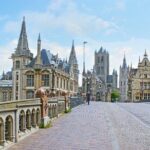
You get time on Saint Michael’s Bridge for photos, plus a story about the tower of Saint Michael’s Church. This one is worth slowing down for, because the view is dramatic.
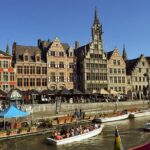
Graslei and Korenlei: the Lys riverbank walk
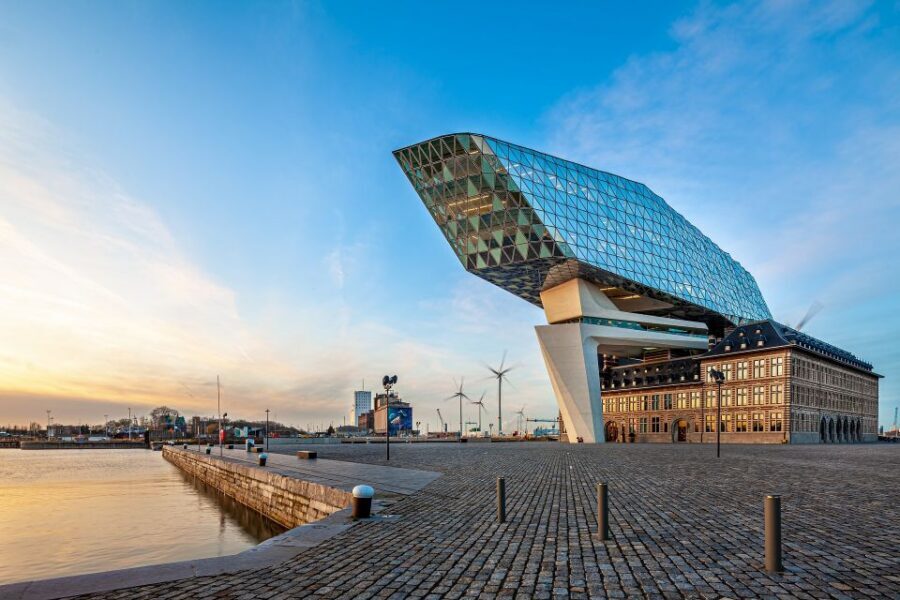
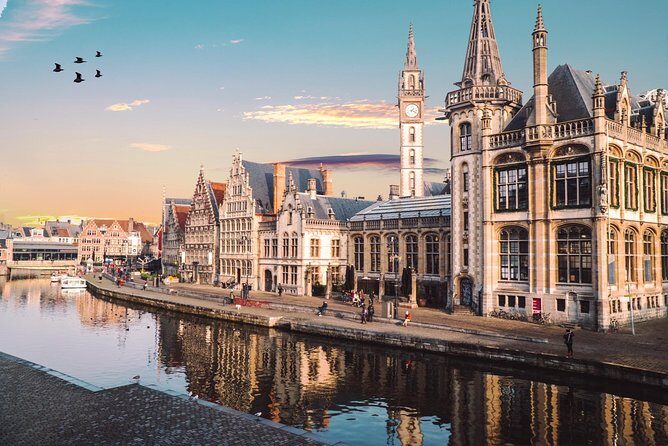
You follow the Lys riverbank through Graslei and Korenlei. The guide calls out notable buildings along the water, including the Masons’ Guild House and even a modern landmark view reference. This is a great stretch for pictures—especially if you enjoy symmetry and riverside architecture.
OOOST (Great Butchers’): a 15th-century covered market
At OOOST, the stop notes the Great Butchers dates back to the 15th century and was originally a covered market. It’s a nice “trades built the city” moment.
Kleine Vismarkt: cuberdon candy stop
At Kleine Vismarkt, there’s a small market-stall moment tied to cuberdon, Ghent’s well-known candy. You don’t need to buy anything, but it’s a fun local flavor break that fits the day.
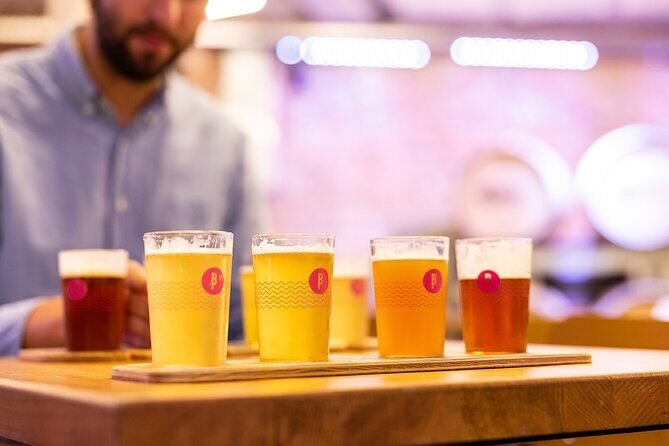
Sint-Veerleplein: final square + beer and souvenirs tips
You end the guided portion at Sint-Veerleplein, where the guide explains the square and gives practical tips for beer and souvenir shopping, plus when and where to meet the bus.
Ghent free time: about 1 hour
Finally you get about 1 hour in Ghent to explore on your own. Ghent’s layout can help you use that time well: you can focus on one zone (riverfront, old-town streets, or a café) and still feel like you covered the essentials.
Audio, radios, and headphones: how it can help or annoy you
This tour may use radio-guides in some areas due to regulations. You’re allowed to use your own wired 3.5 mm jack headphones, or you can buy disposable headphones for €1.
This detail matters because it affects group flow. When radios work, the guide’s instructions and storytelling stay clear as you move between crowds. When they don’t, you can end up separated or unsure which turn comes next. One group specifically complained about headset static, so if you’re sensitive to audio, I’d show up with your own wired headphones to avoid the disposable option.
Also, don’t assume the guide will always call out verbally in the street noise. Many guides rely on the radio channel, so keep an ear free and watch where the group is heading.
Walking pace, crowds, and who should choose this tour
This is not a “wheelchair-friendly stroll” style tour. It’s walking-heavy, and cobblestones are part of the deal in both Bruges and Ghent. Several comments strongly point this out: wear comfortable shoes and plan for uneven ground.
Group size is kept to a maximum (45), and some groups reported smaller numbers like around 28, which generally makes it easier to stay together. Still, you’re moving through two of Belgium’s most touristed cities, so crowds are normal—especially in the holiday season.
This day trip fits you best if:
- You want an organized overview of both cities without planning a whole route
- You like learning short, story-based connections between sights
- You’re okay with frequent stops and a guided pace, then self-guided time blocks
It’s less ideal if you hate group navigation, dislike crowded streets, or need long sit-down breaks to enjoy travel. One regret that repeats in spirit is that free time can feel a bit short for people who want a relaxed lunch plus slow wandering.
Price and value: what $56.72 buys you for two cities
At about $56.72 per person, the best value part isn’t just the sightseeing—it’s the combination:
- Guided walking in both Bruges and Ghent
- Round-trip A/C transport from central Brussels
- A schedule that gets you to key sights efficiently
You still pay for your own food and drinks, and you may want to budget for headphones if you don’t bring your own. But for a two-city day trip, this price often feels fair because you’re not paying two separate city tour packages plus transport planning.
The big value question is match: if you’re the kind of traveler who uses guided time to learn and then uses free time to wander, the day feels worth it. If you want deep museum time and long independent exploration, you might feel rushed and decide you’d rather do it on your own another day.
Should you book this Bruges and Ghent day trip?
I’d book it if you want a structured, high-yield day from Brussels and you’re happy to trade a little freedom for efficiency. The strongest moments tend to be the “how it all connects” guided stops: artisan chocolate in Bruges, the medieval healthcare and guild stories, then in Ghent the cathedral interior and the riverfront views.
I’d skip it (or pick a different style) if you’re very sensitive to audio issues, strongly dislike group logistics, or you want a slow, sit-down lunch and long wandering in Bruges. In that case, you’ll probably do better with a two-day plan or an independently timed itinerary.
One last practical note: guides you may run into—like Angie (Angela), Antonio, Blanca, or JC (Harris)—have been praised for keeping people engaged and giving good local recommendations. Still, the day’s success depends more on your footwear, your timing discipline, and your ability to work with a group pace than on any single personality.
FAQ
Where is the meeting point and what time does the tour start?
You meet at Carrefour de l’Europe (Carré de l’Europe), 1000 Bruxelles, Belgium, and the tour starts at 8:30 am.
How much free time do I get in Bruges and Ghent?
You get about 1.5 hours free time in Bruges and about 1 hour free time in Ghent (timing can vary depending on traffic and the group’s pace).
Do I need headphones for the tour?
The tour may use radio-guides in some places. You can bring wired headphones with a 3.5 mm jack (not wireless), or you can buy disposable headphones for €1.
Is food included?
No. Food and drinks are not included. The guide will suggest places to eat.
What big sights are covered in Ghent?
You’ll see and hear about key landmarks including Ghent Town Hall (Stadhuis), the Belfry (Het Belfort van Gent), and St. Bavo’s Cathedral, where the Van Eyck brothers’ Adoration of the Mystic Lamb is kept.
What happens if the tour is canceled due to weather or too few travelers?
The tour can be canceled due to poor weather, and in that case you’ll be offered a different date or a full refund. If the minimum number of travelers isn’t met, you’ll also be offered a different experience/date or a full refund.