REVIEW · BRUSSELS
Flanders Fields Remembrance Tour from Brussels
Book on Viator →Operated by Brussels City Tours - Keolis Travel · Bookable on Viator
Trenches and names. One long, moving day. I like how this Flanders Fields tour pairs major WWI sites with real, human details, and I especially enjoy seeing Käthe Kollwitz’s Grieving Parents in Vladslo and then watching the Menin Gate Last Post in Ypres. The drawback is simple: it’s a long day (about 13 hours), so plan for extended coach time and tight turnarounds between stops.
You’ll start in central Brussels at 9:15 am, then ride in an air-conditioned coach to the Ypres area. The best part is the structure: you get guided context before you walk among the graves and memorials, not after. This is also a good size group day, capped at 100 people, which helps keep the experience orderly even when the subject matter isn’t.
In This Review
- Key points at a glance
- A WWI day trip with the right rhythm from Brussels
- Vladslo German Military Cemetery and Käthe Kollwitz’s Grieving Parents
- What to watch for
- Diksmuide and the Brooding Soldier: the Canadian gas-attack link
- Flanders Fields Museum: war as a lived, awful daily reality
- Practical tip
- Passchendaele: seeing how a battlefield becomes a town
- The way to enjoy it
- Tyne Cot Commonwealth War Graves Cemetery: scale that overwhelms
- How I’d plan your visit
- Essex Farm Field Hospital: bunkers, In Flanders Fields, and John McCrae
- Hill 60 tunnels: strategy you can almost picture
- Ypres time and the Menin Gate Last Post ceremony at 8 pm
- Best way to handle the emotional weight
- What the full day costs in time—and how to make it easier
- Price and value: $113.72 for a hard-to-replicate route
- The biggest pros, and the one thing to plan around
- Should you book this Flanders Fields Remembrance Tour?
- FAQ
- What time does the tour start, and where do I meet?
- Is lunch included in the price?
- Does the tour include hotel pick-up and drop-off?
- Are the coaches air-conditioned?
- Is there free time during the day?
- Can I change the date of my excursion?
Key points at a glance
- Grieving Parents at Vladslo: Käthe Kollwitz’s sculpture in a German military cemetery.
- Diksmuide memorial stop: the Brooding Soldier and the Canadian story tied to the first gas attack.
- Tyne Cot Commonwealth Cemetery: the scale of remembrance across tens of thousands of names.
- Essex Farm Field Hospital + John McCrae: the connection to In Flanders Fields.
- Ypres in the evening: free time in town, then the Menin Gate Last Post ceremony.
A WWI day trip with the right rhythm from Brussels
This tour is built for one thing: helping you understand the WWI story in the Ypres Salient using places you can actually stand on. You don’t just see monuments. You move from German and Commonwealth cemeteries to battlefield sites and then back into a living ritual of remembrance at the end of the day.
The tour runs about 13 hours, and that matters. A long day can sound like a bad trade—until you realize WWI sites are spaced out, and many are quiet, respectful places where timing is part of the experience. You’ll also have radios/earphones when needed, which is a real quality-of-life upgrade on long coach days and windy outdoor memorials.
Other WWI Flanders Fields tours from Brussels

Vladslo German Military Cemetery and Käthe Kollwitz’s Grieving Parents
This is one of the stops that tends to hit people hardest for a reason. Vladslo’s German Military Cemetery is calm and grounded—rows of graves, careful landscaping, and no showy distractions. It’s a place that reminds you WWI didn’t only belong to one side, even though the war is often told through national lenses.
The main draw is the sculpture called Grieving Parents by Käthe Kollwitz. It’s the kind of artwork that stops your brain from rushing. Instead of learning history only as a list of events, you start to feel the cost: grief shaped into stone.
What to watch for
- You’ll want to slow down here. Plan for a quiet walk and a couple minutes standing still.
- Wear shoes you trust. Cemeteries are respectful, but that also means you’ll be on uneven ground in places.
Diksmuide and the Brooding Soldier: the Canadian gas-attack link
After Vladslo, you head to Diksmuide for a different kind of memorial moment. The star stop is the monument of the Brooding Soldier, dedicated to the sacrifice of 2,000 Canadian soldiers during the first German gas attack.
I like this stop because it forces a fuller view of the battlefield. The name Diksmuide might not be the first thing you’d Google before traveling, but that’s part of why this tour works. It gives context about how the fighting shifted and how new horrors—like gas—changed the war’s nature.
Flanders Fields Museum: war as a lived, awful daily reality
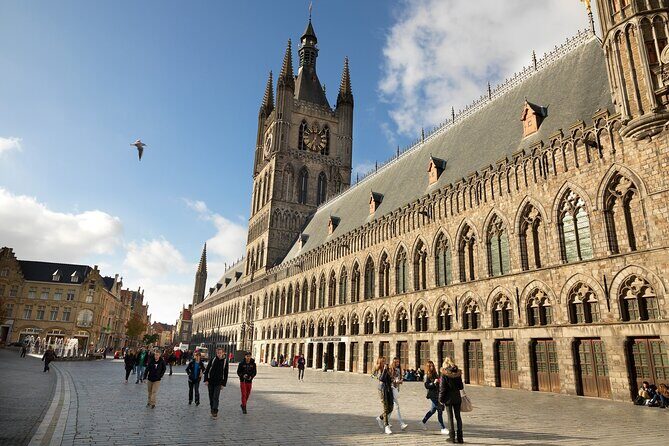
Next comes the Flanders Fields Museum, where the story gets grounded in what soldiers actually endured. The focus isn’t only strategy and dates. You get explanations about how the catastrophe developed and what conditions soldiers faced, including the damp, brutal reality of trench life.
If you tend to learn best when you can connect a site to a narrative, this is a key stop. By the time you reach the cemeteries later, you’ll recognize themes and understand why the terrain mattered so much.




Practical tip
Lunch isn’t included, but you do get a break around this point in the day. So before you go, decide where you’ll eat during that free time or keep expectations flexible.
Passchendaele: seeing how a battlefield becomes a town
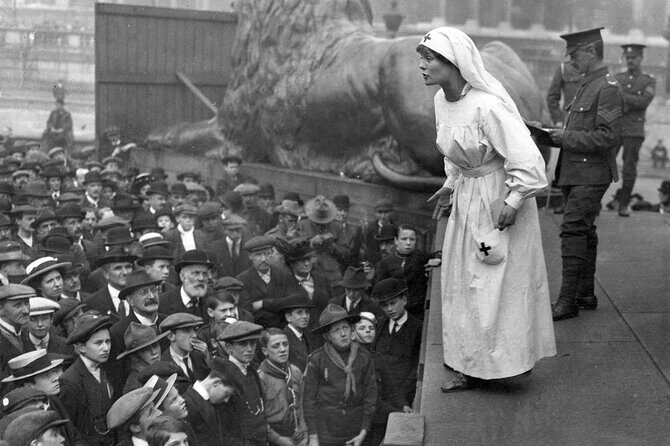
Passchendaele is where the war story gets weird in a good way. You visit the battlefield area, and then you spend time absorbing how something radically changed over time—how a bloody front eventually became a quiet place where everyday life resumes.
This stop helps you avoid one common trap: treating WWI as frozen in time. Being at Passchendaele shows you that landscapes recover, even if the memories don’t.
The way to enjoy it
Bring patience for walking and standing. Even when it’s not hard hiking, battlefield areas ask for attention, not speed.
Tyne Cot Commonwealth War Graves Cemetery: scale that overwhelms
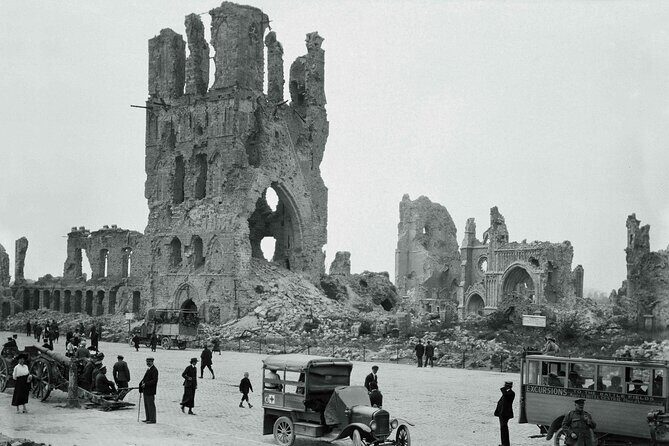
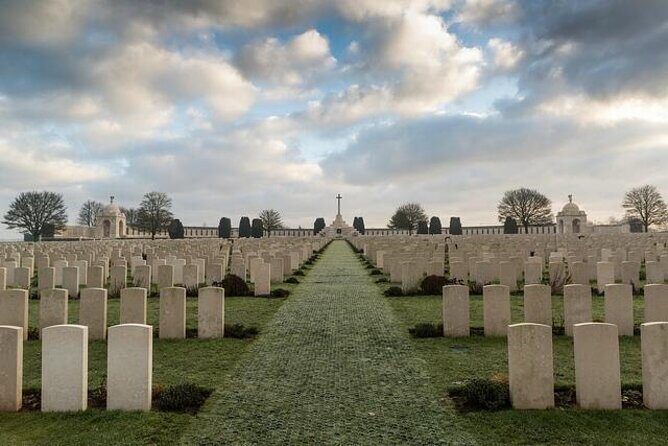
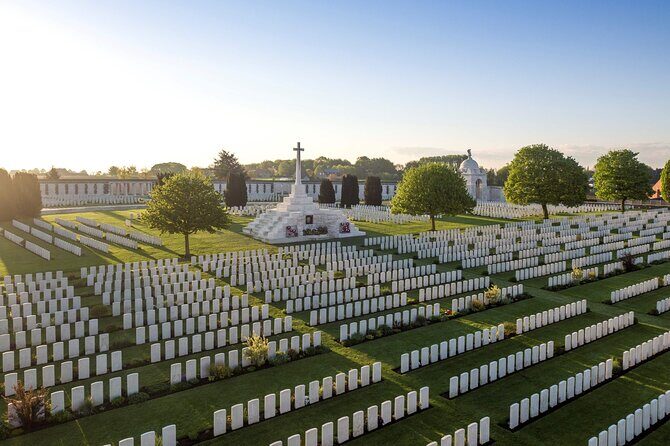
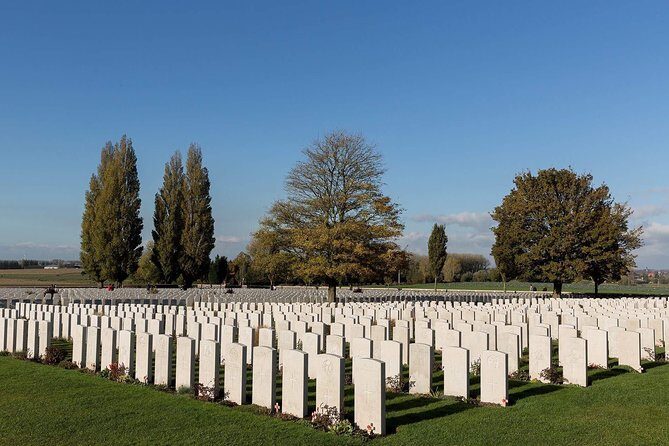
Tyne Cot is the big Commonwealth cemetery stop. It’s described as the largest Commonwealth cemetery in the world, and the scale is hard to grasp until you’re there: tens of thousands of graves, with 35,000 specifically highlighted in the tour material.
This is one of those places where you’ll feel two things at once. First, the physical pattern of graves—rows that create a rhythm. Second, the personal absence behind each marker. The guided context matters here because it helps your eyes “read” the site instead of just scanning it.
How I’d plan your visit
- Don’t rush to the biggest view. Let the rows sink in.
- If you’re prone to emotional burnout, take short breaks. You’ll get them automatically, because the site invites pause.
Essex Farm Field Hospital: bunkers, In Flanders Fields, and John McCrae
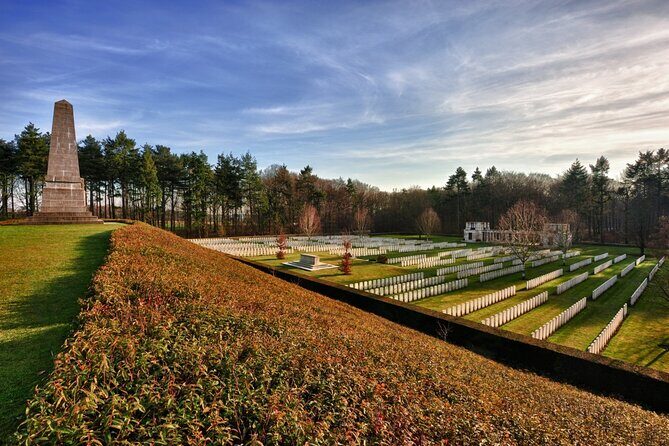
Then you move to Essex Farm Field Hospital, tied directly to one of the most famous WWI poems: In Flanders Fields by John McCrae. The tour focuses on the dressing-station setting and the bunkers that inspired the poem.
I love this stop for its clarity. It takes the grief and turns it into words people can carry across generations. You’re not just hearing about suffering; you’re learning how an observer turned chaos into a message about remembrance.
Hill 60 tunnels: strategy you can almost picture
Hill 60 is another memorable stop because it adds a different layer: engineering and movement under the surface. You’ll visit strategic tunnels, which helps explain that WWI wasn’t only about what you saw above ground. A lot happened out of sight, often in cramped, difficult conditions.
This stop gives balance to all the cemetery time. It widens the story from mourning to action—still tragic, but more complete.
Ypres time and the Menin Gate Last Post ceremony at 8 pm

You’ll reach Ypres and get some independent time before the evening ceremony. This is important. Even a strong guide can only do so much in a schedule packed with heavy stops. The break lets you breathe, find something to eat, and walk streets at your own pace—dinner is at your own expense.
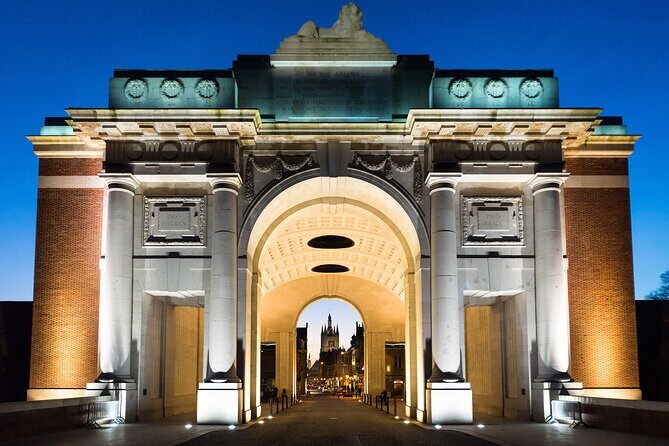
Then it’s Menin Gate for the Last Post Ceremony. This daily tribute is for Commonwealth soldiers and officers who were missing after battle. The service is simple and quiet, and that’s part of what makes it so effective. It’s not a show. It’s an acknowledgment that the war’s losses weren’t tidy, and many families never got closure.
One practical note: the ceremony itself can feel short, even when the moment is long in your head. Plan to arrive with calm focus and be ready for a brief sequence that lands like a punch.
Best way to handle the emotional weight
If you’re the type who gets overwhelmed, don’t fight it. Let the ceremony be the emotional peak. Then treat the return ride as recovery time.
What the full day costs in time—and how to make it easier
This is a long day: about 13 hours total, starting at 9:15 am and ending back in Brussels after the evening event. That means you should pack like you’re on a school trip that happens to be about history’s worst century.
Here’s what helps most:
- Wear comfortable shoes for cemetery walks and battlefield standing.
- Dress for weather. Have a rain layer. It’s Flanders.
- Bring patience for bus time. You’re trading speed for depth.
The tour says it’s best for travelers with moderate physical fitness. That’s usually code for: you’ll be on your feet more than you think, but it isn’t extreme climbing.
Coach comfort is also part of the value. The vehicle is air-conditioned, and the tour includes transportation plus a professional multilingual guide, along with radios/earphones when needed.
Price and value: $113.72 for a hard-to-replicate route
At $113.72 per person, this isn’t a cheap afternoon. But you’re paying for something that’s hard to DIY comfortably: a guided, structured loop through multiple high-impact sites plus an evening ceremony.
Your money goes into:
- Expert guided interpretation across several locations
- Air-conditioned coach transport for a full day
- A capped group size (up to 100), which helps keep the schedule workable
- Mobile ticket convenience and on-board systems like radios when needed
Where you’ll feel the cost most is not the ticket. It’s the time and the day plan pressure. You also pay for lunch, and dinner in Ypres is your own expense. Still, if your goal is to experience Flanders WWI in one tight circuit from Brussels, this price can be fair because it avoids the big headache: coordinating distance, timing, and the Last Post ceremony.
The biggest pros, and the one thing to plan around
The most praised strength here is the guide. When the tour is led by people like Stefan or Dietrich, the storytelling tends to land well—clear, absorbing explanations that make places feel connected rather than random.
You also get real emotional payoff. Grieving Parents, the scale of Tyne Cot, and the Last Post ceremony create a sequence that feels intentional. It’s not just “see a cemetery.” It’s see a story move from grief to context to remembrance.
The one consideration to take seriously is the schedule weight. Even when everything is handled well, this is a long ride with many stops. A few departures can include extra road time for participant pick-ups and drop-offs, which can make the afternoon feel more like travel than sightseeing. If you hate delays, bring a flexible mindset.
Should you book this Flanders Fields Remembrance Tour?
I think you should book if you want a guided WWI day that connects the major Commonwealth and German remembrance sites in the Ypres area, and you’re willing to give the day your full attention. This is also a great choice if you care about meaning: the tour’s best moments aren’t the scenic ones. They’re the quiet ones.
Skip it if you need a short day, or if long coach hours will drain you quickly. Also be honest about your walking tolerance. Cemeteries and memorial grounds mean steady feet and some standing, even though it isn’t a strenuous trek.
If you do book it, go in knowing the emotional tone. Bring your patience, take the pauses seriously, and don’t try to “power through” the Last Post moment. Let it land.
FAQ
What time does the tour start, and where do I meet?
The tour starts at 9:15 am at Bd de Berlaimont 18, 1000 Bruxelles, Belgium. The end point is Brussel-Centraal Carr de l’Europe, 1000 Bruxelles, Belgium.
Is lunch included in the price?
No. Lunch is not included. You’ll have time for meals during the day, but you pay your own food costs.
Does the tour include hotel pick-up and drop-off?
No. Hotel pick-up and drop-off are not included. You meet at the address on your voucher.
Are the coaches air-conditioned?
Yes. The coaches are equipped with air-conditioning (AC).
Is there free time during the day?
Yes. You’ll have free time on every excursion except tours within Brussels. Free time can range from 45 minutes to 3 hours depending on the part of the day.
Can I change the date of my excursion?
Yes. You can change your trip to another date you choose, depending on availability.