REVIEW · BRUSSELS
Brussels: Hop-On Hop-Off Bus Tour
Book on GetYourGuide →Operated by Tootbus · Bookable on GetYourGuide
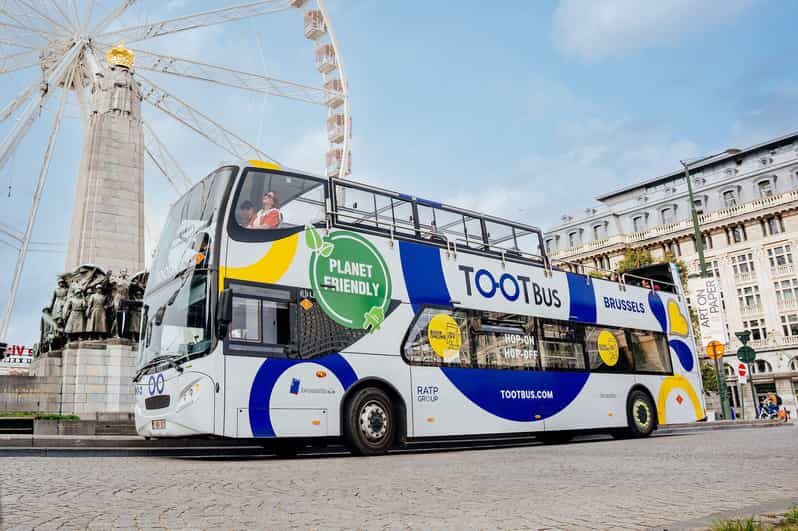
One ride can save you hours in a new city. This Brussels hop-on hop-off bus lets you see the big sights like the Grand-Place and the Atomium while still moving at your own pace. You get open-deck views for photos, plus audio commentary by bus and phone so you can learn without feeling trapped on a timeline.
What I like most is the freedom. You choose how long to linger at stops, and you can hop off for the view, the museum, or a quick snack, then get back on the next bus. The second big win for me is the built-in way to explore on foot: the ticket includes walking tours, and the app adds self-guided options so you can follow up right where you got off.
One consideration: the audio experience is mainly automated. If you’re hoping for deep, personalized answers about what you’re seeing, this isn’t that kind of tour. You’ll get the facts, but you’ll rely on the app and your own curiosity for anything beyond the program.
In This Review
- Quick take: what makes this bus tour work in Brussels
- Price and what $29 buys you in real life
- Getting around fast: the red route and how it feels on the ground
- When to expect the buses
- On the bus: views, comfort, audio, and the little things you’ll notice
- Stop-by-stop: what you’ll actually do at each red-route location
- 1) Central Station (33 rue Cardinal Mercier)
- 2) Place Royale (5 rue de la Montagne de la Cour)
- 3) Luxembourg (2 Place du Luxembourg)
- 4) Cinquantenaire (59A Avenue d’Auderghem)
- 5) Flagey (Chaussée d’Ixelles)
- 6) Poelaert / Louise / Courthouse (58 rue de la Régence)
- 7) Grand Place / Manneken-Pis (68 rue du Lombard)
- 8) Bourse (16–18 rue des Poissonniers)
- 9) Tour & Taxis / Maritime Station (1 rue Picard)
- 10) Atomium (Bld du Centenaire)
- 11) De Brouckère / Monnaie (21 rue de l’Evêque)
- The audio guide: how to use it without getting annoyed
- Included walking tours: the best way to turn one bus day into more
- 1-day vs 2-day approach: a smart way to spend your time
- If you have 1 day
- If you have 2 days
- Who this tour fits best (and who should choose something else)
- Should you book the Brussels Hop-On Hop-Off Bus Tour?
- FAQ
- How long is the Brussels Hop-On Hop-Off Bus Tour valid for?
- How many stops are on the red route?
- What time does the red route run in late 2025?
- Is there an audio guide, and what languages are available?
- Are earphones included?
- What is included besides the bus ride?
Quick take: what makes this bus tour work in Brussels
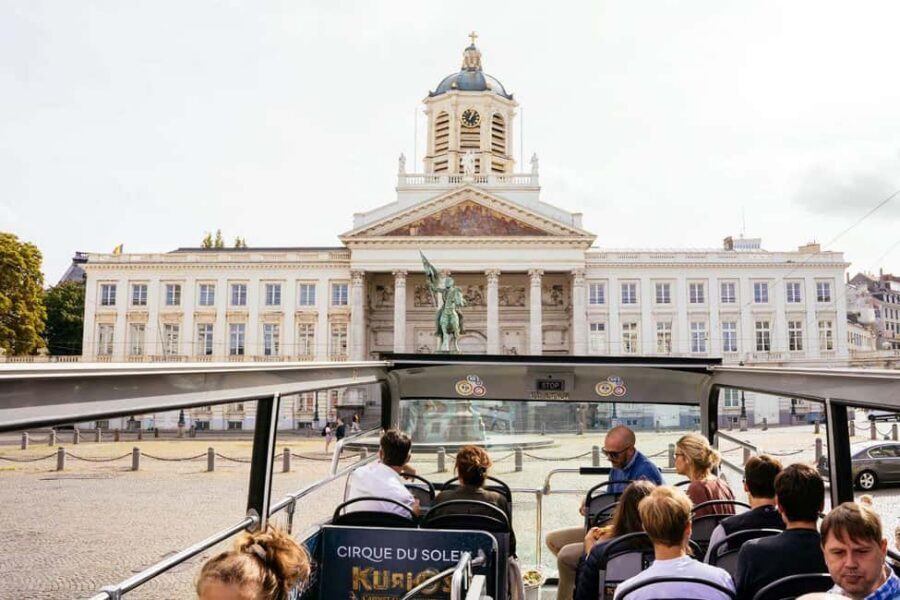
- Open-top photo views that make it easy to frame the city without standing in a crowd for every angle
- Clean-energy buses with Wi‑Fi onboard, so you can look up stops and plans while you ride
- A route built to hit the classics plus practical connections to museums and neighborhoods
- Audio guides for adults and kids, available on the bus and through the app in many languages
- Free walking tours and self-guided follow-ups, so one bus day turns into actual sightseeing
- Frequent service on the red line, with departures timed through the provider app and stop access points
Price and what $29 buys you in real life
At around $29 per person for 24 or 48 hours, you’re buying time-savings. Brussels is spread out, and you can waste your limited daylight waiting for transit or paying for point-to-point taxis. This pass is designed to replace a bunch of separate decisions with a single loop you can repeat.
The value is strongest if you:
- only have a couple days
- want to cover several areas without studying maps for every move
- like the option to get off, then adjust when you find a better photo spot, a shorter line, or a museum you actually feel like doing
If you’re the type who plans every hour down to the minute, you might not need 2 days. But if you’re flexible, the second day often becomes your redemption lap: return to the stops you enjoyed and turn them into longer visits.
Other hop-on hop-off bus tours we've reviewed in Brussels



Getting around fast: the red route and how it feels on the ground
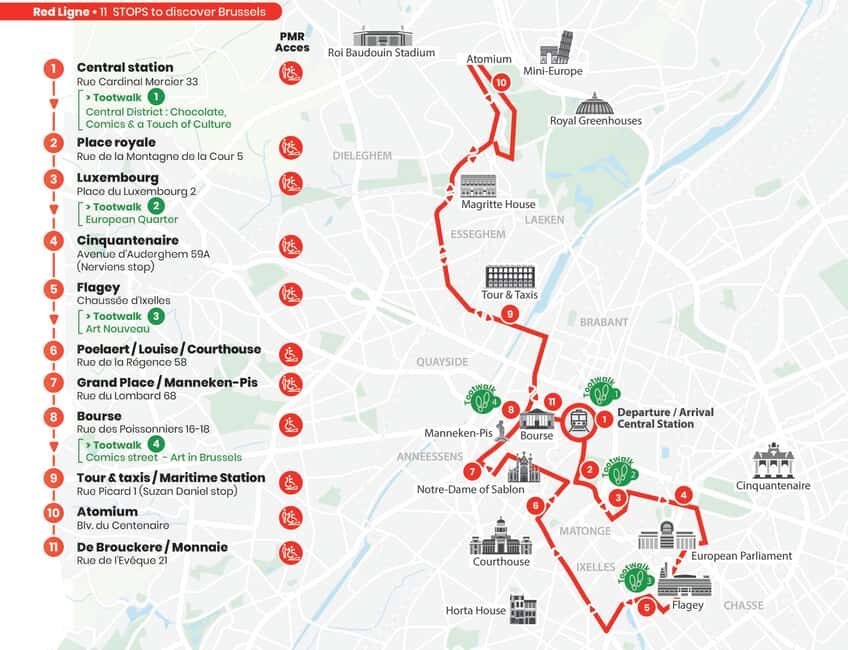
You start at any of the 11 red-route stops, then ride as much as you want within your 1–2 day ticket window. Buses run on a regular pattern (the schedule lists every 30 minutes, and some riders report around 20 minutes depending on the day and conditions). That frequency matters. In a city with traffic and stoplights, “hop-on hop-off” only works if the next bus comes without a long wait.
You’ll also feel the rhythm of Brussels from the top deck. The city has tight turns and busy intersections, so don’t treat it like a smooth sightseeing postcard. The good part: you get constant context as buildings roll past, and you can use that to decide where to spend time once you’re on foot.
When to expect the buses
The provider timetable can change by season, so check the schedule link on the official site. For September 30, 2025 to December 31, 2025, the red route runs with a first departure at 10:00 AM and a last departure at 5:00 PM. That’s the kind of detail you want to know before you plan your day.
On the bus: views, comfort, audio, and the little things you’ll notice
This is the kind of tour that works best when you treat it like a moving orientation desk.
What you get onboard
- An open-top deck for skyline and landmark shots
- Clean-energy vehicle operation
- Wi‑Fi onboard to check maps and plan the next hop
- Audio commentary by bus and app, with kids’ audio guide
- Earphones are included (or you can use your own)
- The audio is available in many languages: Dutch, English, French, German, Spanish, Italian, Chinese, Japanese, Arabic, Portuguese, Russian
- Wheelchair accessible vehicles
What to watch for
The audio is automated, so it’s not interactive. If a stop feels confusing, don’t panic. Use the app for real-time bus tracking, then match where you are with the stop list. Some riders have found it easier when they stay alert for upcoming landmark cues and use the app to confirm.
Stop-by-stop: what you’ll actually do at each red-route location
The red route is built around a clear idea: major landmarks first, then practical connections to museums, neighborhoods, and viewpoints. Here’s how to think about each stop so you can get real value from the hop-on flexibility.





1) Central Station (33 rue Cardinal Mercier)
Central Station is your easiest launchpad. From here, you can build a day around whichever direction your instincts take once you’re aboard. It’s also a good place to start if you’re arriving by train and want to get moving immediately instead of standing still reading directions.
Tip: Use this stop to set your plan for the rest of the day while you’re still fresh, then let the bus bring you to decisions.
2) Place Royale (5 rue de la Montagne de la Cour)
This is where you shift from travel logistics to palace-and-square Brussels. Place Royale is a prime stop for quick photos and for people who like stopping at a classic central location without committing to an all-day museum.
Why it’s worth it: it’s a viewpoint-style stop. You can get your bearings, then either linger or hop back on quickly.
3) Luxembourg (2 Place du Luxembourg)
The Luxembourg stop gives you a calmer feel than the busier commercial edges. It’s a strong choice if you want a breather and a sense of local rhythm. It also helps if you’re mapping your day between civic sights and museum clusters.
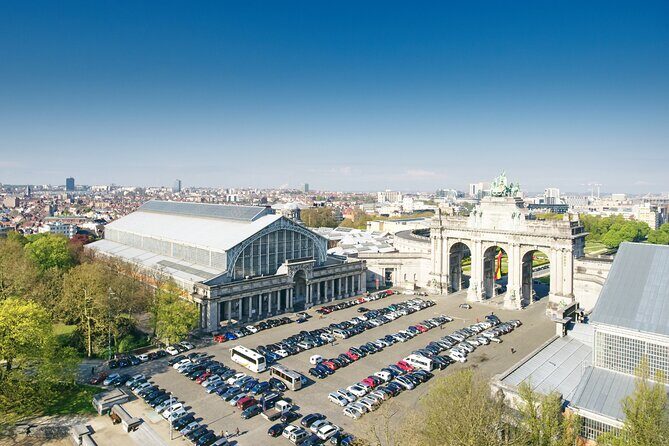
4) Cinquantenaire (59A Avenue d’Auderghem)
Cinquantenaire is a “big structure” stop—exactly the kind of place that benefits from the open-deck perspective. If you like landmark architecture and want a photos-first moment, this is a good place to jump off briefly.
Practical move: get off for a few photos, then decide if you want to go deeper.
5) Flagey (Chaussée d’Ixelles)
Flagey sits in the Ixelles area. This is a nice stop if you’re curious about Brussels beyond the postcard centers. Expect a more neighborhood-style atmosphere where you can snack, walk a few blocks, and break up the day.
6) Poelaert / Louise / Courthouse (58 rue de la Régence)
This stop is useful for the major civic sights zone. It can be a great checkpoint if you’re trying to organize museum time and cathedral/church time without backtracking.
One caution: this is an area where you might spot viewpoints from the bus, then need to plan a short walk to fully enjoy them.
7) Grand Place / Manneken-Pis (68 rue du Lombard)
This is the stop you’ll recognize instantly. Even if you don’t go inside anything, it’s where your “I’m in Brussels” photo set comes together.
What I’d do here:
- hop off for the square and surrounding streets
- check the Manneken-Pis area quickly if it’s on your must-do list
- if lines are long, treat this stop as a photo and orientation break, not a full-day assignment
This stop is also where you’ll likely appreciate the bus for what it does best: getting you there and then letting you leave when you’re ready.
8) Bourse (16–18 rue des Poissonniers)
Bourse is another classic urban-sight stop. It’s great for a short hop off because the area works well on foot: you can walk, take pictures, then jump back on without losing too much time.
Tip: if it’s busy, set a timer in your head. Brussels squares look best when you’re not rushing, but your pass is about flexibility.
9) Tour & Taxis / Maritime Station (1 rue Picard)
This stop shifts into a more modern industrial-and-events vibe. It’s a strong choice if you like seeing Brussels as it changes, not only as it preserves.
You’ll likely find it useful as a connector if you’re trying to balance museums with something different to break up the day.
10) Atomium (Bld du Centenaire)
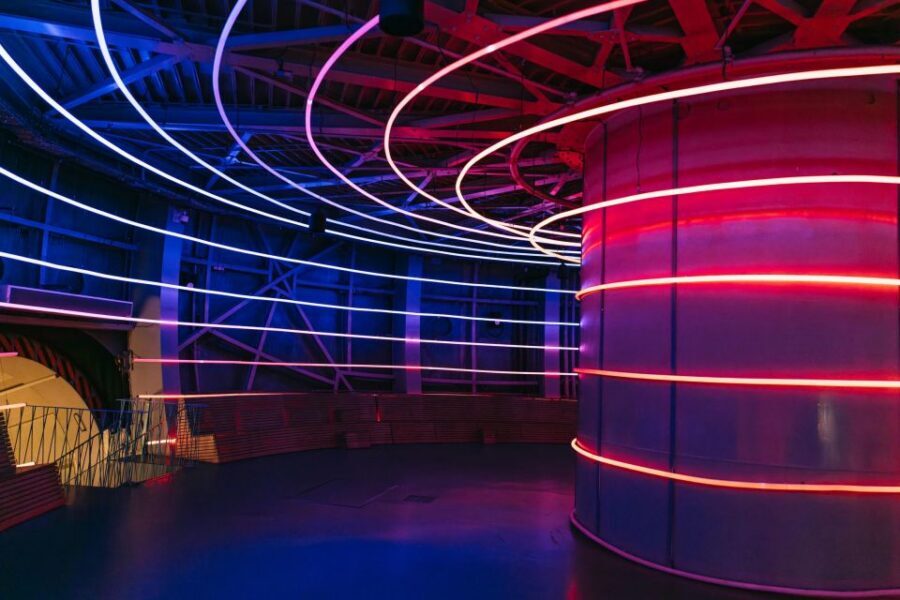
The Atomium is the reason many people choose the bus—because it’s not in the tight center. The red route brings you there directly, and from the top deck you also get a sense of how the city spreads out.
Real talk: some of your ride time will be spent traveling outward. If you don’t get off, you’re mostly doing transit. So when you come to Atomium, commit to a visit or a solid photo-and-walk window, then head back when you’re ready.
11) De Brouckère / Monnaie (21 rue de l’Evêque)
This is a central re-entry stop. It helps you finish the day in an area with lots of options for food, browsing, and easy connections. It’s also a smart final stop when you want the longest evening walk after you’ve already seen the key highlights.
The audio guide: how to use it without getting annoyed
The audio is a big part of the appeal, and it’s offered via both the bus and the app. You can choose adult audio and kids’ audio, and you can pick a language from the list.
Here’s how to get the best experience:
- Use the audio when you’re moving between major landmarks, not while you’re staring at tiny details up close
- Use the app to confirm which stop is coming next, especially if you’re unsure where you are
- Plan to take breaks from listening so the city doesn’t become background noise
Some English narration can feel less specific than you want, and the delivery is programmed, not live. Still, it’s one of the easiest ways to learn names, context, and what you’re looking at without pulling out a guidebook every few minutes.
Included walking tours: the best way to turn one bus day into more
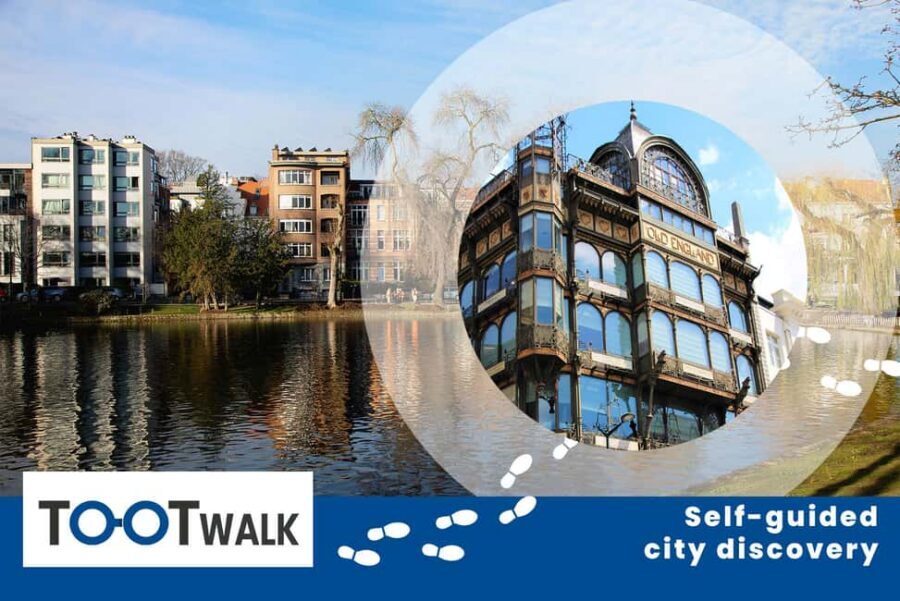
Your ticket includes free walking tours. The app also supports self-guided walking tours, plus it includes content beyond the bus audio.
The practical win is simple: bus tours are good for distance and orientation. Walking tours are where you actually notice street life, small facades, and the subtle reasons one neighborhood feels different from the next.
How to make walking time actually work:
- check the app for the self-guided routes and audio tracks before you leave your hotel
- when you hop off for a sight, decide quickly if you want to walk for 30–60 minutes or just do a quick photo stop
Some people have said it’s not always obvious when the walking tour is starting. So keep your phone handy and follow what the app shows you rather than trusting guesswork.
1-day vs 2-day approach: a smart way to spend your time
You can do Brussels on one loop, but two days tends to give you the “real trip” feeling because you get repetition with variety.
If you have 1 day
- Start from Central Station and ride early through the classics
- Prioritize Grand Place / Manneken-Pis, then make one museum or neighborhood stop based on what you enjoy most
- Don’t try to squeeze Atomium and everything else into one last-minute sprint. If you do Atomium, commit to it.
If you have 2 days
- Day 1: do the highlights fast. Use audio + bus views to learn what matters to you
- Day 2: return to the stops where you felt the strongest pull
- Save your walking tour time for day 2, after you’ve already learned the geography
This is also where the frequency helps. You can jump off, explore, then get back on without planning your life around exact departure times.
Who this tour fits best (and who should choose something else)

This is a great match if you:
- have limited time and want a simple transport plan
- enjoy landmark photography and want a top-deck view
- want audio in multiple languages without paying for a private guide
It’s less ideal if you:
- need deep, live explanations tailored to your interests
- plan to stay only inside major museums all day (you’ll still use the bus for transit, but the audio won’t replace detailed museum signage)
For solo travelers, couples, and families, it’s also a nice stress-reducer because it’s predictable: frequent buses, clear stops, and an app to guide you.
Should you book the Brussels Hop-On Hop-Off Bus Tour?
If your goal is to see Brussels efficiently and still keep your schedule flexible, I’d book it. The combination of clean-energy open-top rides, audio in many languages, and included walking tours is a practical mix for a first visit or a rainy-day plan. It also hits key landmarks like Grand Place, Manneken-Pis, the European quarter area, and the Atomium using a single red route approach.
I’d think twice if you only want one or two sites and you hate repeating the same route. Also, if you expect a human guide on board who can answer questions, this won’t feel like that.
Bottom line: this is a strong value pick for getting oriented fast, then customizing the rest of your time around what you actually liked.
FAQ
How long is the Brussels Hop-On Hop-Off Bus Tour valid for?
Your ticket is valid for either 24 or 48 hours, depending on the option you choose.
How many stops are on the red route?
The red route has 11 stops, and you can start at any of them.
What time does the red route run in late 2025?
For September 30, 2025 to December 31, 2025, the red route runs from 10:00 AM (first departure) to 5:00 PM (last departure).
Is there an audio guide, and what languages are available?
Yes. There is an audio guide on the bus and through the app, with languages including Dutch, English, French, German, Spanish, Italian, Chinese, Japanese, Arabic, Portuguese, and Russian. Kids’ audio is included too.
Are earphones included?
Yes. The tour includes earphones (or you can bring your own).
What is included besides the bus ride?
In addition to the hop-on hop-off ticket, you get audio commentary, Wi‑Fi onboard, a clean-energy vehicle, and free walking tours.