REVIEW · BRUSSELS
Brussels Tootbus Discovery Hop On Hop Off Bus and walking tours
Book on Viator →Operated by Tootbus · Bookable on Viator
You can cover Brussels on your own schedule. With an app, electric buses, and audio help, the city clicks into place fast.
I love the mix of hop-on hop-off freedom and multilingual audio that lets you choose what to linger on. The route hits big-name sights without forcing a rigid group pace. One thing to consider: the experience depends on bus timing and the app working smoothly, and those can be uneven on the ground.
I also like that Tootbus is 100% electric and includes onboard plus app audio, so you’re not stuck reading plaques all day. Add the kids audio guide and free Wi‑Fi, and it’s set up to be easy for families too. For some people, the audio can feel more “soundtrack” than “history,” so set your expectations accordingly.
Here’s my practical drawback check: plan for longer-than-expected waits and buses that may run late, especially during peak congestion around major stops like the Atomium. And if it’s cold or hot, comfort can vary depending on whether heating or cooling works well on the particular bus you board.
In This Review
- Key takeaways before you board
- How the Hop-On Hop-Off pass actually helps in Brussels
- The route: from Central Station to Grand-Place and the Royal Quarter
- Stop cluster 1: Central Station area
- Stop cluster 2: Grand-Place and Manneken Pis
- Stop cluster 3: Poelaert / courthouse area
- Stop cluster 4: Luxembourg district
- Stop cluster 5: Cinquantenaire
- Stop cluster 6: Place Royale
- The other loop: Rogier, De Brouckère, and the Atomium/Mini Europe zone
- Rogier and De Brouckère center points
- Atomium and Mini Europe
- Audio on the bus and in the app: useful, but check what you hear
- Waiting for the bus: the part you should manage actively
- Electric bus details: greener ride, still a bus
- Tootwalk walking tours: how to stitch bus stops into real neighborhoods
- Value for money: when this pass is worth buying
- Should you book Brussels Tootbus Discovery?
- FAQ
- How long is the Brussels Tootbus Discovery hop-on hop-off experience?
- What languages is the audio commentary offered in?
- What ticket durations are available?
- Do I need the Tootbus app to use the bus?
- Is audio commentary included on the bus and the phone?
- Is free Wi‑Fi included on the bus?
- Is there a restroom on board?
- Are food and drink included?
- Are service animals allowed?
- Can I cancel and get a full refund?
Key takeaways before you board

- 24/48/72-hour flexibility: build your own day plan, then repeat tomorrow if you want.
- App-based route help: track buses and use the e-ticket wallet and audio from your phone.
- A route that spans the city: Grand-Place/Manneken Pis, Poelaert area, Luxembourg, Cinquantenaire, Royal Quarter, and Atomium/Mini Europe.
- Electric bus ride: 100% electric for a lighter footprint, plus free Wi‑Fi.
- Comfort and tech are mixed: cold decks, seat issues, headphone/plug problems, and live tracking that may not match reality.
How the Hop-On Hop-Off pass actually helps in Brussels

This is one of those Brussels setups where the biggest win is mental. Instead of wrestling maps and bus routes all day, you get a simple loop that drops you near the highlights. You ride when you want, then hop off when something catches your eye.
You can choose a 24-, 48-, or 72-hour ticket. That matters because Brussels spreads out. A one-day pass works best if you want a quick orientation and a hit list. A longer pass makes sense if you like doing one neighborhood at a time—hop off, walk around, then come back later for the next cluster of sights.
Your ticket is mobile-friendly with a mobile ticket and access to the Tootbus app. The app is doing real work here: it’s your e-ticket wallet and your hub for bus tracking and audio commentary. The onboard audio also exists, so you’re not completely dependent on your phone—still, having the app makes it easier to line up your next ride.
Finally, this runs in English, and there’s also a kids audio guide. If you’re traveling with children, that’s a big quality-of-life detail, because Brussels walking can be long and hot/cold depending on the season.
Other hop-on hop-off bus tours we've reviewed in Brussels



The route: from Central Station to Grand-Place and the Royal Quarter
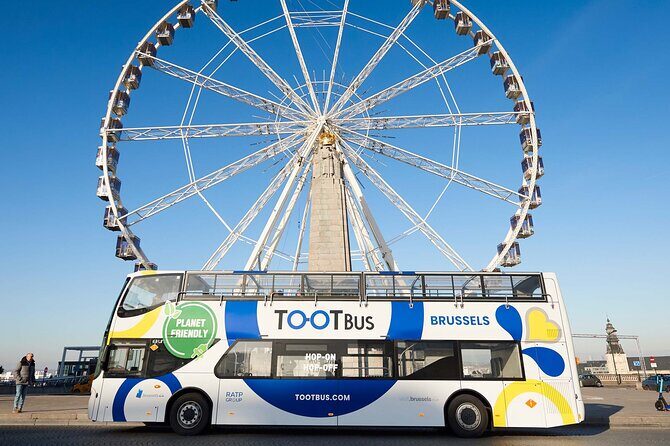
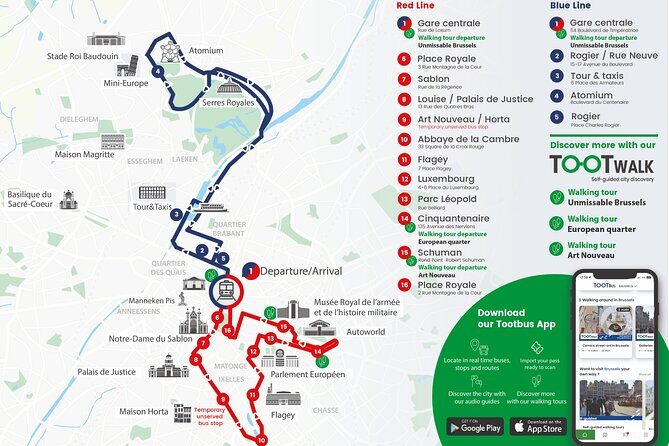
The route is basically two big threads that help you bounce around the city. One side funnels you through the center and into the Royal Quarter and Cinquantenaire area. The other side connects toward the Atomium zone and north-central areas.
Stop cluster 1: Central Station area
You start at Rue du Cardinal Mercier 33 / Central Station. This is useful because it gives you a reliable entry point—especially if you’re arriving by train or you’re still figuring out where things are. Central Brussels is also a good place to decide your plan for the rest of the day.
If you’re the type who likes photos early, start here and then move into the city sights while light is good. If you’d rather ease in, hop off at the center points later and save the station area for a convenient reset.
Stop cluster 2: Grand-Place and Manneken Pis
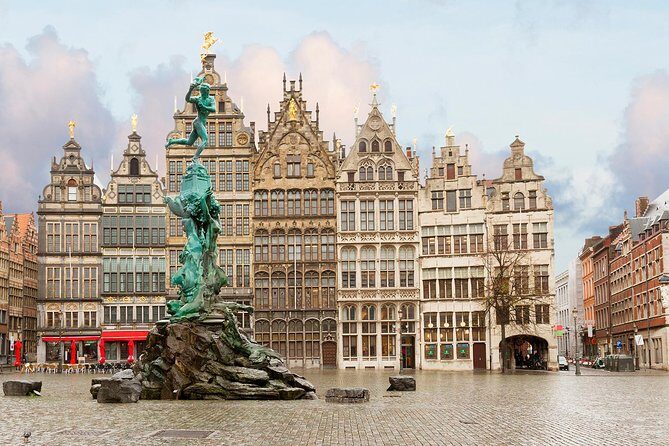
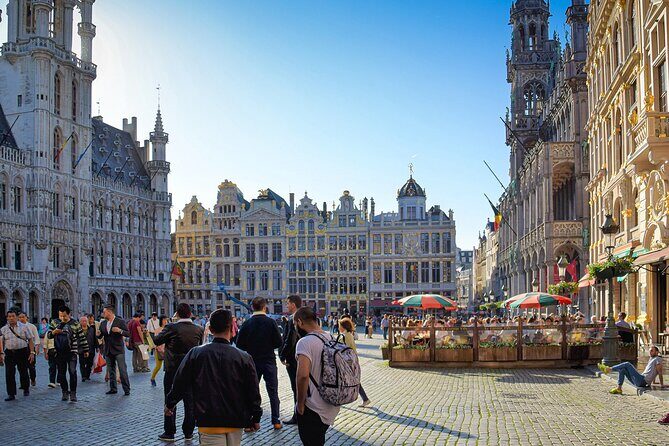
Next up is Rue du Lombard 68 / Grand-Place / Manneken Pis. This is the “yes, this is why people come” stop. Grand-Place is a main event, and Manneken Pis is small but iconic—perfect when you want a quick win without a long walk.
A practical tip: this is also one of the places where crowds form, so plan to be a little flexible. If you find yourself stuck in foot-traffic, you can simply use the bus loop to reposition and try again from another angle.
Stop cluster 3: Poelaert / courthouse area
Then you roll toward Rue des Quatre Bras / Poelaert–Louise–Courthouse. This is a good stop for architecture lovers and for anyone who wants to see more of Brussels than just the postcard center.
The tradeoff here is that this area can feel more “city” than “market square.” If you’re hunting only for the most famous photo spots, you might move through faster. If you like city structure—big façades, viewpoints, and planned streets—this stop can be more rewarding than it sounds.
Other walking tours we've reviewed in Brussels





Stop cluster 4: Luxembourg district
At Place du Luxembourg 2 / Luxembourg, you’re in a calmer pocket. This stop is great when you want a break from heavy crowds and prefer a gentler stroll. It’s also a good place to regroup for your second loop.
One consideration: it’s easy to get tempted into long walks here because it feels pleasant. That’s good—just keep an eye on how much time you’ve spent so you don’t end up scrambling to catch the next bus when traffic gets slow.
Stop cluster 5: Cinquantenaire
Moving to Av. des Nerviens 131 / Cinquantenaire, you’re heading toward one of Brussels’s standout monument zones. This is a stop I’d treat like a mini “set piece.” Even if you don’t do every museum option nearby, it’s a strong spot for a structured pause on the way to the next district.
If you’re doing the full day, this is also where the route starts to feel like you’re spanning Belgium’s layers—center history, then more grand urban planning.
Stop cluster 6: Place Royale
Finally on that thread you reach Rue de la Régence 2 / Place Royale. This is an ideal stop for the classic Brussels vibe: formal squares, royal-leaning streetscapes, and a more polished city feel.
It’s also a smart “last stop” for day two. By then you’ll already understand how the city flows, and you’ll know exactly which areas you want to return to.
The other loop: Rogier, De Brouckère, and the Atomium/Mini Europe zone
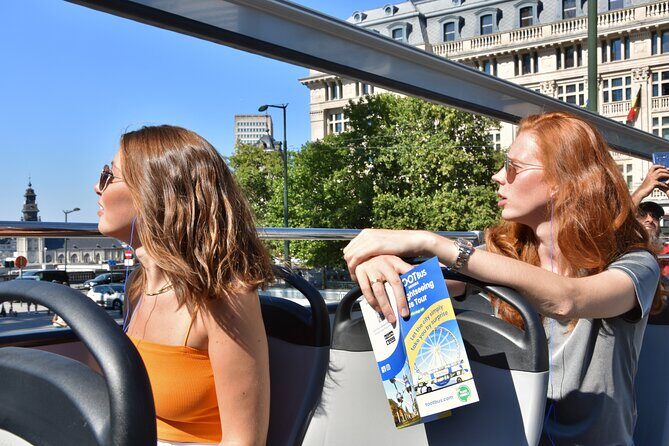
On the return side, the route includes more north and east access.
Rogier and De Brouckère center points
You’ll pass by Av. du Boulevard 21 / Rogier and Rue de l’Evêque 7 / De Brouckère – Centre. These are useful for repositioning without backtracking. If you’re starting a day trip from a central hotel area, these stops can be your “pick up and go” anchors.
A small planning advantage here: these areas can help you avoid too much walking between distant sights. Hop off, explore, hop back on when your legs are done.
Atomium and Mini Europe
The big headline stop is Boulevard du Centenaire / Atomium & Mini Europe. This is where many people aim to spend real time, not just take a quick photo. One of the recurring issues is that lines around this zone can slow your day down, so don’t stack your schedule too tightly.
Also, the bus segment here can feel longer in practice because traffic and timing can stretch the ride between the Atomium and the city center. If you want the Atomium, give it room to breathe.
Audio on the bus and in the app: useful, but check what you hear
Tootbus includes audio commentary in multiple languages, and it’s also available via the Tootbus app. In theory, that’s a great combo: you can listen on the ride and then keep going on foot with the app’s guidance.
In practice, the audio quality seems to vary. Some audio runs feel more “music and mood” than tight history, and sometimes the commentary might not line up perfectly with what you’re seeing at that exact moment. That’s not unusual for pre-recorded narration in a moving vehicle, but it’s worth knowing.
A few tech-related issues show up in feedback often enough to plan for:
- Headphones/headphone jacks might not work on every bus.
- Seat details like plugs may fail, so don’t count on charging.
- Wi‑Fi can be unreliable even though it’s listed as included.
So my advice is simple: treat the audio as helpful background, not as the only source of facts. If you’re serious about history, keep a small backup like a guidebook page or a saved map pin for the key sights you care about.
For the walking side, the experience mentions Tootwalk audio-guided walking tours. You’ll likely want your phone fully charged and ready to use. Bring earbuds/headphones that work well with your device, because your phone is the center of the experience when you’re on foot.
Waiting for the bus: the part you should manage actively
Hop-on hop-off only works if you don’t feel trapped waiting. The service is described as running on a schedule with about a 30-minute interval, but real-world waits can stretch. Sometimes the app tracking may not match what’s actually happening at your stop.
Here’s how to use that knowledge without losing your whole day:
- When you hop off, decide your next stop quickly so you’re not standing around too long.
- If the bus seems late, don’t assume it’s coming “any minute.” Give it a realistic window, then consider walking back to a main stop or using local transit to bridge the gap.
- Keep your cool around peak zones. Central sights and the Atomium area can create congestion that slows everything down.
Comfort also plays into waiting. Some buses can feel very cold on open upper decks, and some comfort systems like heating or cooling might not be consistent. If your visit is in a shoulder season or winter, bring layers. If it’s hot, dress for heat and be ready to move quickly when you get on the bus.
Electric bus details: greener ride, still a bus

The included ride is 100% electric, which is a nice practical improvement. It also signals the operator is trying to modernize the fleet instead of relying only on older vehicles.
But it’s still a bus, so the experience has the same physical reality as any open-road sightseeing ride: you’ll deal with city traffic, stop spacing, and the comfort limitations that come with moving around all day.
What you’re not getting is also important. There’s no restroom on board, and food and drink aren’t included. Plan your own breaks. Brussels is easy to navigate on foot once you’re positioned, so treat the hop-off periods as your “grab a snack, use a restroom, then continue” windows.
Tootwalk walking tours: how to stitch bus stops into real neighborhoods
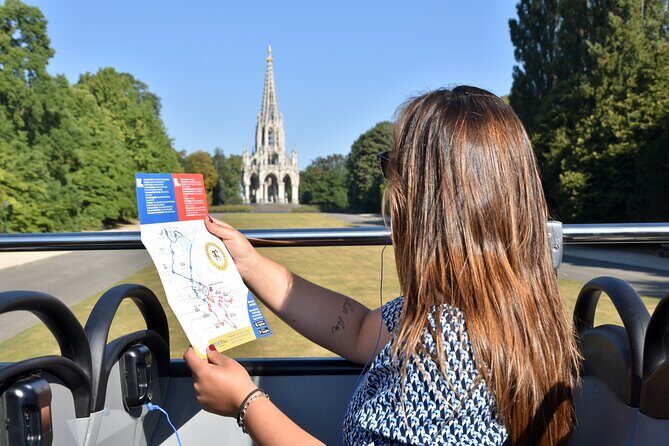
The best way to use hop-on hop-off is not just riding. It’s using the bus to set you down near the right neighborhood, then walking the streets between those points.
Tootbus includes Tootwalk audio-guided walking tours accessed through the app. That’s valuable because it adds context while you’re actually at street level, where details matter more than what you can see from a moving vehicle.
There’s also feedback about a longer walking tour experience with a guide named Patrick, and radio sets were mentioned as a way to make the guide’s voice clear. That suggests some walking options may be more guided than purely self-led audio, depending on what’s running during your visit.
Either way, my strategy is:
- Use the bus for orientation and stop access.
- Pick one area you like.
- Use the walking tour to understand what you’re seeing instead of just collecting photos.
Value for money: when this pass is worth buying

This is where I get picky, because hop-on hop-off is either a smart buy or an expensive convenience—depending on how you use it.
I’d call this good value if:
- You want broad coverage in a short time.
- You plan to hop off and explore multiple districts, not just ride the loop once.
- You like audio support and want a way to keep moving without constantly checking maps.
I’d hesitate if:
- You mostly want a single must-see attraction and nothing else. Then a simpler approach (like a direct ticket or a focused route) might be cheaper and less time-consuming.
- You’re price-sensitive and hate delays. When buses bunch up or tracking isn’t accurate, the “time saved” benefit drops fast.
Also, some people feel the longer pass doesn’t pay off if you don’t do a lot of hopping across multiple days. If you buy 48 or 72 hours, have a rough plan for at least two distinct areas you’ll want to revisit.
Should you book Brussels Tootbus Discovery?
Book it if you want an easy, flexible way to see Brussels across wide distances, and you’ll actually use the hop-on hop-off concept. The electric bus ride, audio in English, and app tracking and walking tours can turn a complicated city into something you can manage without stress.
Skip or reconsider if bus timing and tech reliability will drive you crazy. If you’re the type who hates standing and waiting, or you need flawless live tracking and perfectly synced commentary, this may feel frustrating.
My recommendation: treat the bus as your “backbone,” not your boss. Use it to get positioned, then spend your best time walking and exploring the stops that truly matter to you—Grand-Place, the Royal Quarter, and especially the Atomium zone.
FAQ
How long is the Brussels Tootbus Discovery hop-on hop-off experience?
It’s listed at about 1 hour (approx.), though in real city conditions your loop time can vary.
What languages is the audio commentary offered in?
The experience is offered in English, and audio commentary is available in multiple languages.
What ticket durations are available?
You can choose a 24-, 48-, or 72-hour ticket.
Do I need the Tootbus app to use the bus?
The app is included with your experience and provides access to your e-ticket wallet, bus tracking, and audio commentary, but the bus also offers audio commentary.
Is audio commentary included on the bus and the phone?
Yes. Audio commentary is included on the bus and also available through the Tootbus app.
Is free Wi‑Fi included on the bus?
Yes, free Wi‑Fi onboard is included.
Is there a restroom on board?
No. A restroom on board is not included.
Are food and drink included?
No. Food and drink are not included.
Are service animals allowed?
Yes, service animals are allowed.
Can I cancel and get a full refund?
Yes. Free cancellation is available up to 24 hours in advance of the experience start time for a full refund.