REVIEW · BRUSSELS
e-Scavenger hunt Leuven: Explore the city at your own pace
Book on Viator →Operated by Qula · Bookable on Viator
Leuven turns into a puzzle map. I like this self-guided e-scavenger hunt because it turns a walk around town into an interactive game, with a mobile ticket and around 2.5 hours of built-in content in English. You can start and stop when your group wants.
I love how it blends the headline stops—especially the Leuven Town Hall on the Grand Place—with smaller, more surprising places that you’d miss if you only followed standard sightseeing routes. I also like the format: short, challenge-based questions that keep the day moving, but still let you plan your own rest and snacks.
One catch: it’s very much a game, not a guided tour with a person narrating every step. Also, you’ll want to bring your own smartphone and data, since those aren’t included.
In This Review
- Key things to know before you play
- Leuven at your own pace: what the e-Scavenger hunt really is
- Starting at Monseigneur Ladeuzeplein 17 and powering up
- Grand Place glow: Leuven Town Hall
- Beguinage heritage: a 13th-century community that lasted
- Hortus Botanicus Leuven: oldest botanical garden focus
- Markt law and the city’s trading rhythm
- University heritage at Ladeuzeplein
- Stella Artois roots in its home city
- St. Peter’s Church: Romanesque age and the oldest roots
- Klein Begijnhof: smaller beguinage, same sense of history
- Sint-Geertrui: former abbey church and medieval parish life
- Oude Markt: the longest-bar feeling
- Romanesque gate and the old hospital remnant
- St. James tower and the seven-wonders moment
- Janseniuspark towers and the water gate
- Price and whether it feels worth it
- Who this is best for
- Should you book the Leuven e-Scavenger hunt?
- FAQ
- Where does the e-Scavenger hunt in Leuven start?
- How long does the activity take?
- Is this tour guided by a person?
- What language is it offered in?
- How many people can be in a group?
- Do I need a smartphone or data?
- What’s the price?
- What are the available time slots?
- Is it accessible for hearing impaired visitors?
- Are service animals allowed?
Key things to know before you play

- Flexible timing: start when you like, stop when you like, and finish back at the meeting point
- 2.5 hours of app content: enough to feel like a full half-day without stealing your whole day
- Big sights plus offbeat corners: Town Hall, beguinages, university heritage, and quieter medieval spots
- Quiz-and-challenge style: prompts and tasks that add a little friendly competition
- Small groups by design: one team of up to 6 people keeps it personal
Leuven at your own pace: what the e-Scavenger hunt really is
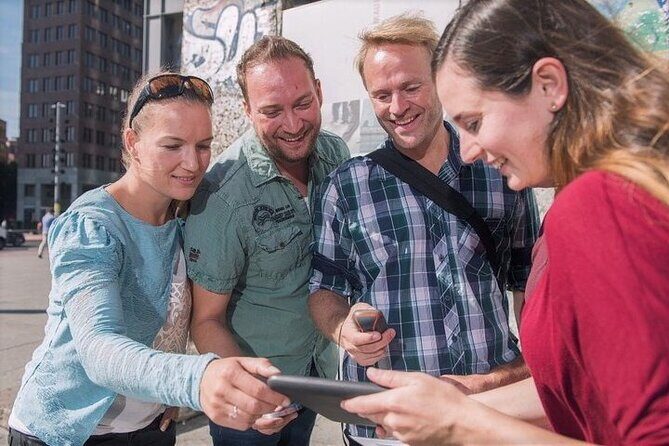
This is a self-guided city game where you explore Leuven by following clues, answering short challenges, and moving from one spot to the next. Instead of a tour guide talking over your day, you control the pace. That matters in Leuven, because it’s one of those places where the best moments are often the in-between ones: a quiet street, a doorway detail, or a square that suddenly feels like your kind of stop.
You’ll still cover major landmarks, so first-time visitors get the “wow” basics. But what makes this work is the way it balances famous monuments with lesser-visited heritage sites. If you like learning while walking, this format keeps the information bite-sized, and it doesn’t punish you if you pause for a drink.
For your group size, it’s set up for teams of up to 6, and it’s private for your party. That’s a nice perk. In a small team, it’s easier to share phones, swap ideas, and keep the game moving without feeling rushed.
Other escape games and scavenger hunts we've reviewed in Brussels



Starting at Monseigneur Ladeuzeplein 17 and powering up
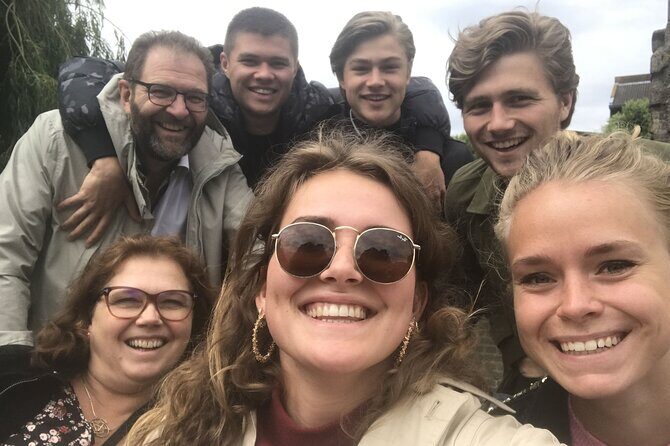
Your start point is Monseigneur Ladeuzeplein 17, in Leuven. This is a smart launching pad because it puts you close to the city’s academic heart. You’re also near public transportation, which helps if you’re combining the game with other plans.
Bring your own phone and your own internet. The experience does not include a smartphone or data, and that’s the one practical thing that can make or break the fun. If your signal is spotty, plan to have enough mobile data, or prepare for a bit of slower progress if the app struggles.
Also plan for a comfortable walking day. The app gives you a full chunk of content (around 2.5 hours), and your total time may stretch toward the 2 to 4 hour window depending on how often you stop, compare answers, or take a long look at buildings.
Grand Place glow: Leuven Town Hall
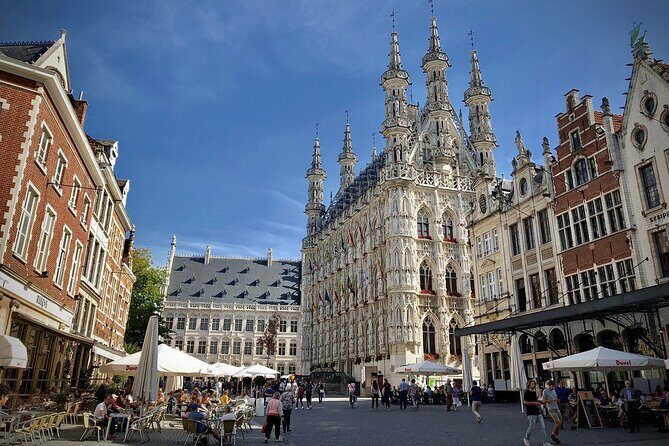
Your game drops you at the Grand Place, where Leuven Town Hall dominates the square. This Gothic town hall is one of the most famous of its kind, and the setting alone does a lot of the talking. Here, you can see why town squares in Belgium weren’t just places to meet—they were where civic life happened.
What I like about starting here is how quickly you get oriented. If you’ve never visited Leuven, the Town Hall and the square give you a mental map of the city center. And because the game has you working toward answers, you tend to look longer at details than you would on a normal “quick photo” stop.
A small caution: the big stops can be crowded at peak times. If you hit it during busy hours, consider using the game’s pacing to wait a minute, then reset and take your time.
Beguinage heritage: a 13th-century community that lasted
Next up is the beguinage, a heritage site that dates back to the 13th century. This is a place with a long timeline: during the heyday in the 17th century, around 360 beguines lived there. Even if you only skim the highlights, that scale helps you picture the community’s role in city life.
The beguinage is also a reminder that Leuven’s story isn’t just universities and churches. There’s a quieter layer here—female religious life, daily routine, and a sheltered kind of urban world. The game format works well because it pushes you to notice what’s in front of you rather than trying to absorb everything at once.
Hortus Botanicus Leuven: oldest botanical garden focus
From there, you head to the herb garden Leuven, officially called Hortus Botanicus Lovaniensis. It’s the oldest botanical garden in Belgium, and it’s the kind of stop where you can feel the difference between a quick glance and a slow look.
Even if you’re not a plant person, this is a great pause in your day. Botanical spaces often break up the heavier sightseeing—stone churches and medieval architecture—and give you a “breathe and reset” moment. In a game, that pause is especially useful because it can help you recharge before the next run of heritage stops.
Other Leuven day trips we've reviewed in Brussels




Markt law and the city’s trading rhythm
Leuven’s growth is tied to market culture. The city square was granted market law in 1150, which helped trade and economic activity take off, with markets held up to three times a week.
This is one of those history bits that can sound dry—until you tie it to place. When you’re near the right squares and streets, market history stops being theory and starts to feel obvious. The game nudges you to connect the dots, so you see how Leuven’s layout reflects its economy and daily life.
University heritage at Ladeuzeplein
Leuven isn’t just historic; it’s intensely academic. The city was the seat of three successive universities almost continuously since 1425, and it also houses prestigious university libraries. One highlight here is the University Library on Ladeuzeplein, a heritage building that looks as impressive as it sounds.
If you’ve ever visited an old European university campus, you’ll recognize the vibe: learning spaces that feel built to last, not patched together. In a self-guided game, this kind of stop is perfect because you can read the key facts, look around, and then decide how long you want to linger.
And since you control pacing, you can also use this area as a natural break point before moving into churches and medieval sites.
Stella Artois roots in its home city
Next comes the brewery of Stella Artois. You’ll learn that it’s still firmly rooted in Leuven, and it’s part of AB InBev, one of the largest brewery groups in the world.
A quick expectation check: this game is about the city, not a timed guided brewery tour. So think of this stop as a learning moment tied to place—where a modern brand sits within an older city identity. It’s a fun contrast stop after the deep medieval stuff, and it gives you something contemporary to anchor the walk.
St. Peter’s Church: Romanesque age and the oldest roots
In the heart of Leuven, you’ll find St. Peter’s Church, built in 986 in Romanesque style. It’s the oldest church in the city, so even a short stop here helps you grasp how long Leuven has been shaping itself.
Romanesque churches tend to feel solid and grounded. The age shows in the form and in how the building sits in its setting. In a game, you’ll probably spend just enough time here to notice key elements and answer the challenge, then move on without feeling like you spent half your trip indoors.
Klein Begijnhof: smaller beguinage, same sense of history
You’ll then visit the Klein Begijnhof, first mentioned in 1272. This area was made up of a street and two cul-de-sacs. It served women who lived and worked in connection with the nearby Sint-Geertruiabdij.
This is one of the more “human-scale” history stops. Big monuments can overwhelm you. Smaller urban districts can feel more personal, because you can imagine the daily paths and routines. The game helps because it turns those facts into something you actively chase, rather than read once and forget.
Sint-Geertrui: former abbey church and medieval parish life
Another heritage stop is the former abbey church Sint-Geertrui, one of five medieval parish churches in Leuven. It sits outside the first city wall, between the Dijle and the Mechelsestraat, and that detail matters. You’re not just looking at a building—you’re seeing how the city stretched and organized itself beyond the earliest defenses.
Around 1440, construction began for the church, and it includes strong architectural features: two strongly protruding transepts with blind longitunical walls, plus a choir with a heptagonal apse. The details can be easy to miss on a casual visit, but the game’s prompts give you a reason to look longer.
If you love architecture, slow down here. If you’re more into the overall city feel, you can keep moving while still getting the key points the game wants you to notice.
Oude Markt: the longest-bar feeling
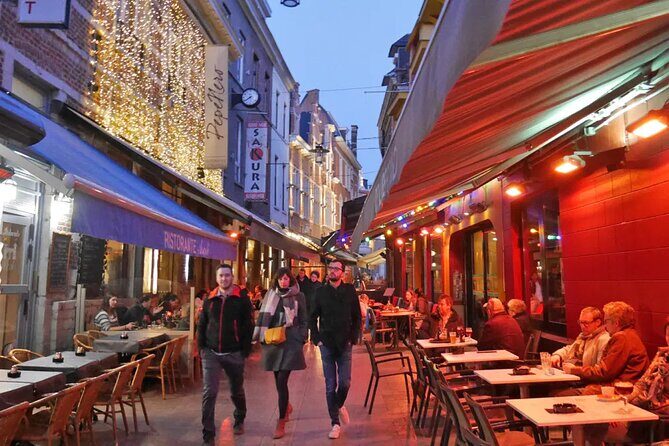
Then you land at Oude Markt, a square known for having lots of catering establishments in one place. The vibe here is classic Leuven: sit down, watch the day happen, and don’t over-plan.
This is a perfect moment to use the game’s flexibility. If your team is enjoying the competition, you might keep going straight through. If you’re starting to feel the walking, take a break. The game format is built for pacing, and Leuven cafes and terrace culture are a major part of the experience.
Romanesque gate and the old hospital remnant
Leuven also has remnants of older institutions. The Romanesque gate from 1218–1222 is the only remnant of the Sint-Elisabethgasthuis, founded around 1080–1090 under Henry III, Count of Leuven.
This is the kind of stop that’s easy to walk past when you’re not looking for it. That’s exactly why the scavenger hunt format is useful. You get to the right corner, at the right time, for the right reason—and you learn what you would have missed.
St. James tower and the seven-wonders moment
Next is the Romanesque Church of St. James, with only the tower remaining. It dates to the beginning of the 13th century. On the tower cover, you can see an ornate bell from 1478, described as one of the seven wonders of Leuven.
Even if bells aren’t your thing, this is a fun challenge stop because it gives you a specific visual to hunt for. And tower views remind you you’re in a city where history didn’t just happen—it kept shaping the skyline.
If you have time and the weather is decent, look around from nearby streets to get a feel for how the tower fits into the center of Leuven.
Janseniuspark towers and the water gate
Finish your arc in the Janseniuspark, where you can see the Jansenius and Justus Lipsius towers. They flanked the water gate in the city wall during the Middle Ages—the place where ships entered Leuven.
This last stretch is a good reward. You move from buildings to the larger idea of how Leuven worked. Ships, walls, entrances, and trade: it ties back to the earlier market and economy story, but in a more physical way.
When you wrap up back at the meeting point, you’ll likely feel like you covered more ground than a typical self-guided stroll—without being drained by a nonstop “listen to the guide” day.
Price and whether it feels worth it
The price is $37.21 per group, up to 6 people, for about 2 to 4 hours. That group setup is the value lever. If you play at full capacity, it works out to roughly $6.20 per person, which is a fair price for an organized, self-paced experience that sends you across key heritage spots plus some less obvious ones.
If you’re booking as a small group of 1–2, the cost per person goes up, so think about your style. This hunt is best when you’ll use the competition and team decision-making to enjoy the pace, not just “complete it” as quickly as possible.
Who this is best for
This works especially well if you:
- want to explore Leuven without hiring a full guided walking tour
- enjoy quiz-style challenges and light competition in a friendly way
- like mixing major sights with quieter places
- are visiting in a group up to 6 and want a shared activity
It’s also great for older children who can handle the app tasks, since the game format naturally keeps them involved. If you prefer museum-style deep commentary from a person, you might feel like you want more narration than a game provides.
Should you book the Leuven e-Scavenger hunt?
I’d book it if you want a half-day that feels active but not stressful. You’ll hit the Grand Place and Town Hall, get beguinage context, see the oldest botanical garden connection, and end with a solid sense of how Leuven grew around trade, learning, and medieval institutions. You also get the freedom to pause for terraces and keep your day shaped by your own energy.
Skip it if you dislike phone-based games or you want a traditional guide-led tour with long explanations. And make sure you bring enough data for the app, because that’s the one practical item you can’t solve on-site.
FAQ
Where does the e-Scavenger hunt in Leuven start?
It starts at Monseigneur Ladeuzeplein 17, 3000 Leuven, Belgium, and it ends back at the same meeting point.
How long does the activity take?
The duration is listed as about 2 to 4 hours. The app includes 2.5 hours’ worth of content.
Is this tour guided by a person?
No. It’s a self-guided city game you complete at your own pace using a mobile ticket.
What language is it offered in?
The experience is offered in English.
How many people can be in a group?
It’s priced for up to 6 people per group, and it’s a private activity for your group.
Do I need a smartphone or data?
Smartphone and data are not included, so you’ll need your own phone and connection to use the app.
What’s the price?
It’s listed at $37.21 per group (up to 6 people).
What are the available time slots?
Opening hours are shown as Monday through Sunday from 12:00 AM to 11:59 PM, so you can choose a time within that window.
Is it accessible for hearing impaired visitors?
It’s described as user-friendly for hearing impaired.
Are service animals allowed?
Yes, service animals are allowed.