REVIEW · BRUSSELS
Brussels: Private Tour of the Upper and Lower City
Book on GetYourGuide →Operated by Bravo Discovery · Bookable on GetYourGuide
Brussels shows itself in two levels. This private tour gives you the big map of the city by walking from the Lower City core to the Upper City viewpoints and institutions, with stops that explain how Brussels grew. I like that it’s built as two clear sections, so you don’t just see sights—you understand why they’re there, including the cultural themes around Art Nouveau, beer, and chocolate. One thing to keep in mind: it’s mostly a walking tour, with uphill moments on the way to the cathedral.
Two highlights for me are the mix of iconic landmarks (Grand Place to Manneken Pis, then from the cathedral toward the Sablons) and the way the guide shapes the story to match your pace. The reviews point to guides like Emil handling the timing of different city eras really well, and to Hr. Boeykens keeping the mood up even when the weather turns cold and wet. The only possible drawback is that museum time may depend on what you choose in the Upper City, so if you want a specific museum visit, confirm it early.
In This Review
- Key points to know before you go
- Two-Level Brussels: Lower City to Upper City in 3 Hours
- Starting at Grand Place: The Plaza You Use Like a Compass
- De Brouckère to Monnaie: Squares with Personality (and a Few Smart Stops)
- Saint-Hubert Royal Galleries: Finish With a Glass-Roof Moment
- Upper City Climb: St. Michael and St. Gudula Inside the Cathedral
- Place des Palais and the Sablons: Royal Park, Palaces, and Museum Choices
- Art Nouveau, Beer, Chocolate, and How Brussels Explains Itself
- Price and Value for a Private Group up to 20
- Practical Tips to Make the Walk Feel Effortless
- Should You Book This Brussels Upper and Lower City Tour?
- FAQ
- Where does the tour start?
- Does the tour include both Lower City and Upper City?
- How long is the tour?
- Is this a private tour?
- What’s included in the price?
- Are museum tickets included?
- What languages are available for the live guide?
- Is hotel pickup available?
- Is there a cancellation option?
Key points to know before you go
- Two-city layout: Lower City + Upper City in one smooth 3-hour plan, starting and returning to Grand Place.
- Iconic anchors: Grand Place, Manneken Pis, the federal opera house, and the Saint-Hubert Royal Galleries.
- Stained-glass moment: Time inside the Cathedral of St. Michael and St. Gudula, not just a quick look outside.
- Museum choice in the Upper City: Musical Instruments Museum, or a route that includes Magritte and the Palace of Fine Arts.
- High guide attention: Private group format, with multilingual guides (including English, French, German, Spanish, and more).
Two-Level Brussels: Lower City to Upper City in 3 Hours
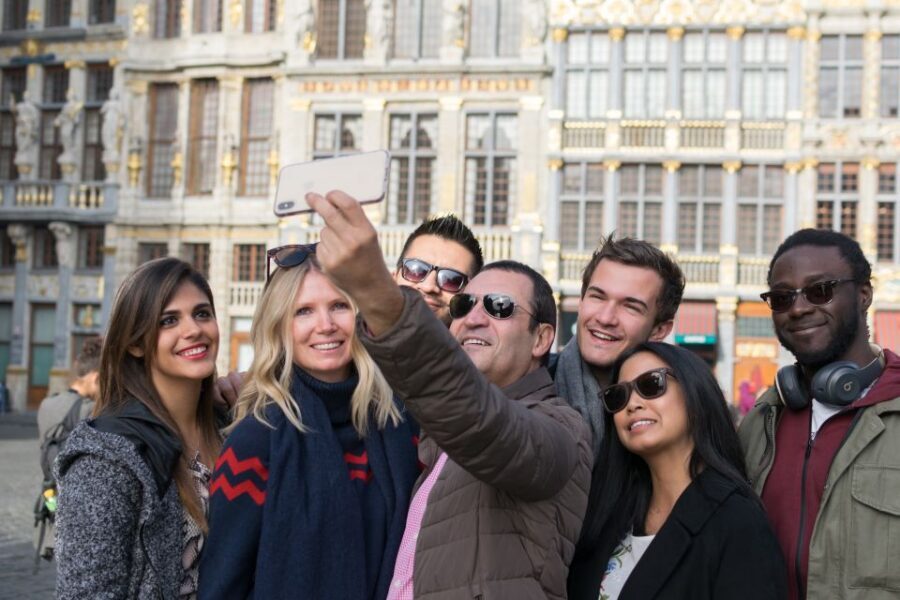
This is the kind of tour that helps you get your bearings fast. Brussels can feel confusing at first—wide boulevards, sudden alleys, grand squares, and then a hill that changes the whole mood. Here, the route solves that by splitting the day into a Lower City loop and an Upper City climb.
The length is a sweet spot: about 3 hours. That means you can do it early in your trip and use it as your reference point for the rest of your days. It’s also a smart fit for groups that don’t want to spend half a day commuting between neighborhoods.
It’s a private group with a guide, and the operator notes a cap of 25 participants per group, while pricing is described for a group up to 20. Translation: you should still feel like you can hear your guide without being buried in a crowd.
This tour is wheelchair accessible, and pickup from your Brussels hotel is possible. So if you’re trying to limit logistical headaches, that matters more than it sounds.
Other private tours with a local we've reviewed in Brussels


Starting at Grand Place: The Plaza You Use Like a Compass
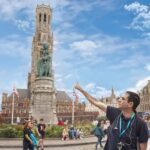
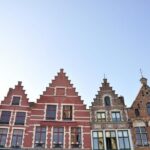
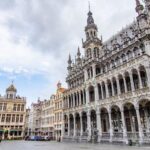
You’ll begin at Grand Place, the city’s main square and the easiest place to understand the “official” Brussels look: ornate facades, grand scale, and the feeling that this square defines the city’s identity. Even if you’ve seen photos, standing here with a guide adds context fast—what you’re looking at, and why it’s so central.
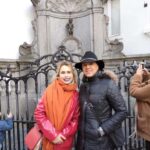
From Grand Place, you head toward Manneken Pis. It’s a small bronze statue, but it works as a perfect contrast point: a playful landmark that pairs well with the more formal architecture around it. Your guide can help you connect that whimsy to how Brussels expresses identity—serious prestige in the big squares, human humor at street level.
Next comes Saint-Géry island, once the largest island in the Senne river. This stop is valuable because it turns Brussels from “pretty buildings” into “a city shaped by geography.” When you understand the river and the earlier layout, later architecture makes more sense.
You then pass through St. Catherine square and continue toward the more modern-feeling heart of downtown around De Brouckère and Monnaie. This is where the tour starts showing you how the city’s center evolved—more public life, more cultural institutions, more movement.
Why it works: this sequence takes you from symbolic anchors to the practical city core, without turning the walk into random sightseeing.
De Brouckère to Monnaie: Squares with Personality (and a Few Smart Stops)
De Brouckère square and Monnaie square are like two chapters in the same book. They aren’t just intersections; they’re places where you can feel the city’s shift from older civic spaces toward a more performance-and-commerce energy.
Your guide uses these stops to talk about architecture and cultural life in a way that’s easier to remember because you’re walking between it. If you’ve got any interest in Belgian design, this is a good stretch to listen closely. The highlights specifically mention learning about Art Nouveau, and the downtown cluster is a logical setting for that discussion.
Then you move on to one of the biggest moments in the Lower City: the federal opera house of Belgium. Even if you don’t attend a performance, the building matters. Opera houses are designed to be seen and felt—placement, scale, and the sense of civic pride all tell you what the city values.
Potential drawback here: depending on crowds and street conditions, this can be a slightly “busy” leg of the walk. If you prefer slow and quiet photography time, tell your guide early so they can pace the group with you.
Saint-Hubert Royal Galleries: Finish With a Glass-Roof Moment
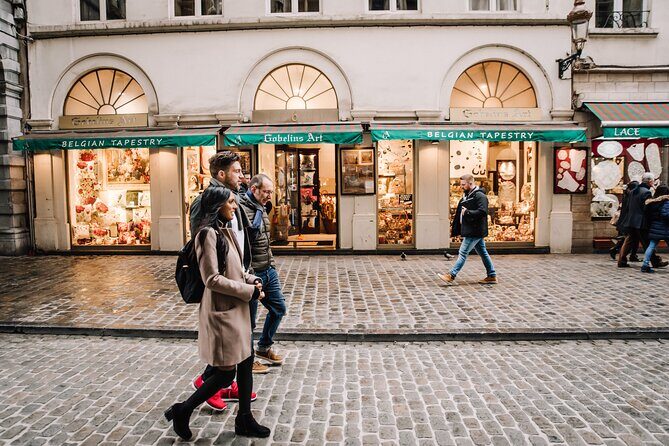
The Lower City loop ends at the Saint-Hubert Royal Galleries, a set of glazed shopping arcades that feel like walking through a preserved slice of old Brussels. This stop is a great reset after squares and landmarks because it slows you down visually. You’re not just looking at an exterior now—you’re moving inside a space that was designed for strolling.
The galleries also help connect the tour’s themes: culture, craft, commerce. A city’s identity often shows up in how people shop, meet, and spend time. These arcades are one of Brussels’ ways of doing that with style.
And because the tour is private, your guide can pause here to interpret what you’re looking at—materials, design choices, and why these arcades became a social hub.
One practical note: if you’re traveling with kids or anyone who gets tired quickly, the galleries are a good place for a short rest. You can still keep the “tour momentum” without rushing.
Upper City Climb: St. Michael and St. Gudula Inside the Cathedral
After the Lower City section, you continue in the Upper City, starting again around Grand Place. That climb is part of the point. Brussels changes as you go up: streets feel different, views open up, and the mood turns more formal.
Your first big Upper City stop is the Cathedral of St. Michael and St. Gudula. The standout detail here is that you can admire the stained-glass windows from inside. That matters. Photos flatten stained glass. Inside, you get the color shift from real light, and that’s where your guide’s story makes more sense.
This is also a good moment for perspective: the cathedral is the kind of building that anchors the city in both time and meaning. When the guide explains what you’re seeing while you’re standing under the windows, it stops being just “a church” and becomes a time capsule.
If you’re visiting during colder or rainy months, plan for indoor focus. People often think they’ll be outdoors sightseeing the whole time, but this Upper City segment naturally balances out your walk.
Other city tours we've reviewed in Brussels

Place des Palais and the Sablons: Royal Park, Palaces, and Museum Choices
From the cathedral, you head to Place des Palais, home to the royal park and palace area. Even when you don’t spend long at the palace itself, the surrounding layout gives you a sense of how power and landscape were planned together. This stop shifts your mental picture of Brussels: it’s not only markets and squares; it’s also governance, ceremony, and structured space.
Then comes one of the most useful features of this tour: a museum choice. You can visit the Musical Instruments Museum, or you can pass by the Magritte museum and the Palace of Fine Arts on the way to the Petit Sablon and Grand Sablon.
Here’s how to choose based on your interests:
- Pick the Musical Instruments Museum if you want something hands-on and theme-based that ties culture to sound and craftsmanship.
- Pick the Magritte and Palace route if you’re more excited by visual art and Belgian creativity.
Either way, the tour ends up at the Sablon area, which is famous for its refined atmosphere. It’s a great closing zone because it feels like Brussels doing its classy-lifestyle thing: smaller streets, calmer pace, and an easy place to ask your guide what to do next.
I like that this structure gives you control without breaking the flow of the route. If your group has different interests, you’re not stuck with a single one-size-fits-all museum stop.
Art Nouveau, Beer, Chocolate, and How Brussels Explains Itself
The highlights say you’ll learn about Art Nouveau, Belgian beers, and chocolate. Even though the tour is built around walking landmarks, these topics aren’t random add-ons. They’re the threads that help you read what you see.
Art Nouveau in Brussels isn’t just a style; it’s a way of communicating modernity through design. When your guide points out design cues while you’re standing among different buildings, you start noticing curves, ornament, and how “fancy” details were used in everyday public life.
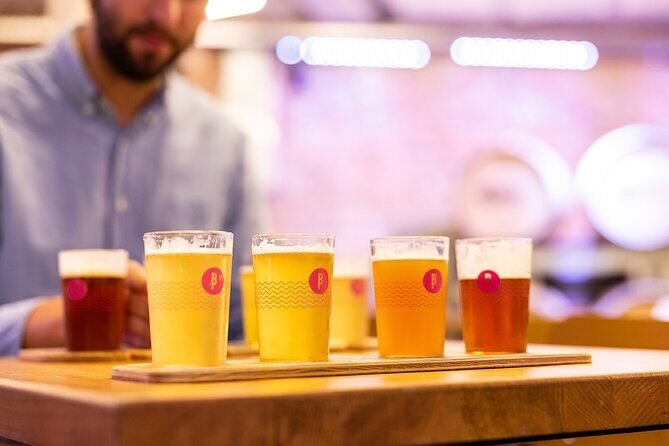
The beer and chocolate pieces add a very practical layer. Brussels is known for these foods and drinks, but they also fit the story of the city’s social culture: meeting places, celebrations, and the idea that hospitality matters. Your guide can connect those traditions to the places you’re walking through—especially squares and arcades where people historically gathered.
And that’s what makes the tour feel more valuable than a simple checklist of stops. You’re not only collecting photos—you’re collecting explanations you can reuse later.
Price and Value for a Private Group up to 20
The price is $353 per group for a private tour lasting 3 hours, with the group described as up to 20. Value depends on how full your group is.
- If you do fill the group (20 people), you’re at about $17.65 per person.
- If your group is smaller, the per-person cost rises, so it helps to compare against other private options and decide what you’ll actually use the guide for.
Where this price makes sense: when you want a guided walkthrough that covers both neighborhoods and includes time inside the cathedral, plus a guided museum decision in the Upper City. You’re getting direction, pacing, and interpretation, not just transportation between landmarks.
Also, pickup from your Brussels hotel is possible. That can save time and reduce friction, especially if you’re juggling limited walking stamina or tight sightseeing windows.
If you’re a couple or a small family, you might still find it worthwhile because the tour is structured to keep everyone together and focused. But it’s the kind of booking where group size really does affect perceived value—so I’d count your people carefully before you hit reserve.
Practical Tips to Make the Walk Feel Effortless
A few small choices can make this tour much more comfortable:
- Wear shoes you trust. You’ll be walking through multiple squares and you’ll climb uphill in the Upper City segment.
- Dress for weather. The guides are ready for cold or wet conditions, but your body still feels it. Bring a layer.
- Use the private format. The tour says the route can be arranged to suit your needs (entertaining, academic, professional). If you care more about architecture, ask for more building talk. If you care about art and museums, steer the museum choice.
- Ask your guide to repeat the “why.” The best parts of this tour are the explanations that connect geography to buildings. When you hear something you don’t fully grasp, ask for a simpler version. The whole point is understanding.
- Plan your day around it. Because the tour gives you both levels of the city, you can use it as a launchpad for later self-guided wandering.
Should You Book This Brussels Upper and Lower City Tour?
If you want Brussels in a single, organized 3-hour format, I think this is a strong choice. It’s especially good for first-time visitors who want both the classic Lower City anchors and the Upper City institutions, and it pays off more if you like guided context rather than just standing in front of landmarks.
I’d book it if:
- your group wants a private experience with a professional guide
- you want time inside the cathedral, not only exterior photos
- you like the idea of an Upper City museum choice (Musical Instruments Museum or the Magritte/Palace route)
- you value practical explanations about how the city developed, with cultural themes like Art Nouveau, beer, and chocolate
I’d think twice if:
- your group strongly prefers long museum time over walking between neighborhoods
- you need a fully flat, step-light route (there is an uphill segment)
Overall, this tour feels like a guide-written map in human form. You leave with a better sense of where you are, why Brussels looks the way it does, and what to hunt for next on your own.
FAQ
Where does the tour start?
The tour begins in the Lower City at Grand Place.
Does the tour include both Lower City and Upper City?
Yes. It’s split into two sections: Lower City first, then Upper City.
How long is the tour?
The duration is 3 hours.
Is this a private tour?
Yes, it’s a private group tour.
What’s included in the price?
A professional guide is included. Transport, museum tickets, and drinks/meals are not included.
Are museum tickets included?
No. Tickets to museums are not included.
What languages are available for the live guide?
The guide is available in Spanish, Dutch, English, French, German, Italian, Russian, and Portuguese.
Is hotel pickup available?
Yes. Pickup is possible from your Brussels hotel.
Is there a cancellation option?
There is free cancellation up to 24 hours in advance for a full refund. You can also reserve and pay later (pay nothing today).