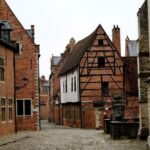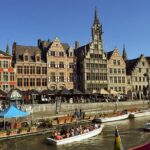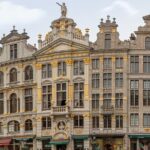
Brussels makes sense on foot. This 2-hour highlight-and-local-life walk starts at the Royal Palace and keeps things easy by moving downhill, with no stair climbs. I like that it covers the must-sees without turning into a marathon, and that your guide keeps the story anchored in how Brussels actually lives today.
You’ll also hit big symbols like Manneken Pis and the church Notre-Dame des Victoires au Sablon, including the legend tied to Holy Maria. I especially like the follow-up value: tips on where to relax and have fun, plus guidance on tasting Belgian waffles and picking souvenirs that fit what you saw. One drawback to plan for: it is two hours outside, so cold weather can feel long, and the tour isn’t set up for wheelchair users.
Meeting is straightforward: get to the Trône metro area (lines 2 and 6) and look for your guide near monument Leopold II holding a yellow sign reading My Super Tour/Bruxelles 15:15. Guides I’ve seen mentioned with this route include Evgenia, Paulina/Polina, Yuvi, and Nver, and the consistent theme is a friendly pace plus real-world advice after the walk.
In This Review
- Key Things That Make This Brussels Walk Work
- Getting Your Bearings: Royal Palace to Grand Place Without the Hill Grind
- Finding Your Guide Near Trône (Lines 2 and 6) and Leopold II
- Royal Palace and Park of Brussels: Easy Starts With Places Most People Skip
- Medieval City-Wall Remnants: Why Brussels Looks the Way It Does
- Notre-Dame des Victoires au Sablon and the Holy Maria Legend
- Manneken Pis Plus an Antique Market Stop for Real City Texture
- Museum Quarter: Where Culture Gets Organized in Brussels
- Grand Place: Ending in the City’s Most Rewarding Square
- Waffles, Souvenirs, and Relax Time: What the Guide Adds After the Walk
- Price and Time: Is $60 Worth It for 2 Hours?
- Who This Tour Suits Best (and Who Should Think Twice)
- Should You Book This Brussels Walking Tour?
- FAQ
- How long is the Brussels walking tour?
- Where do I meet the guide?
- What languages are offered on the tour?
- Is the tour mostly uphill or does it involve stairs?
- What are the main sights on the route?
- Is it suitable for a first-time visitor?
- What should I bring with me?
- Is the tour wheelchair accessible?
Key Things That Make This Brussels Walk Work
- Downhill route, no stair climbing so you can focus on sight-seeing instead of effort
- Royal Palace to Grand Place gives you a clean “big picture” line through the city
- Sablon and Notre-Dame des Victoires add story you can’t spot from a guidebook alone
- Manneken Pis plus a nearby antique market keeps it fun and human, not just formal landmarks
- Museum quarter stop helps you understand where Brussels stores its culture (and how neighborhoods shift)
Getting Your Bearings: Royal Palace to Grand Place Without the Hill Grind
This is the kind of Brussels tour that helps your brain click into place fast. You start at the Royal Palace area and end in the heart of the city at Grand Place, so you leave with a mental map that matches what you’ll want to do next.
The best practical part is the route design. Instead of climbing up through the older upper-town streets, the walk is arranged to avoid that hard hill struggle. You get to descend comfortably, which matters because Brussels is at its best when you can keep your energy for extra stops afterward.
You’re not just ticking boxes here. Your guide weaves together how the city’s layout shapes daily life: where people move, where power sits, and why the city center feels both formal and full of street-level characters.
Other Brussels highlights walking tours we've reviewed in Brussels
Finding Your Guide Near Trône (Lines 2 and 6) and Leopold II
The meeting point is very close to the Trône metro station on lines 2 and 6. Head toward monument Leopold II and look for a guide holding a yellow sign that says My Super Tour/Bruxelles 15:15.
This matters more than you’d think. In a city like Brussels, you waste time when you’re guessing where the group starts. Once you’re set, the tour flows as a single walk with connected stops, so you spend your energy looking around instead of searching.
Royal Palace and Park of Brussels: Easy Starts With Places Most People Skip
The tour begins with the history of the Royal Palace, then transitions into the Park of Brussels area. Even though this is a two-hour format, the pacing is designed to keep the walk comfortable while still giving you meaningful context.
What I like most about the Park of Brussels segment is the attention to small, off-the-radar spots. Think less “park postcard” and more “how the space actually feels when you’re there.” Your guide points out features and angles you’d probably miss if you just walked through without a storyline.
If you’re the kind of person who likes learning why a place looks the way it does, this part delivers. It frames the city’s big official face and then quickly softens it into greenery and quieter corners.
Medieval City-Wall Remnants: Why Brussels Looks the Way It Does
After the park, the walk includes remnants of the ancient medieval city walls. This is one of those stops where a guide can turn “that’s interesting” into “now I see the shape of the city.”
You start connecting dots: city boundaries in the past often influence street lines and neighborhood edges in the present. Even without a long museum stop, this kind of street-level context helps you understand Brussels as a layered city—old defenses, new functions, and constant change.
The upside: it gives structure to everything you’ll see later on the walk, including the smoother path toward the central square. The only real consideration is shoe choice. Cobblestones and uneven pavement are common in this part of town, so bring comfortable shoes and you’ll enjoy the pauses more.
Notre-Dame des Victoires au Sablon and the Holy Maria Legend
Then you reach the church of Notre-Dame des Victoires au Sablon. This stop is valuable because it comes with a story—specifically, the legend connected with Holy Maria.
Religious sites in European cities can feel distant if you only read a plaque. Here, the guide’s job is to make the legend feel like something that grew out of real local belief and local life. That makes it easier to remember the church’s place in the city, not just its architecture.
This is also a good moment to slow down. You get a clear sensory shift from official spaces and park calm into something more intimate—brick, stone details, and a sense of neighborhood identity in the Sablon area.
Other walking tours we've reviewed in Brussels


Manneken Pis Plus an Antique Market Stop for Real City Texture
Next up is the iconic fountain Manneken Pis. It’s famous for a reason, but the guide approach here is what keeps it from feeling like a quick photo stop. You’ll get context that helps you see it as a living Brussels symbol rather than a novelty.
From there, you pass an antique market. This is a fun contrast: a cultural icon followed by everyday commerce. You get the feeling of Brussels as both old-school and practical—people buying, selling, browsing, and meeting in public spaces.
I like including markets during a highlight walk. They break up the “big monument” rhythm, and they’re the easiest way to understand neighborhood character in under an hour.
Museum Quarter: Where Culture Gets Organized in Brussels
After Manneken Pis and the market, the route moves into the Museum’s quarter area. Even without entering a specific museum, this stop helps you understand how Brussels groups culture.
A guide can point out the general feel of the quarter—how it differs from the immediate historic core—and what that means for your planning later. If you’re thinking about adding a museum after the walk, this part gives you a head start on orientation.
This is also a smart time to ask questions. In the run of guides associated with this tour, the common pattern is that they don’t just recite facts. People have noted guides like Paulina or Polina taking extra time to explain how upper-town and lower-town fit together, and that kind of framing helps you decide what to do next.
Grand Place: Ending in the City’s Most Rewarding Square
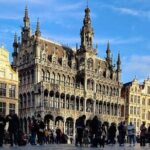
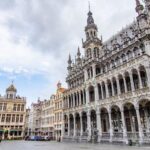
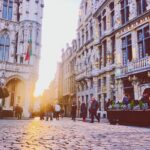
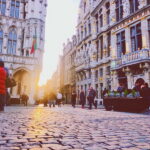
Finally, the tour ends at Grand Place, one of Brussels’s most notable historic squares in Europe. You arrive there with the earlier stops in your head, which makes the square feel less like a final photo and more like the “why” of the whole route.
By the time you stand in the square, you understand what you’ve been seeing: royal power at the top, medieval traces in between, local legends in the middle, and everyday personality shown through street symbols and markets. Grand Place ties it together.
If you want one practical tip for after the tour, it’s this: linger. Don’t sprint away immediately. The square is a strong place to pause, people-watch, and decide your next move while the city feels mapped in your mind.
Waffles, Souvenirs, and Relax Time: What the Guide Adds After the Walk
A highlight of this tour is the “what next” help. Guides provide tips on where to relax and have fun after you finish the route. That sounds small, but it’s actually a big value boost on a short trip.
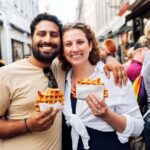
You’ll also get guidance on where to try Belgian waffles and what souvenirs to buy to match what you actually saw. That’s better than generic shopping advice because you can connect the souvenir to the stop it relates to.
I’ve found that this kind of local recommendation is what turns a walking tour into a real planning tool. It helps you avoid the common mistake of spending your last day wandering without a plan.
Price and Time: Is $60 Worth It for 2 Hours?
At $60 per person for a two-hour walk, you’re paying for three things: a professional local guide, a tight route that avoids a hill grind, and immediate planning value you can use right away.
Is it “cheap”? No. But it’s also not trying to be a full-day deep academic course. For most first-timers, two hours is the sweet spot: enough time to learn how Brussels works, not so long that you burn a day in transit.
For value, pay attention to the design choices you’re getting:
- No stair climbing and a comfortable downhill flow
- A route that combines major icons with smaller story-driven stops
- Practical “next steps” after the walk
If you’re short on time, or you want a fast route that doesn’t feel exhausting, this price can make sense. If you’re the type who hates walking for any stretch, then the “two hours outdoors” factor becomes the deciding issue.
Who This Tour Suits Best (and Who Should Think Twice)
This tour is a strong fit if you’re:
- visiting Brussels for the first time and want orientation fast
- interested in both classic landmarks and the stories that explain them
- okay with a steady walking pace for around two hours
It’s less ideal if you:
- need wheelchair-friendly access, since it’s not suitable for wheelchair users
- get miserable in cold weather, since it’s outdoors for the duration and you should plan accordingly with an umbrella and water
One more practical thought: if you like taking photos, this is a route with plenty of visual anchors. A guide’s eye for photo angles can turn “random pictures” into a set you’re glad you brought home.
Should You Book This Brussels Walking Tour?
I think you should book it if you want an efficient first pass through Brussels that mixes big sights with human detail. The Royal Palace to Grand Place flow gives you structure, the no-stairs approach keeps it comfortable, and the guide adds real planning help like waffle spots and what to look for when shopping.
Skip it only if walking for two hours outside is a deal-breaker for you, or if you need wheelchair accessibility. Otherwise, this is the kind of tour that helps you get your bearings fast—and then enjoy the rest of Brussels more on your own.
FAQ
How long is the Brussels walking tour?
It runs for 2 hours.
Where do I meet the guide?
Meet near the Trône metro station (lines 2 and 6). Look for the guide near monument Leopold II holding a yellow sign that reads My Super Tour/Bruxelles 15:15.
What languages are offered on the tour?
The live guide speaks Russian and English.
Is the tour mostly uphill or does it involve stairs?
The route is designed so you do not climb the hill, and it involves no stair climbing. It’s comfortable because the route is set up to descend.
What are the main sights on the route?
The walk includes the Royal Palace area, the Park of Brussels, remnants of medieval city walls, Notre-Dame des Victoires au Sablon (with a legend connected to Holy Maria), Manneken Pis, an antique market, the Museum’s quarter, and ends at Grand Place.
Is it suitable for a first-time visitor?
Yes. It’s suitable for first-time visitors and also works if you’ve already been in Brussels.
What should I bring with me?
Bring comfortable shoes, an umbrella, and water.
Is the tour wheelchair accessible?
No. It is not suitable for wheelchair users.