REVIEW · BRUSSELS
Brussels 3-Hour Guided Art Nouveau Tour
Book on GetYourGuide →Operated by Bravo Discovery · Bookable on GetYourGuide
Art Nouveau in Brussels is a treasure hunt. In just 3 hours, this guided route shines a light on Victor Horta and the wider Art Nouveau scene, especially in the Bailli district where the style clusters.
I like that it starts at the Grand-Place at 10:00, with a guide easy to spot holding a white umbrella, then moves you efficiently by tram toward the densest concentration of Art Nouveau streets. I also like the way the guide helps you “read” buildings, often using photos of interiors so you can understand what you miss when you’re viewing mainly from the outside.
One drawback to plan for: the tour is mostly a street-level look at facades, and you won’t be touring inside every house. If you want the full inside-and-out experience, you’ll want to plan your timing for the Victor Horta Museum afterward.
In This Review
- Key highlights at a glance
- First Impressions: Why this Art Nouveau route works
- Grand-Place Meet-Up to Bailli Tram Hop (3 hours that stay focused)
- The Art Nouveau basics your guide will train your eye for
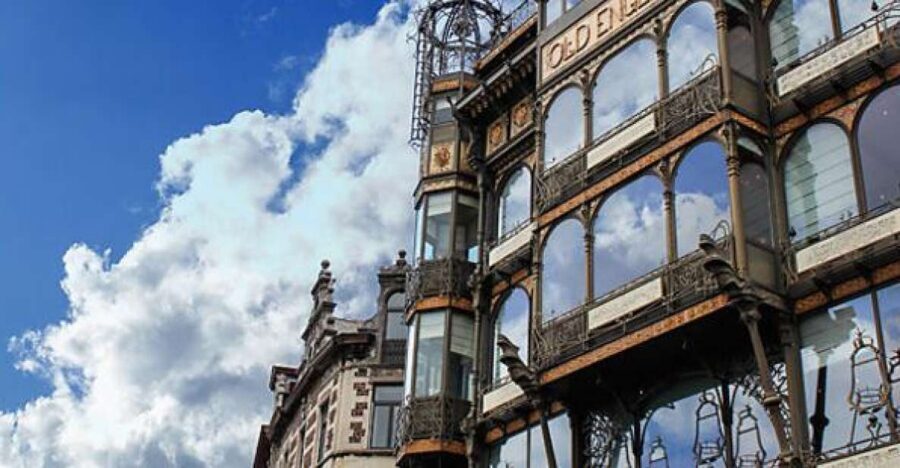
- Old England House (Music Instrument Museum): the warm-up stop
- Hotel Tassel (Victor Horta, 1893–1894): the name you keep hearing
- Van Rysselberghe House (Octave Van Rysselberghe, 1912): Art Nouveau keeps evolving
- Hotel Otlet (Octave Van Rysselberghe + Henry van de Velde, 1894–1898): teamwork in design
- Hotel Goblet d’Alviella (Octave Van Rysselberghe, 1882): earlier than you expect
- Hotel Ciamberlani (Paul Hankar, 1897) and the René Janssens house (Paul Hankar, 1898)
- Architect Armand Van Waesberghe: another design voice in the mix
- The Beukman house (Albert Roosenboom, 1900) and Paul Hankar’s private home
- End at Victor Horta Museum: keep your momentum going
- Price and value: does $35 make sense for 3 hours?
- Small practical notes that will make the tour smoother
- Who should book this Art Nouveau tour, and who might want another option
- Should you book the Brussels 3-Hour Guided Art Nouveau Tour?
- FAQ
- Where is the meeting point and how do I recognize the guide?
- What time does the tour start and how long is it?
- What’s included in the price?
- What languages are offered?
- Is the tour wheelchair accessible?
- Where does the tour end?
- What should I bring?
Key highlights at a glance
- Grand-Place meet-up at 10:00, with the guide holding a white umbrella
- Tram to Bailli, the city’s Art Nouveau hotspot
- An architect-focused route that includes Victor Horta and major rival names
- A clear end point right in front of the Victor Horta Museum
- Material “how it’s made” storytelling: iron, glass, wood, and stone
- Interior context via photos, since most stops are exterior views
First Impressions: Why this Art Nouveau route works
Brussels Art Nouveau can feel like a scavenger hunt. This tour makes it a guided lesson, not a random wandering game. You’ll walk away knowing what to spot, and why these buildings don’t look like anything before or after.
What I like most is the promise of the big-picture idea behind the style: Art Nouveau wasn’t just decoration. It was a design approach that matched materials and structure, mixing iron, glass, wood, and stone into one coherent look.
The route also gives you a practical way to “learn by proximity.” Instead of bouncing all over the city, you stay in the Bailli area long enough to see how different architects interpreted the same visual language.
Other Brussels highlights walking tours we've reviewed in Brussels

Grand-Place Meet-Up to Bailli Tram Hop (3 hours that stay focused)
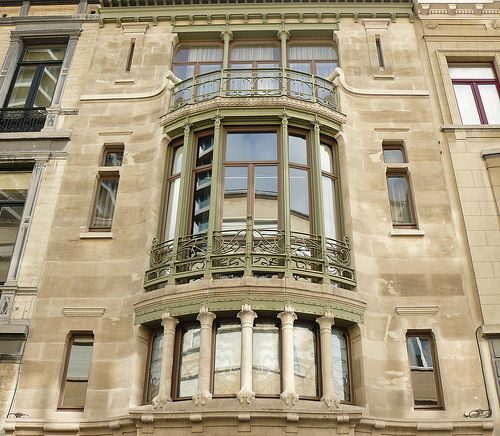
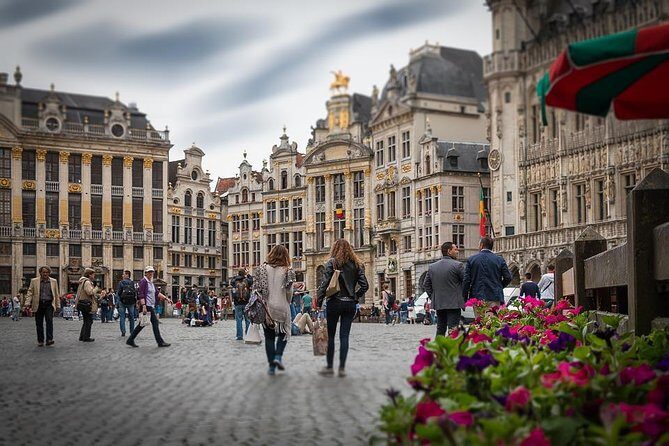
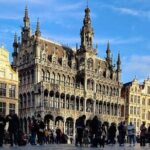
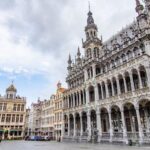
You meet at the Grand-Place in Brussels at 10:00, and the guide is holding a white umbrella. That matters more than people think—Brussels is busy, and Art Nouveau tours can start chaotic if the meeting point is vague.
From there, you take the tram to the Bailli district, described as the famous neighborhood within the city with the largest number of Art Nouveau buildings. This is one of those smart choices that keeps your time on the street from getting eaten by long transfers.
You should also expect a decent amount of walking. One person noted an uphill start, so comfortable shoes are non-negotiable. It’s not a “sit and listen” tour; it’s an on-your-feet style of learning.
The Art Nouveau basics your guide will train your eye for
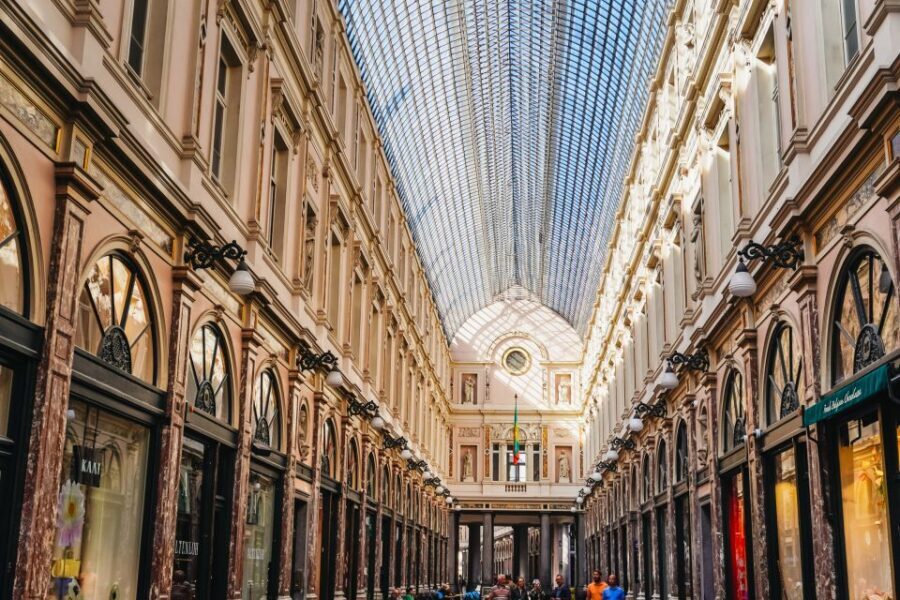
Art Nouveau has a look—curves, ornament, lively forms. But the tour’s real value is that it teaches you what’s doing the work.
You’ll hear how the architects approached design by combining multiple materials in one language. The guide’s focus on iron, glass, wood, and stone helps you understand why so many facades feel both delicate and technical at the same time.
Here’s how that helps you as a visitor:
- You start noticing how the building “frames” windows and doors, instead of only spotting pretty details.
- You learn to connect decorative features to the structure and craftsmanship, not just to aesthetics.
- You begin to tell apart similar-looking facades by their design habits.
Guides vary, but you may encounter someone like Maria, who in the past has shared personal research angles and even connected the movement to the political and social climate of the era. Other guides, like Danielle, have also been described as energetic and ready with specific stories that make the buildings feel less random.
Old England House (Music Instrument Museum): the warm-up stop
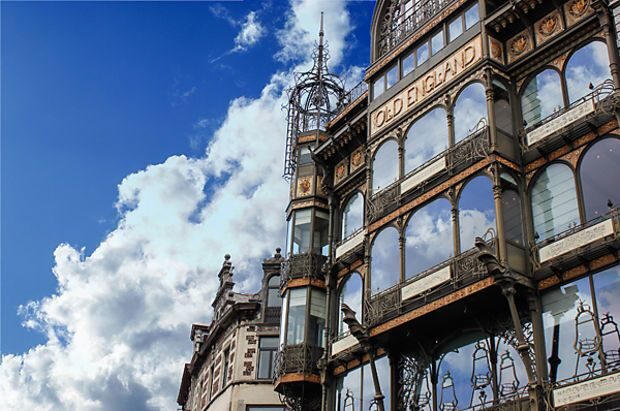
The tour begins its architect trail near the Old England House, also known as the Music Instrument Museum. Even if you’re not going inside, this stop gives you a sense of how Brussels streets can hold serious design intent in plain view.
Use this first stage to “switch on your Art Nouveau lens.” Look at the way forms repeat, how lines guide your eye, and how materials create visual rhythm. The guide will help you connect those street-level observations to the bigger story of the style.
If you’re hoping for a full museum-style explanation, you won’t get that here. This is more like a warm-up: learn what to pay attention to, then apply it block after block.
Hotel Tassel (Victor Horta, 1893–1894): the name you keep hearing
Next comes Hotel Tassel, built by Victor Horta in 1893–1894. Horta is the headliner for good reason, and this stop is designed to show you why his name keeps coming up in serious Art Nouveau conversations.
This is where you’ll start comparing how architects bend traditional building logic into something newer. Instead of treating the house like a box with a facade, the best Art Nouveau work makes the whole exterior feel part of a single design system.
What to watch for: transitions between levels, how openings are treated, and how ornament supports the building—not just adds to it. Even from the outside, those choices start to feel obvious once you know what the guide is pointing out.
Other Art Nouveau tours we've reviewed in Brussels
Van Rysselberghe House (Octave Van Rysselberghe, 1912): Art Nouveau keeps evolving
Then you’ll reach the Van Rysselberghe House, built by Octave Van Rysselberghe in 1912. This is useful because it shows you that Art Nouveau isn’t frozen in time. The style changes as the city and tastes shift.
Use this stop to notice differences in emphasis. Some houses lean more into one kind of decorative language, while others feel more restrained. The tour’s structure helps you see those contrasts without needing a book in your hand.
Practical note: by this point you’ll want to keep pace with the guide. The tour is efficient, and you’ll get more if you’re paying attention to the explanations while you’re still standing in front of the facade.
Hotel Otlet (Octave Van Rysselberghe + Henry van de Velde, 1894–1898): teamwork in design
After that, the tour moves to Hotel Otlet, built by Octave Van Rysselberghe and Henry van de Velde between 1894 and 1898. This stop helps you understand that Art Nouveau in Brussels wasn’t just one person’s vision.
When multiple designers shape a project, you often see more than one “tone” in the overall look. That’s good news for you: it makes the buildings more interesting to compare.
Again, you won’t be touring the interior here, so your best strategy is to focus on how different elements connect on the facade. You’ll be trained to see the material story and how it ties into the flow of the building’s lines.
Hotel Goblet d’Alviella (Octave Van Rysselberghe, 1882): earlier than you expect
One of the most helpful stops is Hotel Goblet d’Alviella, built by Octave Van Rysselberghe in 1882. It’s a reminder that the story of Art Nouveau in Brussels isn’t just late-1900s fantasy. The roots can run deeper than you think.
This stop is also a benchmark. When you compare it later to Horta and the other houses on the route, you can see shifts in style and emphasis over time.
What you’ll likely leave with: a stronger sense of progression—how ideas evolve as architects refine their approach to form and materials.
Hotel Ciamberlani (Paul Hankar, 1897) and the René Janssens house (Paul Hankar, 1898)
Next are two stops linked to Paul Hankar:
- Hotel Ciamberlani (1897)
- House of painter René Janssens (1898)
These two near-neighbor projects are ideal for comparison. Even without stepping inside, you can often feel how the architect’s design habits repeat from one commission to the next.
For you, this is a chance to learn pattern recognition. Once you can spot the architect’s “fingerprints,” the rest of the city becomes easier. You start looking at details the way the guide does.
A small practical thing: if you tend to take a lot of photos, don’t let that slow the group too much here. These stops move fast, and the guide’s best points land while you’re in the right spot.
Architect Armand Van Waesberghe: another design voice in the mix
The itinerary also includes the house connected to architect Armand Van Waesberghe. This part of the route helps round out the Brussels Art Nouveau story beyond the obvious names.
Think of this as context-building. The tour isn’t only there to “prove” Horta’s fame; it’s there to show you that multiple architects shaped the look of the city.
The Beukman house (Albert Roosenboom, 1900) and Paul Hankar’s private home
Then you’ll see:
- The Beukman house (Albert Roosenboom, 1900)
- The private home of architect Paul Hankar
These two stops are especially useful for understanding how Art Nouveau fits different types of clients and purposes. A private home can feel different from a hotel or a more public-minded commission.
The guide’s emphasis on materials becomes even more important here. When you understand how iron, glass, wood, and stone are used together, you start seeing the same design logic in houses that look different on the surface.
End at Victor Horta Museum: keep your momentum going
The tour ends in front of the Victor Horta Museum. Admission to the museum is not included, so you’ll need to plan a visit separately if it’s on your list.
This is where the timing tip really matters. One visitor advised pre-ordering tickets so you can head straight there right after the tour ends. If you’re trying to see the inside of a Horta house, that little bit of planning can save you from delays.
Even if you don’t go inside immediately, ending here is a smart landing zone. You’ll have spent the last few hours learning what to look for, and then you’ll be standing at the place that explains it in a deeper way.
Price and value: does $35 make sense for 3 hours?
At $35 per person for a 3-hour guided tour, this is fairly priced for a specialist architecture walk. You’re not just paying for someone to point; you’re paying for a structured route that keeps you in the Bailli cluster where the density is high.
Value points that support the cost:
- You get a curated set of major buildings, including Hotel Tassel, Hotel Otlet, and multiple Hankar commissions.
- You get a clear design framework about how materials combine in this style.
- You end at a major anchor point, the Victor Horta Museum.
The main thing to watch for is what isn’t included. Museum admission isn’t part of the $35, and transportation by train is listed as not included. Also, you should assume this is a street/exterior viewing tour, not a “go inside every house” package.
If you only want one or two buildings, you might feel it’s too much. If you want the ability to spot Art Nouveau patterns across Brussels, this is the kind of guided start that pays off.
Small practical notes that will make the tour smoother
Here’s what you should do to get the most out of the 3 hours:
- Wear shoes that handle walking plus possible uphill sections.
- Keep your phone charged. If the guide shares interior photos, you’ll want to save references.
- Ask questions at natural stops. The guide often answers and keeps the pacing moving.
- Bring your own plan for the museum. Since admission isn’t included, decide in advance if you’ll go right after.
One more realism check: a few people noted that when the group includes multiple languages, the guide may repeat dialogue for different languages. It can stretch the pace a bit, but it also means the tour stays accessible for more people.
Who should book this Art Nouveau tour, and who might want another option
This tour is a great fit if you:
- Want to learn Art Nouveau in Brussels through a structured route, not random searching.
- Care about architecture and want the material and design logic explained (iron, glass, wood, stone).
- Like comparing architects—Horta, Van Rysselberghe, Van de Velde, Hankar—without needing to research each one first.
It may not be the best fit if you:
- Only care about interiors and expect to tour inside most houses. On this outing, you’ll be viewing exteriors, with interior understanding handled through photos.
- Want a long stay at the museum itself rather than ending at it.
If you fall in the middle, you’re in the sweet spot. This tour sets your eye, then the museum visit can satisfy your curiosity about interiors.
Should you book the Brussels 3-Hour Guided Art Nouveau Tour?
I’d book it if your goal is to leave with real street-level confidence. You’ll learn what to notice, you’ll cover a strong cluster of buildings in the Bailli area, and the route ends where you can continue.
Don’t book it expecting a house-crawling adventure inside every building. If you’re strategic about adding the Victor Horta Museum afterward, the “mostly exterior” format becomes a strength rather than a limitation.
If you want an efficient way to understand why Brussels Art Nouveau feels different from styles before and after, this tour gives you that foundation in 3 hours.
FAQ
Where is the meeting point and how do I recognize the guide?
You meet at the Grand-Place in Brussels. The guide will be holding a white umbrella.
What time does the tour start and how long is it?
The tour starts at 10:00 and lasts 3 hours.
What’s included in the price?
The guided tour is included. Museum admission and transportation by train are not included.
What languages are offered?
The live guide provides the tour in Spanish, English, and French.
Is the tour wheelchair accessible?
Yes, the tour is wheelchair accessible.
Where does the tour end?
The program ends in front of the Victor Horta Museum.
What should I bring?
Wear comfortable shoes for walking.