REVIEW · BRUSSELS
Best of Brussels : Private Luxury Tour
Book on Viator →Operated by FIRST CLASS TOURS & LIMO SERVICE · Bookable on Viator
Brussels hits different when you don’t have to plan every turn. This private luxury tour gives you hotel or airport pickup, a comfortable ride through the city, and tight time at the top sights in about 4 hours. I like that it mixes big-name icons like Manneken Pis and the Atomium with calmer stops such as Mont des Arts and the Sablon church. One possible drawback: you’re on a schedule, so if you want to linger or you hit rain, you may spend more time in the vehicle than you’d like.
What makes it interesting is the pacing and the way the guide connects the dots—why these places matter, not just what they look like. In feedback, guides such as Andrea and Patrick get singled out for strong explanations, and Mary and Bilel are praised for being patient and friendly. The biggest consideration is that a small number of people reported issues like a late start, a short day, or poor coordination, so you should confirm pickup details clearly before you go.
In This Review
- Key highlights that make this tour worth your time
- Private Luxury in Brussels: how the 4-hour flow really works
- Manneken Pis: the tiny landmark with big legends
- St. Michael and St. Gudula Cathedral: Gothic scale you can feel
- Place Royale and the Royal Palace: photos and a daily schedule
- Atomium: the surreal 1958 World Fair icon (entry not included)
- Mont des Arts: the elevated viewpoint that stitches the city together
- Notre-Dame du Sablon: Late Gothic beauty with old guild stories
- Parc du Cinquantenaire: museums under a triumphal arch
- Basilique Nationale du Sacré-Cœur in Koekelberg: size, art, and scale shock
- European Quarter and the Council of the EU: a quick look at power
- Price, comfort, and real value for money
- Who this Brussels private luxury tour suits best
- Should you book Best of Brussels: Private Luxury Tour?
- FAQ
- How long is the Best of Brussels private luxury tour?
- Is this tour private?
- Does the tour include pickup?
- What language is the tour in?
- Is a mobile ticket included?
- Are tickets included for the Atomium?
- Are tickets included for the Basilica of the Sacred Heart at Koekelberg?
- Is admission free at the other main stops like Manneken Pis and St. Michael and St. Gudula Cathedral?
- What time is the Royal Palace Changing of the Guard?
- Can I cancel for a full refund?
- How far in advance do people usually book?
Key highlights that make this tour worth your time
- Private, exclusively for your party: fewer waiting games and more control over questions.
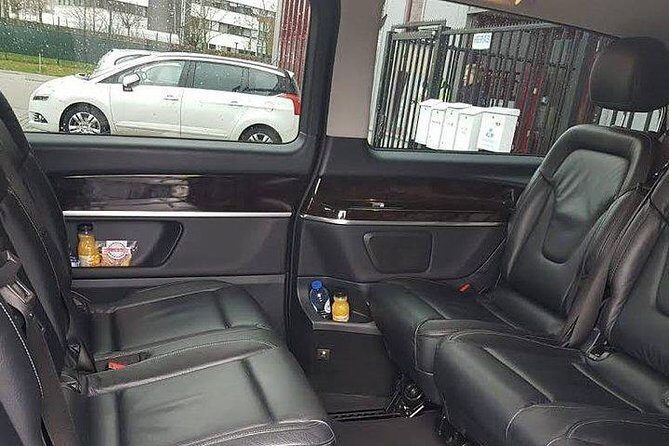
- Luxury vehicle + pickup/drop-off: saves you from the Brussels transit puzzle on day one.
- Icon set in one loop: Manneken Pis, Royal Palace area, Atomium, Sacred Heart, and the European Quarter.
- Free-entry stops in the middle of paid attractions: many key sights are free, so your ticket budget won’t be all at once.
- Daily Royal Palace guard change timing: plan around the roughly 2:30pm moment if it lines up.
Private Luxury in Brussels: how the 4-hour flow really works
This is built for an efficient first taste of Brussels. You’ll move by vehicle between sites, then spend short blocks at each stop—enough time to see the main view, grab photos, and understand what you’re looking at.
Because it’s private, you’re not sharing the guide’s attention with strangers. That matters in Brussels, where the “same-looking street scene” quickly turns into a story of kings, guilds, world fairs, and European politics. Guides mentioned in feedback—like Andrea and Patrick—are credited with keeping the explanations clear while covering a lot of ground.
The main trade-off with a 4-hour format is that you can’t treat every stop like a museum visit. If you’re the type who wants to slow-walk every corner, you’ll still enjoy it—you just need to know you’ll be moving on while you still want more.
Other Brussels highlights walking tours we've reviewed in Brussels
Manneken Pis: the tiny landmark with big legends
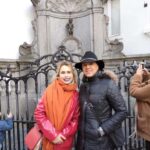
You’ll start at Manneken Pis, the little bronze boy that Brussels can’t stop talking about. The original figure is traced back to at least 1388, but the details get wrapped in legends. One story ties it to a moment of bravery that supposedly prevented a bigger disaster. Another version links it to a procession and an urge that could not be ignored.
What you’ll notice today is that the statue isn’t just a gag landmark. It’s also a living part of city culture. During celebrations and festivals, the figure is dressed in costumes—so it can look different depending on the timing of your visit. In other words, it’s a quick stop with a surprising amount of meaning.
Practical tip: go right away and accept that it’s usually busy. This stop works best when you’re focused on the story, not the crowd-free photo.
St. Michael and St. Gudula Cathedral: Gothic scale you can feel
Next is St. Michael and St. Gudula Cathedral, a Gothic church first founded in 1225 and completed in the 15th century. Even from outside, it impresses: a broad set of steps leads to a facade topped by twin towers, each about 69 meters high.
Inside, you get a long, roomy church with strong proportions. The cathedral’s interior dimensions are listed as about 108 meters by 50 meters, which helps it feel grand without being overwhelming in the way some huge cathedrals can be. The real star for many people is the stained glass.
The transepts are the place to focus. One side features stained glass connected to Charles V and Isabella of Portugal. The other side includes scenes for the Hungarian royal pair Louis II and Mary. There’s also a window in the Chapel of the Holy Sacrament tied to the Miracle of the Host.
Admission here is free, and the tour usually keeps you on this stop for about 30 minutes, which is just enough time to appreciate the big features without turning it into a marathon.
Possible drawback: 30 minutes can feel short if you love stained glass and want to read every detail. If you’re that person, I’d prioritize the transepts first.
Place Royale and the Royal Palace: photos and a daily schedule
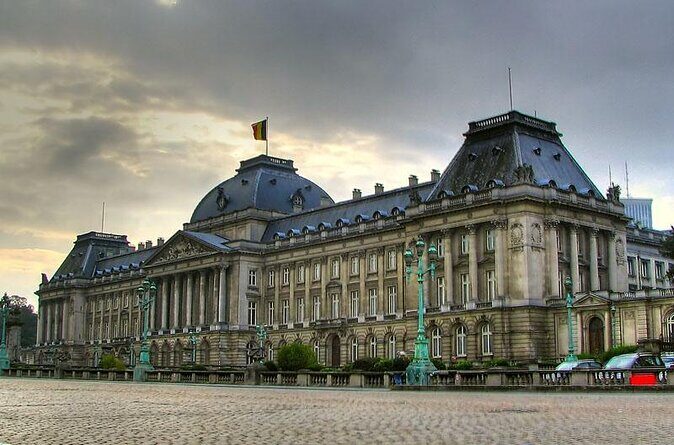
At Place Royale, the highlight is the Royal Palace (Palais Royal), used by the Belgian royal family as an official residence. The presence of the Belgian flag on the roof signals that the sovereign is in residence.
Right near the palace is the daily Changing of the Guard, scheduled at about 2:30pm. If your tour timing lines up, this can be a fun way to turn a photo stop into a short live moment.
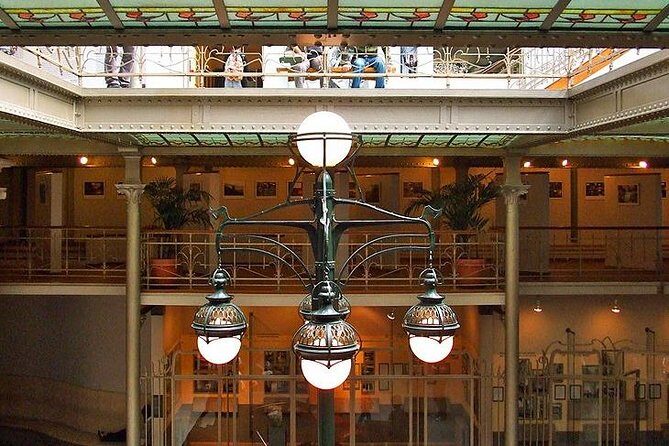
The square is also surrounded by major cultural buildings with Neoclassical facades, including the Palais des Académies and the Palais des Beaux-Arts. The latter was designed and built in the 1920s by Victor Horta, and it adds architectural texture to the whole area.
The tour keeps this stop to about 30 minutes, so you’ll likely move on right after your photos and a quick orientation.
Practical tip: if you’re chasing the guard change, don’t treat it as guaranteed. Timings can shift with traffic and weather.
Atomium: the surreal 1958 World Fair icon (entry not included)
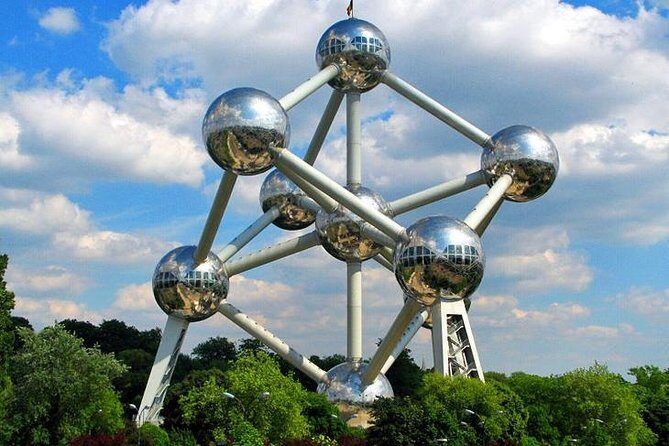
If Brussels has one “wait, what is that?” monument, it’s the Atomium. It’s a 102-meter-high steel-and-aluminum structure designed for the 1958 Brussels World Exhibition. It represents a molecule of iron magnified 165 million times.
You’ll get about 30 minutes at this stop. The outside is the quick wow. If you want the inside experience, you’ll need to pay separately, since the Atomium admission is marked not included.
Inside, the tour description notes that four of the nine spheres are used for a show called Biogenium, focused on human life. That’s the kind of modern exhibition that helps Atomium feel like more than a photo backdrop.
Possible drawback: because the entry is separate, you should decide early if you’re going in. If you’re just here for the exterior, you’ll still enjoy it. But if you want both the exterior and inside, plan your time carefully.
Other private tours in Brussels

Mont des Arts: the elevated viewpoint that stitches the city together
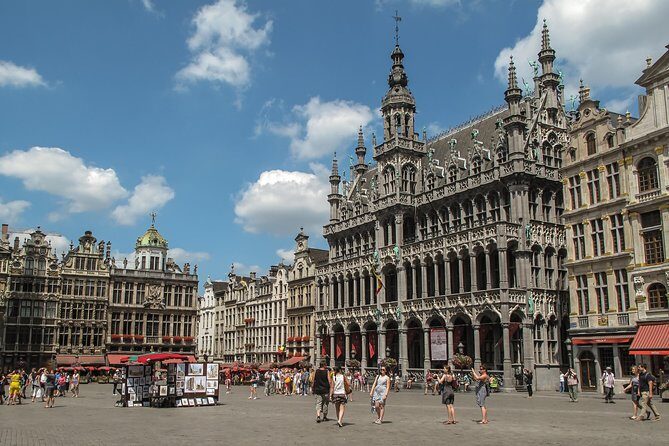
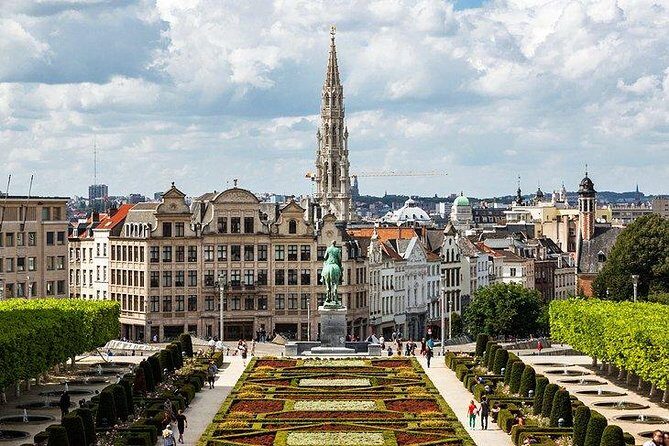
Between Place Royale and Place de l’Albertine sits Mont des Arts, created in 1956–1958. The point of this stop is the in-between view: you get a sense of how central Brussels is laid out, and it’s a nice break after the heavier landmark hits.
This area includes major buildings such as the Bibliothèque Albert I and the Palais de la Dynastie and Palais de Congrès. From the square between them, you can look down toward the lower parts of the city.
The Bibliothèque Albert I is described as having been founded during the Burgundian rule period and includes more than three million volumes, plus manuscripts and museums. The tour doesn’t push you into any one museum here—it’s more about the space and the viewpoint.
Time on this stop is usually around 20 minutes, and admission is free.
Practical tip: wear comfortable shoes. You may walk a little on uneven ground, even if it’s not a long hike.
Notre-Dame du Sablon: Late Gothic beauty with old guild stories
At Notre-Dame du Sablon (often called Notre-Dame du Sablon / Onze Lieve Vrouw op de Zavel), you’re stepping into a Late Gothic church that’s frequently described as one of the loveliest in Belgium. It dates to the 15th–16th centuries, built as a replacement for an older chapel first erected on the sandy area of the Sablon by the Crossbowmen’s Guild in 1304.
The interior is where the church earns its reputation. Expect especially strong stained glass. There’s also a burial chapel for the Thurn und Taxis family, with part of its work attributed to Luc Fayd’herbe.
One legend tied to the sacrarium involves a Virgin figure said to be a copy of a Madonna brought in 1348 by a woman from Antwerp named Baet Soetens, after she claimed the Virgin appeared to her.
Admission is free, and your stop is about 20 minutes.
Possible drawback: if you’re visiting during a time when the church is busy with service activity, your time inside might feel constrained. Still, even a short visit here is worth it for the stained glass and the calm shift in atmosphere.
Parc du Cinquantenaire: museums under a triumphal arch
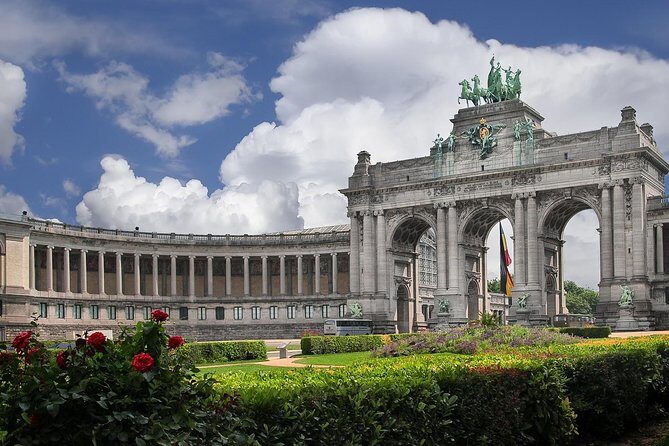
Next comes Parc du Cinquantenaire, established in 1880 to mark Belgium’s 50th anniversary. The centerpiece is the Palais du Cinquantenaire, with two wings linked in 1905 by a massive triumphal arch designed by Charles Girault.
This stop is a great “breather” because it’s less frantic than the city core. The museums inside give you options, depending on what you like:
- The Royal Art and History Museum is highlighted for its tapestry collection.
- The Belgian Army Museum and Museum of Military History focuses on military technology and campaigns on Belgian soil.
Your time is usually about 20 minutes, and admission is listed as free.
Practical tip: if you’re a museum person, this is where you’ll wish the tour had a longer slot. For this format, use it to get oriented and decide later if you want to come back for deeper museum time.
Basilique Nationale du Sacré-Cœur in Koekelberg: size, art, and scale shock
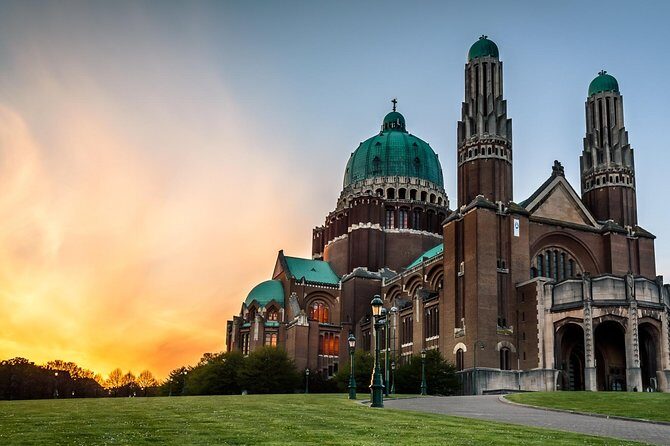
The National Basilica of the Sacred Heart sits in the Koekelberg district and is described as the fifth largest church in the world. The key detail: it started under Leopold II in 1905 to mark Belgium’s 75th anniversary, but it wasn’t completed until 1970.
It’s huge on paper—about 141 meters by 107 meters—and that size comes through when you’re nearby. Inside, you’ll find an art collection and ongoing exhibition material focused on the basilica’s history. One specific item noted is a picture of Christ giving his blessing by Georges Minne above the altar.
This is one of the stops where admission is marked not included, and the tour typically gives you about 20 minutes.
Possible drawback: if you want interior access, factor in time for entry timing and ticketing. If you choose not to go in, you’ll still appreciate the building from outside, but the basilica’s interior is where many people feel the impact.
European Quarter and the Council of the EU: a quick look at power
The final stop is the European Quarter, with a quick look toward the Council of the EU. This is listed as about 15 minutes, with admission not included.
In practical terms, this works best as a short orientation stop. You’ll get the sense of where European governance happens and connect it to what you’ve already seen in the city: Belgium as both a historic kingdom and a modern political hub.
Practical tip: use this time to ask your guide what changed over the decades in Brussels’ role. Even a short stop can lead to a big understanding if your guide can connect the dots.
Price, comfort, and real value for money
At $505.73 per person for a private luxury, 4-hour format, this isn’t a budget tour. So the question isn’t whether it’s expensive. The question is whether it saves you something you can’t easily buy with cash: time and hassle.
Here’s where the value tends to show up:
- Pickup and drop-off from Brussels-area locations, including the airport, which helps a lot if you arrive and just want to start seeing things.
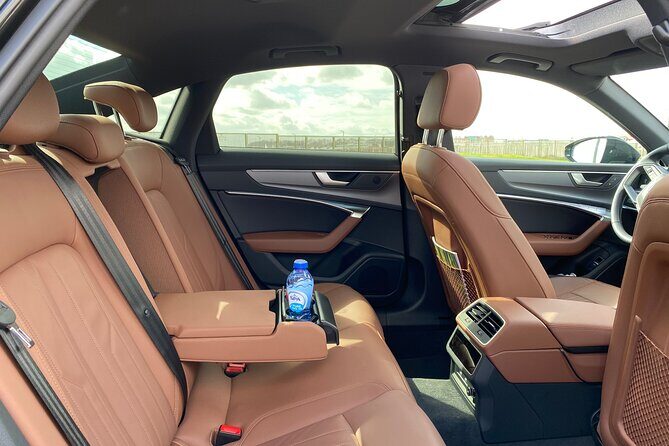
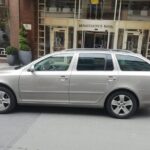
- A comfortable vehicle that keeps you moving between spread-out sights.
- A private setup where you can ask questions that actually fit your interests.
- Many of the major stops are free-entry (like the cathedral and Mont des Arts), so you’re not paying for every single location.
Where value can feel thin:
- The schedule is tight. If you’re the type who wants long museum time, you may wish for a longer day.
- If weather turns bad, you might spend more time inside the vehicle than you hoped, which can reduce your ability to fully enjoy exterior viewpoints.
- There are occasional reports of the day ending early or feeling disorganized. That’s not something to ignore. I’d plan your next reservation buffer-style, not minute-to-minute.
Who this Brussels private luxury tour suits best
This is a strong choice if you:
- Want a high-efficiency first day in Brussels.
- Prefer a private guide instead of group pacing.
- Need an easier start with hotel or airport pickup.
- Like a mix of famous landmarks plus church-and-architecture stops.
It may be less ideal if you:
- Want a slow, museum-heavy day.
- Plan to add tight commitments right after the tour ends.
- Are sensitive to weather-related viewing changes, since parts of the day may be spent in the vehicle.
Should you book Best of Brussels: Private Luxury Tour?
If you want a smooth introduction to Brussels without handling transit or juggling multiple tickets, I think this is a smart booking. The route hits the city’s most recognizable landmarks, but it also includes quieter stops like Mont des Arts and Notre-Dame du Sablon where you get real atmosphere.
Before you lock it in, do one simple thing: confirm your pickup point clearly and keep your expectations aligned with a 4-hour format. If you do that, you’re setting yourself up for a great overview—one that gives you enough context to explore the city on your own afterward.
FAQ
How long is the Best of Brussels private luxury tour?
It’s about 4 hours.
Is this tour private?
Yes. It’s private, and only your group participates.
Does the tour include pickup?
Yes. Pickup is offered from any location in the Brussels area, including the airport.
What language is the tour in?
It’s offered in English.
Is a mobile ticket included?
Yes. A mobile ticket is offered.
Are tickets included for the Atomium?
No. Atomium admission is not included.
Are tickets included for the Basilica of the Sacred Heart at Koekelberg?
No. Admission is not included for the National Basilica of the Sacred Heart.
Is admission free at the other main stops like Manneken Pis and St. Michael and St. Gudula Cathedral?
Manneken Pis and St. Michael and St. Gudula Cathedral are listed as free admission, and several other stops on the route are also listed as free.
What time is the Royal Palace Changing of the Guard?
The Changing of the Guard is described as occurring daily at about 2:30pm.
Can I cancel for a full refund?
Yes. You can cancel for a full refund if you cancel at least 24 hours in advance.
How far in advance do people usually book?
On average, it’s booked about 44 days in advance.