REVIEW · BRUSSELS
Private Tour – Bruges and Ghent, our fairytale cities
Book on Viator →Operated by Brussels City Tours - Keolis Travel · Bookable on Viator
Two fairy-tale towns, one day plan. What makes this outing work is the multilingual local guide who helps you understand what you’re seeing, plus the air-conditioned coach that gets you from Brussels to both cities without turning your day into a transit scavenger hunt. I also like that so many of the key stops are listed with free admission, which keeps the day feeling focused on sightseeing, not ticket math.
The only real catch is that it’s a lot of walking for a long day, and Bruges can be very busy, so plan for crowds and wear shoes you trust. If you don’t handle steady walking well, this is probably not your best match.
In This Review
- Key Points You’ll Care About
- How This Private Tour Really Saves You Time
- Ghent First: Belfry Views, River Quays, and Cathedral Icons
- Gravensteen Castle: Power, Punishment, and Changing Uses
- St. Nicholas Church: A Quiet Landmark With Old Roots
- Bruges Arrival: Holy Blood, Church Towers, and City Hall Splendor
- Minnewater Lake and Beguinage Ten Wijngaarde: The Softer Side of Bruges
- Bruges Historic Centre Time: Canal Tour Option and Free Browsing
- The Guide Makes or Breaks It: Multilingual, Practical, and Fast
- Price and Value: How $57 Adds Up on a Two-City Day
- What to Bring (and What to Plan For)
- Should You Book This Private Bruges and Ghent Tour?
- FAQ
- What time does the tour start?
- How long is the private Bruges and Ghent tour?
- Is this tour truly private?
- What languages are available for the guide?
- What is included in the tour price?
- Is lunch or food included?
- Is there an extra-paid canal tour in Bruges?
- Can I book the Bruges canal tour in advance?
- Is access to the Mystic Lamb at St Bavo’s Cathedral possible on Sundays?
- Will the guide wait if I’m late for the meeting point?
Key Points You’ll Care About
- Two cities, one coach day: travel from Brussels and see major sights in Ghent and Bruges.
- Free entry at most landmarks: multiple churches and monuments are listed as free to enter.
- A guide who speaks your language: choose English, French, or Spanish, and you’ll get the stories as you go.
- Radios/earphones may be provided: easier listening when you’re moving between stops.
- Optional Bruges canal tour: you can add it for about 30 minutes, booked with the guide the day of.
- Free time is built in: you’ll get breaks to breathe, browse, and snack on your own.
How This Private Tour Really Saves You Time
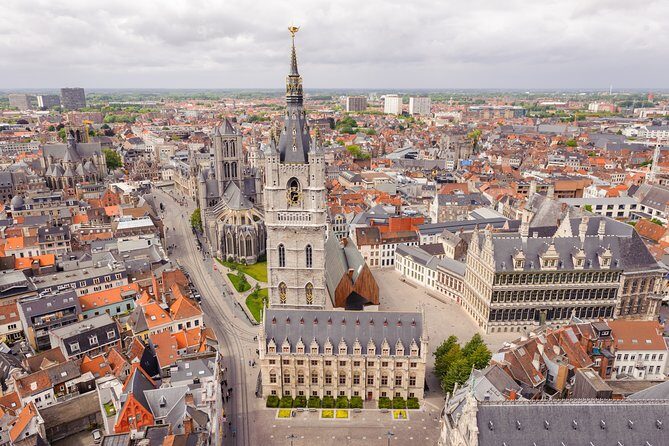
This tour is built for people who want the classic picture-postcard parts of Ghent and Bruges without spending the day jumping between websites, tickets, and opening hours. Starting from Brussels at 9:00am and running roughly 10.5 hours, you’re getting a full two-city loop, but still with a guide driving the order and context.
The value here isn’t just the price on paper. It’s that the major monuments you’d normally research on your own are handled in sequence: viewpoints first, then the big Gothic and medieval landmarks, then Bruges’ famous churches, squares, and canal-side corners. If you like structure—not rushed, but efficient—this is a smart way to do it.
Also, the “private” part matters in how the day feels. Only your group participates, so you’re not stuck competing with a huge crowd just to hear explanations or ask a question. In the feedback for this tour, guide quality comes up hard, including mention of guides like Andrea and Stephan for making the day feel smooth and easy to enjoy.
Other private tours with a local we've reviewed in Brussels



Ghent First: Belfry Views, River Quays, and Cathedral Icons
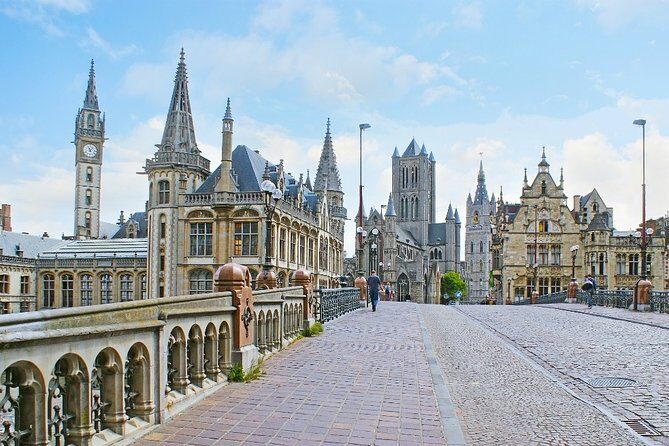
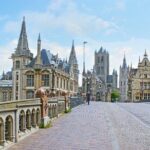
Ghent is where you’ll get the medieval street-and-tower feeling right away. The guide starts with the Het Belfort van Gent, Ghent’s iconic belfry at 91 meters. It’s one of three medieval towers that define the old city center skyline—so even if you never climb anything, you can still use the tower to understand where the city’s power literally sat.
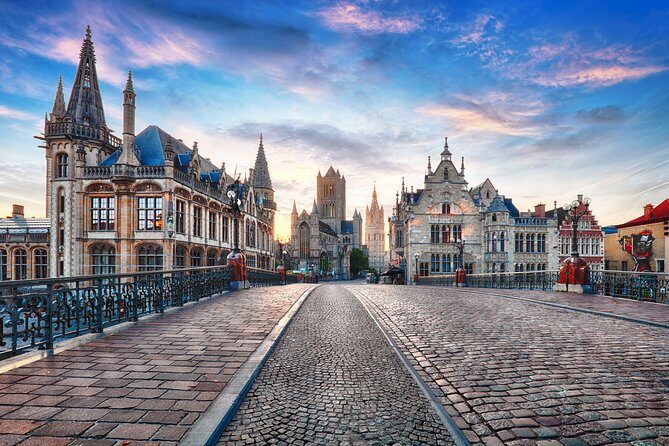
From there, you move to Graslei and Korenlei, the famous quay area along the Leie River. This is the moment where Ghent stops being “a bunch of buildings” and starts becoming a place with a rhythm: canal-side views, historic facades, and that sense that the city has always been built around water traffic. Admission here is listed as free, so you’re not paying just to stand in a beautiful spot with your camera ready.
Next up is St. Bavo’s Cathedral, an 89-meter Gothic cathedral and the seat of the diocese of Ghent. It’s named for Saint Bavo of Ghent, and it’s known for housing the well-known Ghent Altarpiece. On Sundays, there’s a specific limitation: access to the Mystic Lamb inside St. Bavo’s Cathedral is not possible, so if your trip lands on a Sunday, go in knowing that one highlight may be off-limits.
This cathedral stop is also a good anchor for the whole day. After the river quays, you get the vertical scale of Gothic architecture and the feeling of what “big institutions” looked like in medieval Europe—then you’re ready for the more dramatic, practical side of history.
Gravensteen Castle: Power, Punishment, and Changing Uses
After the cathedral, you’ll head to Gravensteen, the Castle of the Counts of Flanders. The current castle dates to 1180, and it served as the residence of the counts until 1353—then it kept being repurposed again and again, including as a court, prison, mint, and even a cotton factory.
That mix of uses is what I think makes Gravensteen click for most people. It’s not only about romantic medieval walls. It’s about how the same stone structures can be adapted as society changes. When you see a castle that long ago was a seat of authority and later a working facility, you understand the city’s evolution faster than reading about it later.
Admission is listed as free for this stop, so it’s a cost-friendly way to add real story to your day. Even if you mostly enjoy exterior views, this is one of those sites where the scale tells you you’re standing in the right place.
St. Nicholas Church: A Quiet Landmark With Old Roots
Ghent’s St. Nicholas Church is a strong follow-up because it’s less of a “tour bus must-see” and more of a real landmark that helps round out the city. The church is one of the oldest and most prominent in Ghent, started in the early 13th century as a replacement for an earlier Romanesque church.
The practical tip: use this stop as your reset. After belfry, cathedral, and castle energy, St. Nicholas helps you slow down and take in details. The admission is listed as free here too, which makes it easy to stop without feeling like you’re stealing time from something else.
Bruges Arrival: Holy Blood, Church Towers, and City Hall Splendor
Then the day shifts into Bruges, and the mood changes. You’ll start with the Basilica of the Holy Blood, which holds a venerated relic of the Holy Blood. The information provided describes it as allegedly collected by Joseph of Arimathea and brought from the Holy Land by Thierry of Alsace. Whether you’re religious or not, this kind of relic tradition is part of why Bruges became so influential.
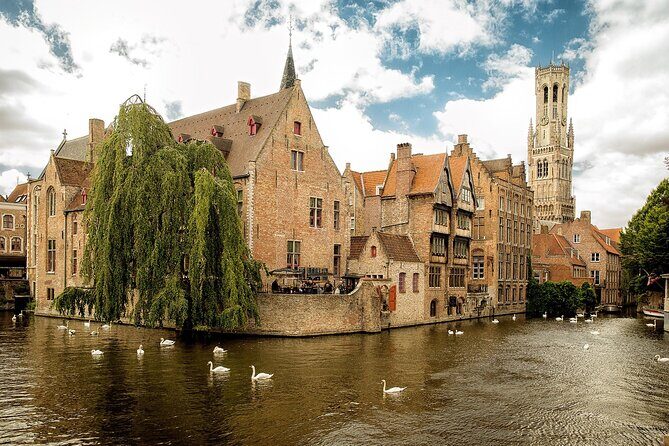
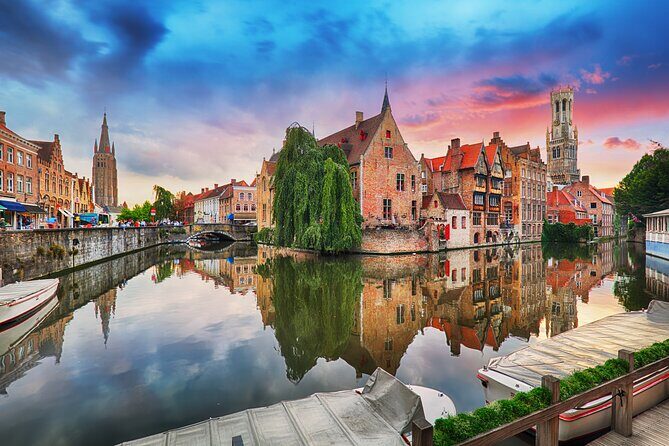
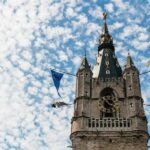
Right after that, you’ll see Onze-Lieve-Vrouwekerk (Church of Our Lady). This is the big one for tower watchers. The church dates mainly to the 13th, 14th, and 15th centuries, and its tower rises to 115.6 meters, described as the tallest structure in the city and the second tallest brickwork tower in the world. If you’re into skyline cues, this is your Bruges “measure” point.
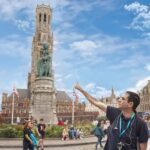
From there, you’ll visit Stadhuis—Bruges City Hall—located in Burg Square. It’s described as one of the oldest city halls in the Netherlands region. This is where the city’s civic side shows up: a sense of government, order, and public life, right in the middle of the historic center.
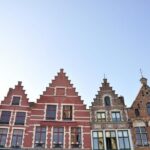
Admission for these stops is listed as free, so Bruges doesn’t feel like an expensive checklist. You’re spending time where the architecture itself is the attraction.
Other Bruges day trips we've reviewed in Brussels
Minnewater Lake and Beguinage Ten Wijngaarde: The Softer Side of Bruges
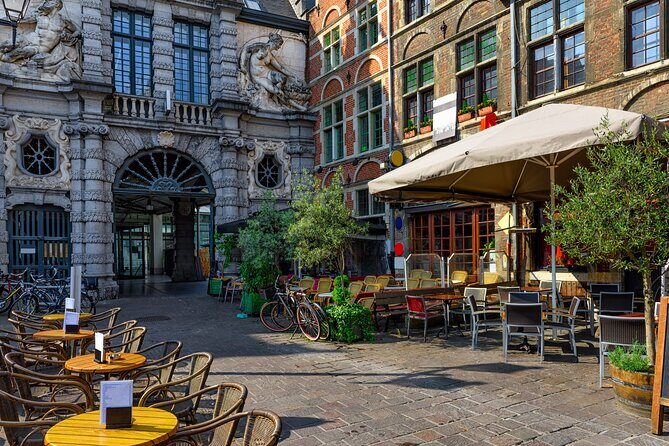
Next you’ll reach Minnewater Lake, often called the Lake of Love, plus the Lovers bridge. It’s one of those places where even a short stop feels like a pause in the story. Look for the way the water shapes the space and the way the city feels intimate rather than monumental.
Then come The Princely Beguinage Ten Wijngaarde, which is described as the only preserved beguinage in Bruges. The number of living beguines is now gone, and since 1927 it functions as a convent for Benedictines, founded by canon Hoornaert.
This stop is a good contrast to all the big church towers. It shows a different kind of medieval life—religious, but not the same as a cathedral chapter. If you like understanding how different communities worked, this is one of the more meaningful moments of the Bruges half.
Admission is also listed as free, so you’re getting more than a quick photo. You’re getting a different texture of history.
Bruges Historic Centre Time: Canal Tour Option and Free Browsing
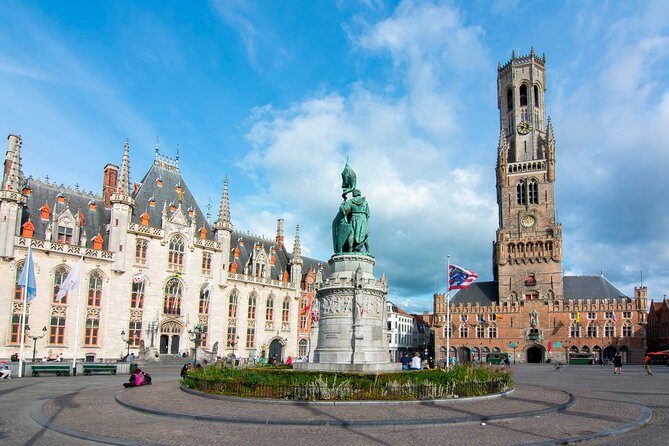
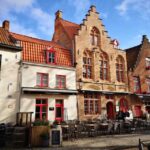
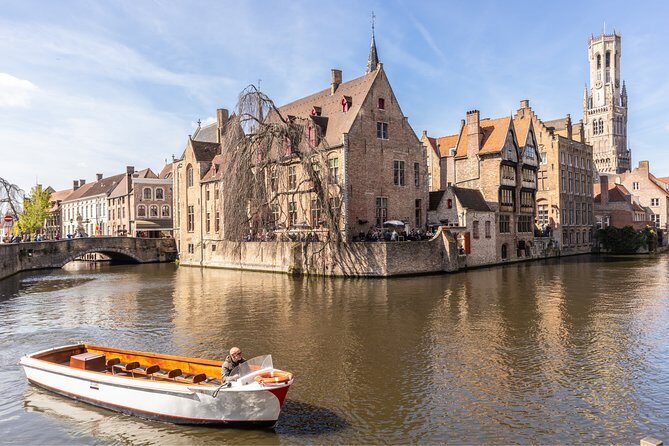
Your final stretch gives you time in the Historic Centre of Brugge, and this is where you’ll likely want to slow down and just wander with a purpose. The tour offers an optional canal tour—about 30 minutes—but it’s not included. The key detail is that the canal tour is booked with your guide on the day of your trip, so you can decide once you’re actually in Bruges and can read the crowd and weather.
This is also the part of the day where you can shop or snack without needing the guide to translate everything for you. In the feedback tied to this experience, guides like Andrea are mentioned for recommending where to eat and what to see—so if food matters to you, ask your guide what’s nearby once you have your free time.
One small reality check: Bruges gets crowded. Even with a guide and a plan, you’ll want to treat this section like popular Europe, not a quiet museum corner.
The Guide Makes or Breaks It: Multilingual, Practical, and Fast
What you’re buying with a private guided day trip is not only facts—it’s speed. A good guide helps you avoid wandering into the wrong street at the wrong time and lets you spend your energy on the places that deliver.
Here, you can choose a multilingual guide in English, French, or Spanish, and you’ll be able to speak in the language you book. That matters in places like St. Bavo’s Cathedral and Gravensteen, where details about architecture and medieval function can be the difference between vague “pretty” and real understanding.
Also, the tour uses an air-conditioned vehicle, which is a genuine comfort factor when your day starts at 9:00am and ends close to evening. Add in the included radios/earphones when necessary from the tour info, and you’re not left straining to hear explanations as you move between points.
If you’re the type who likes asking questions, this setup is ideal. The tour info and the feedback both point toward guides who do more than point—they guide you.
Price and Value: How $57 Adds Up on a Two-City Day
The listed price is $57 for a day trip of about 10 hours 30 minutes, including a professional multilingual guide and transportation via air-conditioned vehicle. For two cities—plus multiple major landmarks—that’s not just “cheap,” it’s structured value.
Here’s how I’d think about it:
- You’re paying for time-saving logistics from Brussels, not just sightseeing.
- Many stops are listed with free admission, so you’re not constantly paying extra once you arrive.
- You get a guide to interpret what you’re seeing, which can be worth real money when the alternative is reading a guidebook on your phone while standing in a crowd.
The cost you should plan for is straightforward: food and drinks are not included. If you want the day to feel easy, pick a light breakfast before you go and plan to stop for lunch and snacks during free time.
What to Bring (and What to Plan For)
This isn’t a marathon-slow tour, but it also isn’t a sit-and-stare experience. You should have moderate physical fitness and bring comfortable walking shoes.
A few practical additions based on the tour info:
- Wear layers. Church interiors can feel cooler, while outdoor walking can get warm.
- Bring some cash, since it’s advised to have some with you at all times.
- If you’re thinking about Sundays, remember the Mystic Lamb access issue at St. Bavo’s Cathedral.
If you’re traveling with luggage, good news: you can take it along, since it’s described as traveling in large and comfortable tourism coaches.
Should You Book This Private Bruges and Ghent Tour?
Book it if you want an efficient, well-planned way to see Ghent and Bruges in one day with a multilingual guide and a route that hits major landmarks without you doing the heavy planning work.
Skip it (or rethink it) if you know you struggle with steady walking for a long day, because this is a full day across two cities. Also, if you hate crowds, Bruges may challenge you, even with a private-group pace.
If your goal is to get your bearings fast, understand what you’re seeing, and end the day with meaningful stops—from Gravensteen to Onze-Lieve-Vrouwekerk—this tour is a solid value pick. And when in doubt, ask your guide for food and timing tips while you still have the full day in front of you.
FAQ
What time does the tour start?
The tour start time is 9:00am.
How long is the private Bruges and Ghent tour?
It runs for approximately 10 hours 30 minutes.
Is this tour truly private?
Yes. It’s described as a private tour/activity, and only your group will participate.
What languages are available for the guide?
You can choose English, French, or Spanish.
What is included in the tour price?
The tour includes a professional multilingual guide and an air-conditioned vehicle. Radios/earphones may also be provided when necessary.
Is lunch or food included?
No. Food and drinks are not included.
Is there an extra-paid canal tour in Bruges?
Yes. An optional canal tour is available for about 30 minutes, and it is not included.
Can I book the Bruges canal tour in advance?
No. The canal tour can only be booked with your guide on the day of your trip.
Is access to the Mystic Lamb at St Bavo’s Cathedral possible on Sundays?
No. Access to the Mystic Lamb at St Bavo’s Cathedral is not possible on Sundays.
Will the guide wait if I’m late for the meeting point?
They can wait for 5 minutes if you let them know in advance about your delay (call +32 2 513 77 44).